Choosing to study medicine in Cyprus means an English-taught, EU-accredited medical degree on a sunny Mediterranean island that is a member of the European Union (though not the Schengen Area). Cyprus's medical schools — led by the University of Nicosia, which pioneered Cypriot medical education by delivering the St George's, University of London MBBS — offer modern, internationally recognised programmes that open careers across the EU, UK, Gulf and beyond. This 2026 guide covers everything about choosing to study medicine in Cyprus: the universities, degrees, admission, costs, recognition, student life and how to practise afterwards.
Why study medicine in Cyprus
There are compelling reasons to study medicine in Cyprus. It offers an English-taught, EU-accredited medical degree in a safe, sunny, welcoming island setting, with modern universities, strong clinical training and a genuinely international student community. The degrees are internationally recognised, opening doors across Europe, the UK, the Middle East and beyond.
Cyprus combines the academic credibility of an EU qualification with a relaxed Mediterranean lifestyle — beaches, sunshine and a low crime rate — that makes the demanding years of medical school more enjoyable. For students who want a respected European degree taught entirely in English, without the cost of the UK or USA, the decision to study medicine in Cyprus is increasingly popular. This guide walks through every aspect in turn. For the wider European picture, see our hub on studying medicine in English in Europe.
What sets Cyprus apart from many alternatives is the particular combination it offers. Plenty of countries provide English-taught medicine, and plenty offer a pleasant lifestyle, but Cyprus pairs an EU-accredited degree, a genuinely English-speaking environment (English is widely used across the island, a legacy of its history), a strong flagship university with UK pedigree, and a warm Mediterranean setting — all at a cost well below the UK or USA. For students weighing several destinations, it is this blend of academic credibility, accessibility and quality of life that makes the case to study medicine in Cyprus stand out.
It also helps to understand who, in practice, chooses Cyprus. The island attracts a distinctive mix: UK and Irish students seeking a GMC-linked route home without UK fees and the UCAT; Indian and Gulf students drawn by English-taught, NMC-compatible, recognised degrees close to home; and European students wanting an EU qualification in a sunny, English-speaking setting. This diverse intake creates the genuinely international classrooms that are a hallmark of Cypriot medical schools, and it reflects the broad appeal of the decision to study medicine in Cyprus across very different student profiles and home countries.
EU member, not Schengen
A defining feature when you study medicine in Cyprus is the island's status: Cyprus is a full member of the European Union, but it is not part of the Schengen Area. This distinction matters in two practical ways. First, EU membership means your degree carries EU recognition and rights — invaluable for practising across Europe. Second, the non-Schengen status affects travel and visas.
Because Cyprus is outside Schengen, a Cyprus student visa or permit does not automatically allow Schengen travel, and vice versa — you may need a separate Schengen visa to visit mainland Europe, and non-EU students apply specifically for a Cypriot permit. For EU students this is seamless; for non-EU students (including UK nationals post-Brexit) it is a point to plan around. Understanding the EU-but-not-Schengen position is essential context for anyone planning to study medicine in Cyprus.
It is worth dispelling a common confusion here: being outside Schengen does not diminish the academic or professional value of a Cyprus degree in the slightest. EU membership is what governs the recognition of your qualification and your right to practise across Europe, and Cyprus has that in full. Schengen is purely a travel-and-border arrangement. So the non-Schengen status is a logistical detail to manage — an extra visa here, a separate permit there — not a limitation on your degree or career. Keeping this distinction clear prevents unnecessary worry when you plan to study medicine in Cyprus.
For non-EU students, the practical upshot is simply to plan two things separately: your Cypriot study permit, which lets you live and study in Cyprus, and any Schengen visa you might want for holidays or electives in mainland Europe, which is a distinct application. Many students happily complete their entire degree without needing Schengen access at all, treating European trips as an occasional extra to arrange when the time comes. Framed this way, the non-Schengen status is a minor administrative footnote rather than an obstacle, and it should not deter anyone weighing whether to study medicine in Cyprus.
The medical universities
Several universities offer the chance to study medicine in Cyprus, all teaching in English. The largest and best known is the University of Nicosia (UNIC), which founded Cypriot medical education in 2011. Also prominent is European University Cyprus (EUC), with a strong, modern medical school. The public University of Cyprus runs a medical school too, and other institutions such as the University of Cyprus International and others add to the choice.
These universities cluster mainly in Nicosia (the capital) and Limassol, drawing students from across the world. Class sizes are often smaller than at giant European universities, giving close clinical contact. Each has its own admission criteria, fees and character, so choosing the right one is an important early decision when you plan to study medicine in Cyprus. The next sections look at the leading options in detail.
A useful way to approach the choice is to weigh each university on a consistent set of criteria: international reputation and recognition, tuition and available scholarships, class size and the resulting closeness of teaching, the quality and location of clinical placements, campus facilities, and the character of the city. UNIC and EUC dominate the international intake and are the natural starting points for most applicants, but the right fit depends on your priorities and budget. Researching two or three options properly, rather than fixating on a single name, is the sensible way to choose where to study medicine in Cyprus.
Location within the island is one factor worth weighing deliberately. Nicosia, the inland capital, hosts the two largest medical schools and offers the fullest student infrastructure and clinical network; Limassol, on the south coast, is a vibrant, cosmopolitan port city with a more beach-oriented lifestyle; other towns offer their own character. The differences are real but not dramatic — all are safe, English-friendly and well-served — so location is more about personal preference for city versus coast than about academic quality. Considering where on the island you would most enjoy living adds a human dimension to the decision to study medicine in Cyprus.
University of Nicosia & St George's
The flagship choice to study medicine in Cyprus is the University of Nicosia (UNIC) — the island's largest and oldest medical school, and the most internationally renowned. Founded in 1980, UNIC has over 12,000 students from more than 70 countries, and its medical school began in 2011 by delivering the St George's, University of London graduate-entry MBBS — students earned a UK degree while studying in Cyprus, a landmark in Cypriot higher education.
Today UNIC offers its own EU-accredited six-year Doctor of Medicine (MD) for school-leavers and a graduate-entry MD for degree-holders, taking around 200 students a year onto the six-year programme. UNIC graduates work in leading hospitals in the UK and worldwide, and the school is GMC-familiar, WFME-aligned and WDOMS-listed. Its blend of heritage, scale and international recognition makes UNIC the standout option for many who study medicine in Cyprus.
The St George's, University of London connection is worth understanding because it shaped UNIC's reputation and remains a point of pride. By delivering a respected UK university's graduate-entry MBBS from its Cyprus campus, UNIC allowed students to earn a British medical degree in the Mediterranean — an arrangement that established the school's credibility from the outset and seeded its strong links with UK medical training. While UNIC now confers its own EU-accredited MD, that heritage of UK-standard education endures in its curriculum and its graduates' success in the NHS, and it is a large part of why so many choose UNIC to study medicine in Cyprus.
A point sometimes raised about UNIC is that it is a private university, the largest in Cyprus, which means its medical degree is fee-paying rather than state-subsidised. For international students this is the norm and not a drawback — the fees fund modern facilities, strong student support and the international orientation that make the experience accessible. What matters is the value the degree delivers: EU accreditation, global recognition and a track record of graduates succeeding worldwide. Judged on outcomes rather than ownership, UNIC offers excellent value as a place to study medicine in Cyprus.
UNIC's scale brings further advantages beyond reputation. As the largest medical school on the island, with around 200 students entering the six-year programme annually, it has the resources, faculty depth and clinical-placement networks that a large, established institution can offer, while still teaching in English to a global cohort. Its size also means a substantial alumni network now working in hospitals across the UK and worldwide — a valuable professional web for new graduates. For students who want the security and connections of a major, proven institution, UNIC is a compelling place to study medicine in Cyprus.
European University Cyprus
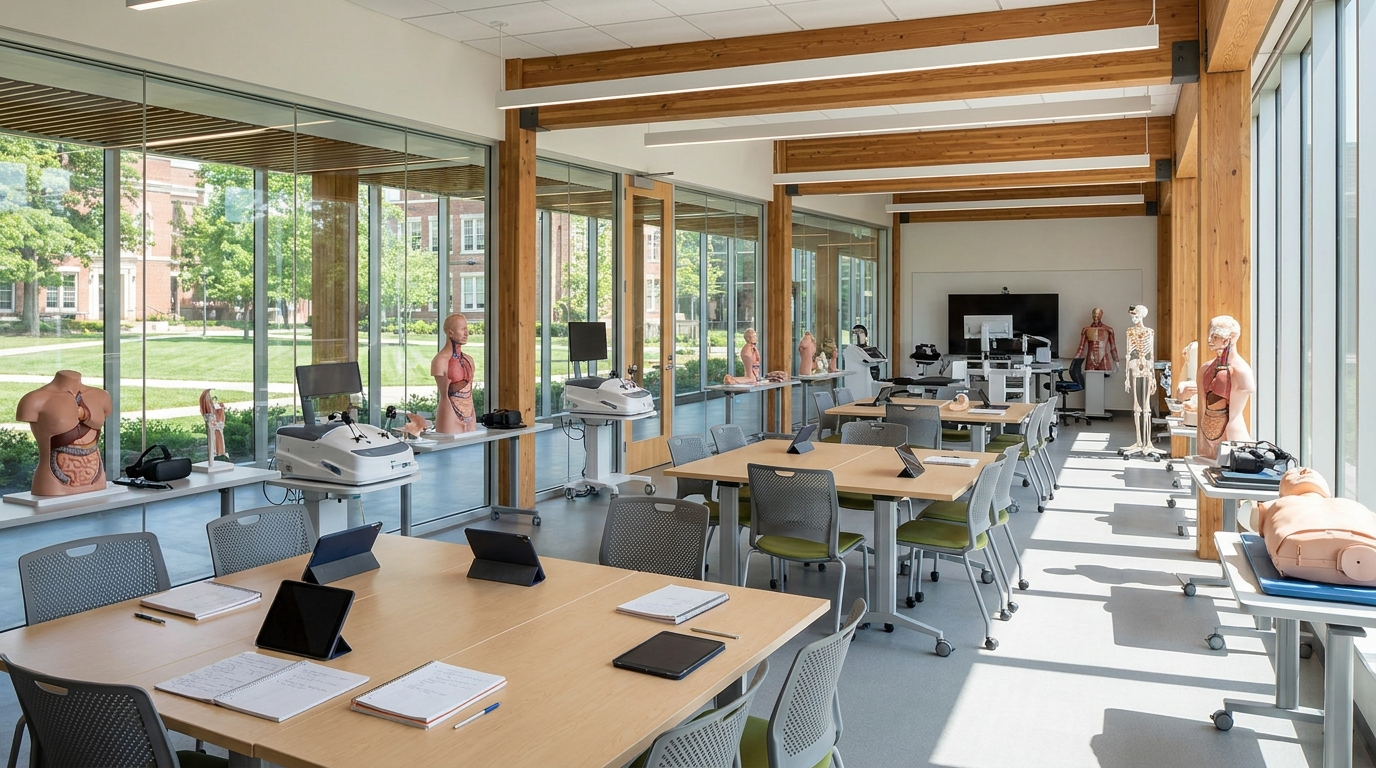
Another leading option to study medicine in Cyprus is European University Cyprus (EUC) in Nicosia. EUC runs a well-regarded, modern English-taught medical school with strong facilities, simulation-based teaching and a sizeable international student body, and is a popular choice among students from India and the wider region.
Like UNIC, EUC's medical degree is EU-accredited and internationally recognised, with its own admissions process and fee structure. EUC is known for innovative teaching and practical, hands-on training, and offers scholarships for strong applicants. For students comparing universities when they plan to study medicine in Cyprus, EUC is a serious alternative to UNIC, and worth evaluating on programme structure, fees, location and clinical opportunities alongside the others.
EUC has invested heavily in modern medical education infrastructure, including simulation centres and clinical-skills facilities that give students hands-on practice in a controlled environment before they reach the wards. Its medical school has grown a strong international reputation in a relatively short time, and it actively recruits students from India, the Middle East and beyond, building a diverse cohort. For applicants who find UNIC's places limited or its fees a stretch, EUC offers a comparably recognised, well-equipped route to study medicine in Cyprus, and many students apply to both to maximise their chances of a place.
When comparing EUC with UNIC, students typically weigh a few practical differences: the exact fee levels and scholarship offers each makes them, the structure and length of the programmes (including graduate-entry options), the specific clinical-placement arrangements, and the feel of each campus and its student community. Both are EU-accredited and internationally recognised, so neither is a "wrong" choice; the decision is about fit and the offers you receive. Applying to both, then choosing once you can compare concrete offers side by side, is a sensible strategy for anyone determined to study medicine in Cyprus.
Other universities
Beyond UNIC and EUC, a few more institutions let you study medicine in Cyprus. The public University of Cyprus has a medical school of high academic standing. Other private universities and international campuses add further English-taught medical or health-science options, some with their own scholarships and entry routes.
The choice between them comes down to factors such as reputation, fees, class size, clinical placements, location (Nicosia vs Limassol vs elsewhere) and the specific degree on offer. Because the universities vary in admission requirements and cost, researching each carefully — ideally with expert guidance — is wise. Whichever you choose, all offer the core advantage that draws students to study medicine in Cyprus: an English-taught, EU-recognised degree in a Mediterranean setting.
It is worth noting that the public University of Cyprus operates somewhat differently from the private institutions, often with more competitive entry and a different fee structure, and its programmes can be smaller and more research-oriented. The private universities, by contrast, have built their medical schools specifically with international students in mind, with the support structures, English-language delivery and flexible admissions that suit applicants from abroad. Understanding this public-versus-private distinction helps you target the universities whose ethos and entry route best match your profile when you set out to study medicine in Cyprus.
Degrees & programme structure
When you study medicine in Cyprus, the standard qualification is the six-year Doctor of Medicine (MD) for students entering straight from school. The first years cover the basic medical sciences (anatomy, physiology, biochemistry and so on), the middle years bridge into clinical knowledge, and the later years are clinical rotations in hospitals, culminating in a final internship year.
The curriculum follows modern, international standards, integrating early clinical contact, problem-based learning and simulation. A mandatory internship in Cyprus is part of the programme. By graduation you hold an EU-accredited MD qualifying you to seek licensure in Cyprus, across the EU, and — after the relevant exams — worldwide. This structure mirrors leading European medical education and is a key reason the decision to study medicine in Cyprus delivers a globally portable degree.
The mandatory internship in Cyprus is a feature to understand carefully, as it has practical implications. Completing the final clinical internship within Cyprus is part of earning the degree and Cypriot licensure, and it embeds you in the local health system for that period. For most students this is a valuable, immersive clinical year; for some — particularly Indian students with NMC internship expectations — it is a detail to reconcile with home-country requirements. Either way, knowing that the internship is Cyprus-based from the outset lets you plan around it sensibly as you prepare to study medicine in Cyprus.
It is worth emphasising the clinical strength that this structure delivers. Cyprus's medical schools make extensive use of university and teaching hospitals, simulation centres and early patient contact, so students build practical skills progressively throughout the degree rather than only at the end. The smaller class sizes typical of Cypriot schools also mean closer supervision and more hands-on time than students might get in a vast, crowded faculty elsewhere. This emphasis on solid, well-supervised clinical training is a genuine educational strength of the decision to study medicine in Cyprus, and it serves graduates well wherever they go on to practise.
Graduate-entry medicine
A distinctive option when you study medicine in Cyprus is graduate-entry medicine — a shorter MD (typically four to five years) for applicants who already hold a relevant bachelor's degree (in biomedical, life or health sciences). This route, pioneered at UNIC through the original St George's partnership, suits career-changers and science graduates who want to enter medicine after a first degree.
Graduate-entry programmes are intensive, condensing the curriculum for students with a strong prior science foundation, and lead to the same MD qualification and career options as the six-year route. They are a valuable path for older or already-qualified students, and a notable strength of Cyprus's offering. If you already have a degree, graduate-entry medicine is an excellent reason to study medicine in Cyprus rather than start a six-year programme from scratch.
The existence of a robust graduate-entry pathway is one of Cyprus's genuine differentiators, especially given UNIC's pioneering role in introducing it through the St George's model. For a science or health-sciences graduate who decides on medicine after their first degree — a common path in many countries — it offers a faster, focused route into the profession without repeating foundational material. It also widens access to medicine for mature students and career-changers who might struggle to re-enter a six-year school-leaver programme. This flexibility of entry is a thoughtful, modern feature of the way you can study medicine in Cyprus.
For applicants weighing the six-year versus graduate-entry routes, the choice is straightforward: school-leavers and those without a relevant degree take the six-year MD, while holders of a suitable bachelor's degree can opt for the shorter, more intensive graduate-entry programme. Both arrive at the same destination — an EU-accredited MD with the same career options — so it is purely a question of your starting point and how quickly you wish to qualify. Having both routes available under one roof is part of what makes Cyprus a flexible, inclusive place to study medicine in Cyprus for students at different life stages.
English-taught teaching
A core attraction of the decision to study medicine in Cyprus is that the medical degrees are taught entirely in English. There is no need to learn Greek to follow lectures, study materials or exams, which removes the language barrier that complicates studying in many other countries and makes Cyprus immediately accessible to international students.
The student bodies are highly international — UNIC alone draws students from 70+ countries — so English is the working language of campus life as well as the classroom. The one caveat is that some Greek is useful for clinical placements, where you interact with local patients, so universities teach medical Greek alongside the curriculum. But for the academic core, English throughout is a decisive, accessible advantage of choosing to study medicine in Cyprus.
The English-speaking environment extends well beyond the lecture theatre, which eases daily life enormously for international students. Cyprus has deep historical ties to the English language, so English is widely spoken in shops, services and across the island's cosmopolitan cities — meaning newcomers can navigate everyday life, open bank accounts, rent flats and socialise without a language barrier from day one. This is a marked contrast with countries where English-taught medicine sits inside a non-English society, and it is a quietly significant practical reason the decision to study medicine in Cyprus is so accessible to students worldwide.
Admission requirements
Admission requirements to study medicine in Cyprus are clear and generally more flexible than the UK's. For the six-year MD, you need a strong secondary-school record with good grades in science subjects (biology and chemistry especially). For graduate-entry medicine, you need a relevant bachelor's degree. Universities may also consider an interview, an admissions assessment, and English-language proficiency.
Unlike the UK, there is generally no UCAT or BMAT requirement, and entry, while competitive due to limited places, is more accessible for capable students. Indian students must also have qualified NEET (covered below). Each university sets its own exact criteria, so check the specific requirements of your chosen school. Overall, the admission process to study medicine in Cyprus rewards solid academics and genuine motivation rather than a single high-stakes exam.
This more holistic, less exam-centric approach is a relief for many capable students who would thrive as doctors but do not perform well in a single make-or-break aptitude test. Rather than hingeing everything on one exam score, Cyprus universities look at your overall academic record, your science grades, your motivation and, where used, an interview that lets you demonstrate your commitment to medicine. For students who have strong, consistent results and a genuine vocation but who find high-stakes admissions tests punishing, this accessibility is a meaningful advantage of choosing to study medicine in Cyprus.
The English-proficiency requirement is straightforward for most international applicants but worth preparing for in good time. Universities typically accept standard evidence such as IELTS or TOEFL, or prior English-medium education, to confirm you can follow the course. Since the entire degree is delivered in English, this is a sensible safeguard rather than an obstacle, and students from English-speaking or English-medium backgrounds often satisfy it easily. Arranging any required English test early, alongside your academic documents, keeps your application to study medicine in Cyprus moving smoothly through each university's process.
That said, capable students should not mistake "more accessible than the UK" for "easy." Places are limited by the relatively small size of Cyprus's medical schools, so entry remains competitive, and a strong academic record in the sciences is genuinely expected. The point is simply that the assessment is fairer and more rounded — rewarding sustained achievement and real motivation rather than a single exam day — not that standards are low. Approaching the application seriously, with strong grades and a clear demonstration of your commitment to medicine, is the way to succeed in the competitive but accessible route to study medicine in Cyprus.
How to apply
Applying to study medicine in Cyprus is done directly to each university, not through a central system like UCAS, which gives flexibility and often rolling or multiple intakes. You submit your application with academic transcripts, certificates, a personal statement, references and English-language evidence, and may attend an interview or assessment.
Because you apply directly, you can apply to several universities, and deadlines are generally more generous than the UK's single annual cycle. Once offered a place, you accept, pay the initial fees, and (if non-EU) begin the visa/permit process. Applying early secures your place and accommodation. The direct, flexible application process is one of the practical attractions of choosing to study medicine in Cyprus, and EHEC guides students through each university's specific requirements.
One practical advantage of direct application is the ability to apply strategically across several universities to maximise your options. Because there is no central cap of a few choices as in the UCAS system, you can submit applications to UNIC, EUC and others, compare the offers and scholarships you receive, and then choose the best fit. This flexibility, combined with generally rolling or multiple intakes, gives applicants far more control over the process than a single rigid annual cycle would. Used well, it significantly improves your chances of securing a place to study medicine in Cyprus at a university that suits you.
Visas & the non-Schengen permit
For non-EU students, the visa step to study medicine in Cyprus reflects the island's non-Schengen status. You apply for a Cypriot student visa/residence permit specifically — separate from any Schengen visa — submitting your university acceptance, proof of funds, accommodation, health insurance and supporting documents to the Cypriot authorities. After arrival you complete residence registration.
EU students need no visa and simply register their residence. UK nationals, now treated as non-EU after Brexit, follow the non-EU permit route. A key planning point: because Cyprus is outside Schengen, your Cypriot permit does not by itself let you travel freely in mainland Europe — factor this into travel plans. Understanding and starting the Cypriot permit process early is an important practical step when you study medicine in Cyprus as a non-EU student.
The process is well-trodden and the universities are experienced in supporting international students through it, so it need not be daunting — but it does require organisation and time. Gathering and legalising the necessary documents, arranging proof of funds and accommodation, and securing health insurance all take preparation, and the authorities' processing adds further lead time. Starting as soon as you have your acceptance, and following your university's international-office guidance closely, keeps everything on schedule. Treating the permit as an early priority ensures a smooth arrival when you go to study medicine in Cyprus.
Health insurance deserves particular attention within the permit process, as it is both a requirement and a genuine practical necessity. International students arrange cover for their time in Cyprus, and the universities can advise on suitable options; keeping this cover continuous throughout your studies protects you and satisfies the authorities at each renewal. Alongside insurance, maintaining valid proof of funds and up-to-date accommodation details makes annual permit renewals routine rather than stressful. Staying organised with these essentials is part of settling comfortably into life as you study medicine in Cyprus.
Cost of studying
The cost to study medicine in Cyprus is moderate — cheaper than the UK, Ireland or USA, though higher than Eastern European destinations. Tuition at the leading universities runs around €22,000–24,000 a year (UNIC's 2026 MD is €24,000), with living costs of roughly €800–1,200 a month in Nicosia.
| Cost item | EUR | INR | USD | GBP | AED |
|---|---|---|---|---|---|
| Tuition (per year) | €22,000–24,000 | ₹19.8L–21.6L | $23,760–25,920 | £18,700–20,400 | AED 88,000–96,000 |
| Living (per month) | €800–1,200 | ₹72,000–1.08L | $864–1,296 | £680–1,020 | AED 3,200–4,800 |
| Six-year all-in (approx.) | ≈€185,000 | ≈₹1.66cr | ≈$199,800 | ≈£157,250 | ≈AED 740,000 |
The six-year all-in cost (tuition plus living, insurance and incidentals) lands around €185,000. It's a significant investment, but well below a comparable UK or US medical education, and for an EU-recognised English degree it represents solid value. Our dedicated cost guide breaks every figure down in five currencies.
It is important to set this cost in context rather than viewing it in isolation. While €185,000 over six years is a substantial sum, a comparable medical education at a UK or US private institution can cost considerably more, and Cyprus delivers an EU-accredited, English-taught degree with strong international recognition for the price. Against Eastern European destinations, Cyprus is more expensive, so students prioritising the lowest possible cost may look to fixed-fee routes like Latvia or Poland — but for those who value the specific blend of UK-linked pedigree, English-speaking environment and Mediterranean lifestyle, the cost to study medicine in Cyprus represents fair value for what is offered.
Scholarships & financial aid
Several scholarships can ease the cost when you study medicine in Cyprus. Universities offer merit-based scholarships (for strong academic and entrance-assessment performance) and need-based financial aid (requiring proof of family income and hardship). UNIC, EUC and others run their own schemes, and instalment plans are commonly available to spread tuition.
Awards can meaningfully reduce fees for eligible students, so it pays to research and apply for every scholarship you might qualify for, and to ask each university's financial-aid office for guidance. While Cyprus does not have the near-free public route of some EU countries, its scholarships and payment plans make the cost more manageable. Factoring scholarships into your planning is a smart way to improve the value of the decision to study medicine in Cyprus.
A practical tip is to treat scholarship applications as an integral part of your university applications rather than an afterthought. Strong academic results and a well-presented case for financial need can unlock meaningful reductions, and instalment plans can ease cash flow even where a full scholarship is not available. Because each university administers its own awards with its own criteria and deadlines, researching these early — and applying to several universities partly to compare scholarship offers — maximises your chances of bringing the net cost down. This diligence is well worth the effort for anyone funding the decision to study medicine in Cyprus.
It is also worth remembering that the cost, while significant, buys a complete six-year journey to a recognised medical qualification, with all the career earning potential that follows. Doctors enjoy strong, durable salaries and exceptional job security worldwide, so the investment in a Cyprus degree is repaid over a long professional life. Viewed as the foundation of a lifelong medical career rather than simply an upfront expense, the cost to study medicine in Cyprus sits in a much more favourable light — particularly given the global portability of the qualification it provides.
Recognition of the degree
Recognition is a major strength when you study medicine in Cyprus. The medical degrees are EU-accredited (by the Cyprus Agency of Quality Assurance and Accreditation in Higher Education), aligned with the World Federation for Medical Education (WFME) standards, and listed in the World Directory of Medical Schools (WDOMS) — ensuring worldwide recognition.
As an EU qualification, a Cyprus MD enjoys recognition across the European Union, and the degree is familiar to the UK's GMC, with UNIC graduates registered there. It is accepted (subject to local licensing exams) in the USA, India, the Gulf and elsewhere. This broad recognition means a Cyprus degree is a globally portable qualification, not a local one — a core reason the decision to study medicine in Cyprus is a sound long-term investment. Our practising guide details every licensing route.
The strength of this recognition cannot be overstated, because it is what transforms a Cyprus degree from a local qualification into a global passport. A student graduating from UNIC or EUC is not confined to working in Cyprus; the EU accreditation, WFME alignment and WDOMS listing together mean the degree is accepted as a legitimate medical qualification by regulators worldwide, subject only to each country's own licensing exams. This is precisely the reassurance international students and their families seek, and it is a foundational reason the decision to study medicine in Cyprus is a sound investment in a portable, international career.
Practising after graduation
A degree earned when you study medicine in Cyprus opens practice worldwide, after each country's licensing process. In Cyprus and the EU, the EU-accredited MD gives strong recognition (with the local language needed to treat patients). For the UK, graduates register with the GMC via the UKMLA. For the USA, they take the USMLE and ECFMG route.
For India, graduates qualify NEET beforehand and sit the FMGE/NExT screening exam, and for the Gulf, they register with authorities like the DHA or MOH. Note that Cyprus requires a mandatory internship within Cyprus, which Indian students should factor into NMC requirements. With the right planning, a Cyprus degree leads to practice almost anywhere — explored fully in our dedicated guide to practising after a Cyprus medical degree.
The key principle to grasp is the same one that applies to any international medical degree: the qualification opens the door, but each destination country still requires you to pass its own licensing process. A Cyprus degree clears that first, crucial hurdle of being a recognised qualification almost everywhere; what remains is preparing for the specific exam — the UKMLA, USMLE, FMGE/NExT or a Gulf authority's assessment — of the country you wish to work in. Planning that licensing route early, ideally from the start of your studies, is the secret to a smooth career transition after you study medicine in Cyprus.
Student life in Cyprus
Life is a real draw when you study medicine in Cyprus. The island offers a safe, sunny, relaxed Mediterranean lifestyle — beaches, warm weather most of the year, a low crime rate and a friendly, welcoming culture. The large international student community means you quickly find friends from around the world, and English is widely spoken across the island, not just on campus.
Cyprus has a rich history and culture, good food, lively student social scenes in Nicosia and Limassol, and easy access to the sea and countryside for downtime between study. The cost of living is moderate, and the climate and pace help make the intense medical years more enjoyable. This appealing lifestyle is a significant, if intangible, benefit of the decision to study medicine in Cyprus, explored further in our student-life guide.
The wellbeing dimension of this lifestyle should not be underestimated, because medical school is long and demanding, and the environment in which you study it matters. Sunshine for much of the year, easy access to beaches and the outdoors, a safe and friendly society, and a relaxed pace all help students decompress between intense study and clinical work — supporting the resilience needed to get through six years. Many students who study medicine in Cyprus cite the lifestyle not as a frivolous extra but as a genuine contributor to their happiness and academic stamina across the course.
Living in Nicosia
Most students who study medicine in Cyprus are based in Nicosia, the capital and largest city, and home to UNIC and EUC. Nicosia blends modern infrastructure with historic charm, offering a comfortable, student-friendly environment with cafés, shops, cultural sites and a sociable atmosphere. It is the island's economic and cultural hub.
Student accommodation — university-affiliated housing and private rentals — costs roughly €500–800 a month, with living costs around €800–1,200 a month overall. The city is safe and walkable, with a warm community feel. For those at universities elsewhere (such as Limassol), similar comforts apply. Settling into a welcoming city like Nicosia is part of what makes the experience of choosing to study medicine in Cyprus so positive day to day.
Nicosia's character as a real, lived-in capital — rather than a purpose-built student town — gives the experience depth. It is the island's seat of government, business and culture, with museums, historic quarters, restaurants and a genuine local life that students become part of, not just visitors to. The presence of two major medical schools and many other faculties means a large, sociable student population, while the city remains safe, walkable and human in scale. This combination of capital-city amenities and a manageable, friendly atmosphere makes Nicosia an excellent base from which to study medicine in Cyprus.
For Indian students: NEET & NMC
Indian students who study medicine in Cyprus must plan around India's rules. NEET qualification is mandatory before starting, both for eligibility and to practise in India later. On return, graduates sit the FMGE (transitioning to the NExT) and register with the National Medical Commission (NMC) under the 2021 Foreign Medical Graduate Licentiate (FMGL) Regulations.
Those regulations require the degree to meet criteria on duration, English-medium instruction, internship and eligibility to practise in the country of study — which Cyprus's EU-accredited MD satisfies. One important nuance: Cyprus requires its internship to be completed in Cyprus, so Indian students should confirm how this aligns with NMC's internship expectations. With NEET beforehand and careful planning, studying in Cyprus is a recognised, viable route for Indian students aiming to study medicine in Cyprus and return home to practise.
For Indian families, the reassurance lies in the degree's compliance with the substance of the NMC's requirements rather than in any single college appearing on a list — since the 2021 FMGL regulations moved to a criteria-based system. A Cyprus MD that is six years long, taught in English including clinical work, includes an internship, and confers eligibility to practise in Cyprus aligns with those criteria, with the internship location being the main point to verify carefully. Confirming this fit before committing, ideally with expert advice, gives Indian students the confidence that their decision to study medicine in Cyprus supports a return to Indian practice.
Pros & cons
Weighing the decision to study medicine in Cyprus, the pros are substantial: English-taught, EU-accredited degrees; the renowned UNIC and its St George's heritage; broad international recognition (GMC, WFME, WDOMS); a graduate-entry option; no UCAT/BMAT; a safe, sunny Mediterranean lifestyle; and a strongly international community.
The cons to weigh: tuition is higher than in Eastern Europe (around €22,000–24,000 a year); places are limited due to smaller class sizes; some Greek is needed for clinical placements; the non-Schengen status complicates European travel; and students aiming to work outside the EU must research licensing carefully. On balance, for students who value an English-taught EU degree with strong recognition and lifestyle — and can fund it — the case to study medicine in Cyprus is strong.
Ultimately, the right decision depends on matching Cyprus's particular profile to your own priorities. If your overriding goal is the absolute lowest tuition, Eastern Europe may suit you better; if you need guaranteed practice in a specific non-EU country, that country's requirements should drive your choice. But if you want a recognised EU degree, taught in English, from a credible university with UK links, in a safe and sunny environment, and you can fund it — Cyprus is one of the most attractive options in Europe. Weighing these trade-offs honestly is how you decide whether to study medicine in Cyprus.
For a great many international students, that weighing comes out firmly in Cyprus's favour. An English-taught, EU-accredited degree from a credible university with UK heritage, earned on a safe and sunny Mediterranean island and recognised across the world, is a rare and attractive combination. With early, informed planning — choosing the right university, securing scholarships, navigating the permit, and mapping your licensing route home — the decision to study medicine in Cyprus can be the foundation of a rewarding international medical career.
Thousands of international students have built exactly such careers from a Cyprus start, and with the right preparation there is no reason you cannot join them. The pathway is clear, the recognition is broad, and the experience along the way is genuinely enjoyable.
How EHEC helps
EHEC guides you through every stage of the decision to study medicine in Cyprus — choosing between UNIC, EUC and the others, meeting each university's admission criteria, preparing a strong application, securing scholarships, navigating the non-Schengen permit, and planning your eventual licensing route home or abroad. We turn a complex choice into a clear, well-supported plan.
Book a free 45-minute consult →
Common mistakes to avoid
A few avoidable errors trip up applicants who study medicine in Cyprus. The biggest is not researching recognition for your target country — confirm GMC, NMC or other acceptance before committing, especially if you plan to work outside the EU. Indian students must remember NEET must be qualified before starting, and should check the Cyprus-internship nuance against NMC rules.
Other pitfalls include overlooking the non-Schengen status when planning European travel, applying late and missing accommodation or places, underestimating the cost (it's higher than Eastern Europe), and not comparing universities properly on fees, location and clinical placements. Each is easily avoided with early, informed planning. Sidestepping these mistakes ensures the decision to study medicine in Cyprus delivers the international career it promises.
Related guides
- MBBS in Georgia: the complete guide
- Study medicine in Greece
- Study medicine in Malta
- Study medicine in Romania
- Study medicine in Slovakia
- Cost of studying medicine in Cyprus
- Medicine in Cyprus admission
- Student life in Cyprus: living in Nicosia
- Practising after a Cyprus medical degree
- Study medicine in Italy (comparison)
- Study medicine in Lithuania (comparison)
- Study medicine in English in Europe
- Study MBBS abroad: the complete guide
- Studying medicine abroad as a US student
- University of Nicosia
- European University Cyprus
- Explore Cyprus
Frequently asked questions
Is medicine in Cyprus taught in English?
Yes — Cyprus's medical degrees at universities like UNIC and EUC are taught entirely in English, to a highly international student body. You don't need Greek for lectures, materials or exams, though some Greek is useful for clinical placements with local patients, and universities teach it alongside the course.
Is Cyprus in the EU and in Schengen?
Cyprus is a full EU member, so its degrees carry EU recognition and rights — but it is not part of the Schengen Area. That means a Cypriot student permit doesn't by itself allow Schengen travel, and non-EU students apply for a Cypriot visa specifically rather than a Schengen one.
What is the University of Nicosia known for?
The University of Nicosia (UNIC) is Cyprus's largest and oldest medical school, with 12,000+ students from 70+ countries. It pioneered Cypriot medical education in 2011 by delivering the St George's, University of London MBBS, and now offers its own EU-accredited six-year and graduate-entry MD programmes.
How much does it cost to study medicine in Cyprus?
Tuition runs around €22,000–24,000 a year (UNIC's 2026 MD is €24,000), with living costs of about €800–1,200 a month. The six-year all-in total is roughly €185,000 — cheaper than the UK or USA, though higher than Eastern European destinations.
Is a Cyprus medical degree recognised internationally?
Yes — Cyprus's medical degrees are EU-accredited, WFME-aligned and WDOMS-listed, ensuring worldwide recognition. They're recognised across the EU, familiar to the UK's GMC, and accepted (after local licensing exams) in the USA, India, the Gulf and elsewhere.
Can I practise in the UK after studying medicine in Cyprus?
Yes — Cyprus degrees are GMC-familiar (UNIC has GMC-registered graduates). You register with the GMC via the UKMLA and undertake a foundation post. Some universities even offer limited UK clinical placements. It's a popular, recognised route to the NHS.
Is there a graduate-entry route?
Yes — Cyprus offers graduate-entry medicine (a shorter four-to-five-year MD) for applicants who already hold a relevant bachelor's degree. UNIC pioneered this through its original St George's partnership. It's ideal for science graduates and career-changers entering medicine after a first degree.
Do I need UCAT or BMAT?
Generally no — Cyprus universities don't require the UCAT or BMAT. Admission is based on your academic record (strong science grades), sometimes an interview or assessment, and English proficiency. This makes entry more accessible than the UK, though places are limited.
Do Indian students need NEET for Cyprus?
Yes — Indian students must qualify NEET before starting, both for eligibility and to practise in India later via the FMGE/NExT and NMC registration. Note Cyprus requires its internship to be done in Cyprus, so confirm how this aligns with NMC's requirements.
How long is the medical degree?
The standard programme is a six-year MD for school-leavers, including clinical rotations and a mandatory internship in Cyprus. Graduate-entry programmes for degree-holders are shorter, typically four to five years, leading to the same MD qualification.
Want this applied to your own profile? Book a free 45-minute consult and a senior counsellor will map exactly what it means for you, your timeline, and your budget.