To study medicine in Latvia is to earn a six-year, English-taught Doctor of Medicine (MD) degree from an EU university for a fraction of Western-European costs. Two universities in the capital, Riga — Rīga Stradiņš University and the University of Latvia — teach medicine entirely in English, with tuition around €12,000–13,500 a year, EU-wide degree recognition, and a strong international community. This 2026 guide covers everything: the universities, tuition (in five currencies), admissions, student life, and how to practise worldwide after you graduate. In short, Latvia offers an affordable, globally recognised, English-taught route into medicine — and below we explain exactly how it works and whether it is the right choice for you.
Why study medicine in Latvia
Students choose to study medicine in Latvia for a simple combination: an EU degree, taught in English, at an affordable price, in a safe and beautiful country. Latvia is a member of both the European Union (since 2004) and the Schengen Area (since 2007), so its medical degrees carry full EU recognition and its graduates can work across the continent. For students priced out of Western Europe or facing fierce competition at home, it is an attractive, practical route into medicine.
To set the scene: medical-school places in the UK, USA, Canada and much of Western Europe are extraordinarily competitive and expensive, and many capable students are turned away each year despite strong grades. Central and Eastern European countries — Latvia among them — built English-taught medical programmes precisely to meet this international demand, offering the same European standard of education at a far lower cost and with more accessible admission. The result is a well-established, trusted pathway that tens of thousands of international students now follow. Understanding this context makes clear why the decision to study medicine in Latvia is not a compromise but a smart, strategic choice for many aspiring doctors.
The appeal is broad. Indian and Gulf students value the recognised, affordable path to becoming a doctor; UK and European students value escaping domestic numerus clausus caps and high fees; and students worldwide value the quality of life. With strong universities, modern facilities and a welcoming international community, the decision to study medicine in Latvia is increasingly popular. The cornerstone of the cluster, this guide links to dedicated deep-dives on cost, admission, student life and practising afterwards.
It is worth understanding why Latvia, specifically, has grown into a trusted destination. The country rebuilt and modernised its higher-education system after joining the EU, investing in facilities and aligning its medical degrees with European standards. Its universities have decades of experience teaching international students — RSU has done so for many years and now draws cohorts from more than 65 countries. That long track record matters: it means established support systems, a proven curriculum, and graduates already practising worldwide. Add the Baltic region's safety, its strong command of English, and living costs well below Western Europe, and the practical logic to study medicine in Latvia becomes clear for students from almost any background.
The degree & structure
When you study medicine in Latvia, you earn a six-year Doctor of Medicine (MD) — an integrated programme worth 360 ECTS credits, with no separate bachelor's stage. The degree follows the European Credit Transfer System, ensuring it is recognised across the EU and beyond. It blends rigorous theory with extensive hands-on clinical training, preparing you for medical practice anywhere in the world.
The "integrated" structure is worth understanding if you are used to a different system. Unlike the US model — where you first complete a separate undergraduate degree and then apply to medical school — the European MD combines pre-medical and medical study into one continuous six-year programme entered straight from secondary school. This is the same model used across the EU, and it is both faster and more affordable than the US pathway. It also means you commit to medicine from the outset, which suits students who are already certain it is the career for them. For school-leavers worldwide, this direct, six-year route is one of the structural attractions of choosing to study medicine in Latvia.
The structure is consistent across the universities. The first two to three years cover fundamental medical sciences — anatomy, physiology, biochemistry, pathology and pharmacology — while the final three years focus on clinical rotations across internal medicine, surgery, paediatrics, obstetrics and gynaecology, psychiatry and emergency medicine. Notably, some universities introduce clinical exposure as early as Year 2. A final-year State Examination confers the MD and the licence to practise. This robust structure is what makes the decision to study medicine in Latvia a sound academic investment.
The teaching style blends traditional rigour with modern methods. Latvian medical faculties use simulation centres, problem-based learning and early patient contact alongside classic lectures and dissection, so you build practical skills throughout rather than only at the end. The ECTS credit system means each module is comparable to its equivalent anywhere in Europe, which is what underpins the degree's seamless recognition. By graduation you will have completed extensive supervised clinical work across the major specialties, leaving you genuinely prepared for residency or licensing exams abroad. For students who want a degree that travels, this European-standard structure is a core reason to study medicine in Latvia rather than at a school whose credits don't transfer as cleanly.
Universities & programmes
Two universities, both in Riga, let you study medicine in Latvia in English. Each is well-established, internationally recognised and popular with overseas students.
It is worth stressing that the choice is between two genuinely reputable institutions, not a long list of uneven options. This concentration is actually helpful for applicants: rather than wading through dozens of unfamiliar schools of varying quality, you compare two well-known universities, both EU-accredited, both teaching the full MD in English, both in the same attractive capital. That clarity reduces the risk of choosing poorly — a real danger in some destinations with many private colleges of mixed reputation. Whichever you pick when you study medicine in Latvia, you can be confident the degree is recognised and the teaching is to European standard.
Rīga Stradiņš University (RSU) is the larger and better-known of the two. Founded in 1950, it hosts close to 10,000 international students from more than 65 countries, making it one of the most international medical schools in Europe. It is known for modern facilities — including a state-of-the-art Medical Education Technology Centre — strong licensing-exam pass rates, and the flexibility of two annual intakes (September and February). Its English-taught MD, dentistry and pharmacy programmes are recognised across the EU, by the UK's GMC, and in major markets including India and the USA.
The University of Latvia (UL), the country's oldest and largest university, also offers a respected English-taught MD in Riga. It ranks highly globally and provides a similarly rigorous, EU-recognised medical education. Between them, these two institutions give international students a clear, trusted choice when they decide to study medicine in Latvia.
How do you choose between them? RSU is the specialist health-sciences university — medicine is its core focus, its international cohort is huge, and its two intakes and discount schemes add flexibility, which is why most international applicants start there. The University of Latvia is a large comprehensive university, so medical students sit within a broader academic community and campus life. Both deliver an EU-recognised MD taught fully in English, both are in Riga, and both prepare you for global licensing. The deciding factors are usually intake timing, specific entry subjects (maths at RSU, physics at UL), and personal fit. A counsellor can help you match the right university to your profile when you decide to study medicine in Latvia, and EHEC works with both.
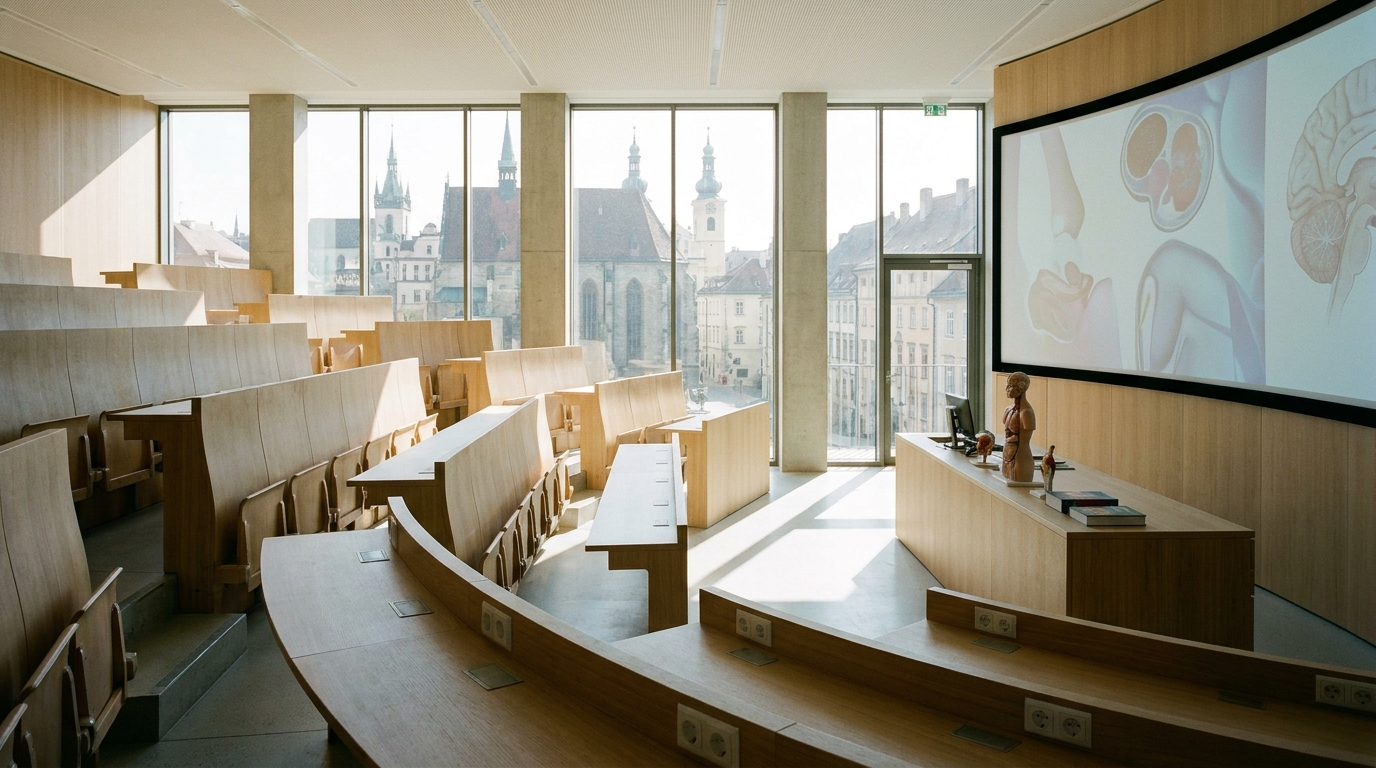
Tuition fees
A leading reason to study medicine in Latvia is affordability. Tuition for the English-taught MD runs at roughly €12,000–13,500 a year — far below comparable Western-European or private programmes. Here are the figures in all five currencies (per year; confirm the current figure with the university for your intake).
| Programme (per year) | EUR | INR | USD | GBP | AED |
|---|---|---|---|---|---|
| RSU — Medicine (MD, English) | €12,000–13,500 | ₹10.8L–12.15L | $12,960–14,580 | £10,200–11,475 | AED 48,000–54,000 |
| University of Latvia — Medicine (MD, English) | €12,000–13,000 | ₹10.8L–11.7L | $12,960–14,040 | £10,200–11,050 | AED 48,000–52,000 |
| RSU — Dentistry (reference) | €14,000–15,500 | ₹12.6L–13.95L | $15,120–16,740 | £11,900–13,175 | AED 56,000–62,000 |
These fees are fixed in euros, so the figures in rupees, dollars, pounds and dirhams move with the exchange rate — always confirm the live conversion. Even so, the price is consistently among the lowest for an EU medical degree, which is why so many international students choose to study medicine in Latvia. Our full cost guide breaks down every fee, including living expenses and hidden costs.
To put the value in perspective, a private medical programme in Western Europe or the USA can cost several times as much, and even UK medical school fees for international students run far higher per year. A Latvian MD delivers an EU-accredited, English-taught education for a fraction of that — without sacrificing recognition or quality. It is worth budgeting for the one-off and recurring extras too: an application fee, a deposit on acceptance, residence-permit and insurance costs, books and equipment, and travel home. None is large, but together they matter for accurate planning. When you tally everything, the total cost to study medicine in Latvia remains one of the most affordable routes to a globally recognised medical degree.
Total cost estimate
Beyond tuition, you should budget for living costs when you study medicine in Latvia. Riga is moderately priced by EU standards, with most students spending €500–800 a month. Here is an indicative annual all-in estimate (tuition plus living), in all five currencies.
The figures below give a realistic working budget, but your actual spend depends on lifestyle and accommodation choices. A student in a university dormitory who cooks at home and uses cheap public transport will sit near the lower end; one renting a private flat with a busier social life will be nearer the top. The key advantage is that, unlike in many Western capitals, even the higher end of living costs in Riga remains modest. Combined with tuition that is a fraction of UK or US fees, this keeps the all-in cost to study medicine in Latvia genuinely affordable, which is the single most cited reason students choose it.
| Annual all-in (indicative) | EUR | INR | USD | GBP | AED |
|---|---|---|---|---|---|
| Tuition (per year) | €12,000–13,500 | ₹10.8L–12.15L | $12,960–14,580 | £10,200–11,475 | AED 48,000–54,000 |
| Living (per year) | €6,000–9,600 | ₹5.4L–8.64L | $6,480–10,368 | £5,100–8,160 | AED 24,000–38,400 |
| Total per year | €18,000–23,100 | ₹16.2L–20.79L | $19,440–24,948 | £15,300–19,635 | AED 72,000–92,400 |
Over the full six years, the all-in cost typically lands around €108,000–140,000 — substantially less than Western-European, UK or US alternatives. This affordability, set against a globally recognised degree, is the core financial case to study medicine in Latvia. For the complete breakdown including scholarships, see the cost guide, and for day-to-day budgeting, the student life guide. To put that six-year total in perspective, it is often less than a single year's fees at a private US medical school, and comfortably below the international rate at most UK universities — which is why the value proposition is so compelling. For most families, that difference is genuinely life-changing, opening medicine as a realistic option.
Scholarships & funding
Funding options exist for those who study medicine in Latvia, though they are more modest than at some Western universities. Rīga Stradiņš University offers tuition discounts to high-performing students on its English-taught General Medicine and Dentistry programmes, awarded to reward academic excellence. State and EU scholarship schemes also support some students, particularly at PhD level, and the relatively low baseline tuition means many families fund the degree directly.
Beyond university discounts, students can explore education loans (Indian banks, for instance, lend against recognised foreign medical programmes), part-time work during studies, and the savings that come from Latvia's low living costs. Because scholarship rules and amounts change each cycle, confirm what is currently on offer with the university before you budget. While you should not rely on a full scholarship, the combination of low fees, possible discounts and cheap living keeps the total cost to study medicine in Latvia manageable for most international families. The cost guide covers funding and loans in detail.
A sensible funding strategy usually combines several sources rather than relying on one. Many families fund the bulk of the degree directly, helped by the low baseline fees, and top up with an education loan for tuition and a contribution from any university discount earned through strong grades. Latvia's cheap living costs then keep the ongoing burden light, and EU students may be eligible for portable home-country support. The key is to map your full six-year budget upfront — tuition, living, one-off costs and a contingency — so there are no surprises. Planned properly, the cost of choosing to study medicine in Latvia is well within reach for a wide range of international students.
Admission & entry requirements
Admission to study medicine in Latvia is straightforward and merit-based, resting mainly on your secondary-school performance. The universities look for strong grades in biology and chemistry plus a third science subject — at RSU this is typically mathematics, while the University of Latvia looks at physics. Many programmes admit on grades alone, without a separate entrance exam, though some assess applicants via interview or an online test.
This grades-led model is one of Latvia's quiet advantages. In countries with a single national exam, one bad day can end a medical ambition; in Latvia, your performance across the whole of secondary school carries the weight, which rewards consistent students and reduces the gamble. The specific subject requirements are clear and standard for medicine — biology and chemistry are non-negotiable, with maths or physics as the third pillar — so you know exactly what to focus on at school. Understanding these requirements early, ideally before your final school years, lets you line up the right subjects and grades to study medicine in Latvia without nasty surprises.
All non-native English speakers must evidence English proficiency (usually IELTS or equivalent), since the entire degree is taught in English. Indian students must also have qualified NEET — the National Eligibility cum Entrance Test — which India's National Medical Commission requires of everyone studying medicine abroad. The full requirements, document checklist and deadlines are covered in our admission guide. Meeting these criteria is the first concrete step to study medicine in Latvia.
Compared with many destinations, the bar is refreshingly clear. There is usually no high-stakes, country-specific entrance exam of the kind Italy (the IMAT) or some Central-European schools require — your school record does most of the work. That makes Latvia especially attractive to students who interview and document well but dread a single make-or-break test. That said, places on the English-taught programmes are competitive and the strongest applicants present excellent science grades, solid English scores and a well-prepared application. Getting these elements right early is the surest way to secure a place to study medicine in Latvia, and our admission guide walks through each requirement in depth.
How to apply
The application process to study medicine in Latvia follows a clear sequence. First, choose your university and intake — RSU offers both September and February starts, which helps students who miss the main autumn deadline. Second, prepare your documents: secondary-school transcripts, English-proficiency certificate, passport, and (for Indian students) your NEET result. Third, submit your application directly through the university portal or with guidance from a counsellor.
Each of these steps rewards care. Choosing the right university and intake means matching the entry subjects and start date to your situation. Preparing documents properly means getting transcripts translated and certified where required, and sitting your English test in good time. Submitting a complete, accurate application avoids the back-and-forth that delays offers. None of this is complicated, but attention to detail matters, because a missing certificate or a late form can cost you a place or push you to the next intake. Working methodically — or with a counsellor who knows the process — keeps your application to study medicine in Latvia on track.
After submission, universities review your academic record and may invite you to an interview or online assessment. On acceptance, you receive an offer and pay a deposit to secure your place, then begin the student visa / residence-permit process (non-EU students need a Latvian residence permit). Because deadlines and document rules shift each cycle, confirm the current timeline before you plan. EHEC supports applicants through every step, making it simple to study medicine in Latvia. The admission guide details the full timeline and visa requirements.
A realistic timeline helps. Most students begin preparing six to nine months ahead of their intended intake: sitting NEET or an English test, gathering and translating transcripts, and researching universities. Applications typically open several months before the start date, with the main rush around late spring for an autumn start. Once you have an offer, allow time for the visa or residence-permit process, which requires proof of funds, accommodation and insurance and can take several weeks. Starting early is the single best thing you can do, because it removes the time pressure that causes mistakes. With a clear plan, applying to study medicine in Latvia is a straightforward, well-trodden process, and EHEC keeps you on track at every milestone.
Intakes & academic calendar
A practical advantage when you study medicine in Latvia is the choice of intakes. Rīga Stradiņš University runs two intakes a year — September and February — which is genuinely useful: students who miss the main autumn deadline, or who need extra time to sit NEET or an English test, can begin in spring instead of waiting a full year. The University of Latvia typically runs a single autumn start.
The academic year follows the standard European calendar, divided into two semesters with winter and summer examination periods. Clinical rotations in the later years run year-round at affiliated teaching hospitals. Knowing the calendar helps you plan your application backwards from the intake you want: aim to have documents, NEET results and English certificates ready several months ahead. Planning around these intakes is part of a smooth start when you study medicine in Latvia, and the flexibility of two annual entry points is a real benefit over single-intake countries. Confirm exact dates with the university, as they can shift slightly each year.
The February intake deserves special mention because it is genuinely rare and useful. Most European medical schools admit only once a year, in autumn, so a student who misses that window — perhaps because of a delayed NEET result, a re-sit, or a late decision — usually loses a full year. RSU's spring start removes that penalty, letting you begin just a few months later instead. For students who need a little more time to prepare a strong application, this flexibility can be the deciding factor in choosing to study medicine in Latvia over a single-intake destination. It is one of several small but meaningful conveniences that make the country a practical choice.
Language & teaching
One of the biggest reassurances for those who study medicine in Latvia is that the entire degree is taught in English, by professors fluent in medical English. You do not need to speak Latvian to follow lectures, sit exams or complete coursework — the academic side is fully accessible to international students from day one.
This matters enormously for accessibility. A student from India, Nigeria, the UK or anywhere else can arrive with no knowledge of Latvian and immediately understand every lecture, textbook and exam. The teaching faculty are experienced in working with international cohorts and deliver the curriculum in clear, professional English, with course materials, assessments and clinical teaching all conducted in the language. This removes the single biggest barrier that would otherwise stand between an international student and a European medical education, and it is a core reason the country works so well for the diverse cohorts who study medicine in Latvia each year.
However, Latvian is compulsory in the first couple of years, taught specifically so you can communicate with patients during clinical rotations. This is a practical necessity rather than an academic hurdle: by the time you reach the wards, you can take a basic patient history in Latvian. The universities support this language learning throughout. This blend — English academics, functional clinical Latvian — is standard across Europe and works smoothly for the thousands who study medicine in Latvia each year.
It is worth seeing the Latvian requirement as a benefit rather than a burden. Learning the local language helps you integrate, make local friends and navigate daily life, and it makes your clinical years far more rewarding when you can speak directly with patients. Many graduates say the language skills they gained became a genuine asset, whether they stayed in Latvia or moved on. The teaching is pitched at the practical level you need, building gradually, and you are never expected to reach academic fluency. For most international students, the modest effort of picking up functional Latvian is one of the more enriching parts of the experience when they study medicine in Latvia.
Student life in Riga
Life is a genuine pleasure for those who study medicine in Latvia. The capital, Riga, is a vibrant, culturally rich city of over 600,000 people, famous for its UNESCO-listed Art Nouveau architecture, medieval old town, lively café and music scene, and green parks. It is safe, walkable and well-connected, with cheap public transport and easy travel across the Baltics and wider Europe.
Riga is the cultural and economic heart of the Baltics, yet it remains compact and affordable — a rare combination for a European capital. Students find everything they need within easy reach: the universities and teaching hospitals, dormitories and shared flats, supermarkets and markets, and a social scene built around cafés, music venues and student events. The city is genuinely international, so newcomers settle quickly, and the broader Latvian quality of life — clean air, green space, safety and a relaxed pace — supports the demanding work of a medical degree. For students weighing not just where to study but where to live for six years, Riga is a strong reason to study medicine in Latvia.
Living costs are moderate — roughly €500–800 a month — with student dormitories from around €130, shared-flat rooms from €300, and affordable food and transport. The large international student community (RSU alone hosts students from 65+ countries) means you quickly find your people, and English is widely understood. Combined with Latvia's safety and natural beauty, this makes the years you study medicine in Latvia genuinely enjoyable. Our student life guide covers costs, accommodation and culture in full.
Beyond the practicalities, Riga offers a rich cultural life. The city hosts festivals, concerts, theatres and markets year-round, and its café and food scene is varied and affordable. The surrounding country is beautiful — Baltic beaches at Jūrmala a short train ride away, forests and lakes for weekends, and easy, cheap travel to Estonia, Lithuania and the rest of Europe thanks to Schengen membership. Winters are cold and dark, which takes adjustment for students from warmer climates, but they bring their own charm and the summers are long and bright. This combination of affordable, safe, culturally rich living is a genuine quality-of-life reason to study medicine in Latvia, not just an academic one, and it helps explain the country's growing popularity.
Recognition & practising
A degree earned when you study medicine in Latvia is globally portable. Because it is EU-accredited and follows ECTS, it benefits from automatic recognition across the EU/EEA under Directive 2005/36/EC, and it is listed on the WHO World Directory of Medical Schools (WDOMS) — a prerequisite for the US licensing route.
This breadth of recognition is one of the strongest practical arguments for the country. Unlike degrees from some non-European destinations, which can face extra hurdles in certain markets, an EU-accredited Latvian MD is accepted wherever you are likely to want to work. The key thing to understand is that recognition of the degree is separate from the licence to practise: every country still requires you to pass its own licensing process (an exam and/or registration). Latvia's degree clears the first hurdle everywhere that matters; the second is down to your preparation. Knowing this distinction from the start lets you plan your pathway properly, and it is why the recognition that comes when you study medicine in Latvia is so valuable. It is also worth confirming, for your specific target country, that your chosen university appears on the relevant recognised lists before you enrol — a quick check that gives complete peace of mind.
Graduates go on to practise in many countries: across the EU (automatic recognition, local language permitting), the UK (GMC registration via the UKMLA — Latvian degrees are GMC-recognised), the USA (USMLE plus ECFMG certification and the residency Match), India (the FMGE/NExT screening exam plus internship), and the Gulf (DHA/DOH/MOH registration with DataFlow verification). Our dedicated guide on practising after a Latvia medical degree maps every pathway in detail. This worldwide recognition is the ultimate payoff of choosing to study medicine in Latvia.
Careers & salary outlook
The career you build after you study medicine in Latvia is genuinely global. Most graduates pursue specialisation (residency) after the MD — in fields such as surgery, internal medicine, paediatrics, cardiology or radiology — in Latvia, elsewhere in the EU, the UK, or further afield. The degree's EU recognition means you can compete for training posts internationally, shaping a career around your interests and chosen country.
The range of destinations open to you is unusually wide. Because the degree is recognised across the EU and listed on the WHO directory, you are eligible to pursue specialty training in any number of countries, not just one — a flexibility that students of some non-European programmes do not enjoy. Many graduates train in a different country from where they studied: a Latvia graduate might specialise in Germany, return to India, or match into a US residency. This mobility lets you follow the best opportunities and adapt as your plans evolve, which is a significant long-term advantage of the decision to study medicine in Latvia.
Earnings vary enormously by destination and seniority. A junior doctor in India earns modestly at first but far more as a specialist; a foundation doctor in the UK earns a structured NHS salary; doctors in Germany and the wider EU are well paid and in high demand; and the Gulf offers tax-free packages. Across every market, medicine offers strong, durable earnings and exceptional job security. Beyond clinical work, the degree also opens research, public-health, academic and healthcare-management careers. This breadth of opportunity is a powerful reason to study medicine in Latvia, and our practising guide covers licensing and earnings by country.
It also helps to think about the career as a long arc rather than a first salary. After six years of study come licensing, then specialty training over several more years, then independent practice as a specialist — a journey of roughly a decade or more, as it is anywhere. The early years are demanding and modestly paid in most countries, but earnings and security rise steeply with experience and specialisation. Set against the relatively low cost of the degree, the lifetime financial return on the decision to study medicine in Latvia is strong, and the non-financial rewards — meaningful work, respect, and a near-universal demand for doctors — are just as significant.
Notes by country
Because students from different countries search differently, here is what matters most to each when they study medicine in Latvia.
Each audience approaches the decision with its own priorities and vocabulary, and a good guide speaks to all of them. Indian and Gulf families tend to focus on recognition and the route home; British and Irish students compare it against the cost and competition of medical school at home; American students think in terms of getting back into a US residency; and EU students weigh it against their domestic options and the numerus clausus. The reassuring truth is that an EU-accredited Latvian MD serves all of these goals — the differences are in the specific licensing exam each group faces afterwards, not in the value of the degree itself. That universality is a big part of why the decision to study medicine in Latvia appeals across such a wide range of nationalities.
India & UAE (often searching "MBBS in Latvia"): the MD is the equivalent of an MBBS, NMC-recognised, and a recognised route home via the FMGE/NExT. NEET is mandatory before you start. UAE students can later pursue DHA/MOH/HAAD licensing. UK students: an affordable, GMC-recognised alternative to UK medical school, with no UCAT and lower fees; you return via the UKMLA and the Graduate Route may apply. USA students: a WDOMS-listed European route back to a US residency via the USMLE. EU students: a way to escape numerus clausus caps and high fees at home, with automatic EU recognition and the freedom to work continent-wide. For the cross-country picture, see our hubs on studying medicine in English in Europe and studying MBBS abroad, the European comparison, and our guide for US students.
How Latvia compares to other European destinations
Latvia is one of several strong European options, and it helps to see where it sits. On cost, it is competitive with the most affordable EU routes — broadly comparable to studying medicine in countries like Bulgaria or Poland, and cheaper than the West. On recognition, every EU degree — Latvia's included — carries the same automatic EU-wide recognition, so a Riga MD is on an equal footing with one from Romania or the Czech Republic.
On admission, Latvia is among the more accessible routes: most places are offered on school grades plus an interview, rather than a high-stakes national exam like Italy's IMAT. On climate and lifestyle, it offers a safe, green, Nordic-influenced setting with cold winters — different from the Mediterranean appeal of southern Europe but prized by many. And on language, the pattern is the European norm: English academics with the local language learned for clinical work. Across these dimensions, Latvia rarely tops every single category, but it scores consistently well on all of them, which is exactly why it makes such a balanced, sensible choice for students who decide to study medicine in Latvia.
Where Latvia stands out is the combination: a small, safe, English-friendly Baltic country with two reputable Riga universities, low living costs and two annual intakes. Countries like Hungary may have a longer international track record and a stronger USMLE reputation, while Slovakia uses a competitive entrance exam — so the right choice depends on your priorities. If you want a comprehensive head-to-head, our European comparison guide weighs the leading destinations side by side. For many students, the affordability, safety and straightforward admission make the case to study medicine in Latvia compelling.
It is also worth weighing the less tangible factors. Latvia's Nordic-influenced culture, safety and English proficiency make it an easy place to settle for international students, and its strong appeal among Nordic, German and Indian students has built sizeable, supportive communities. The Baltic location puts the rest of Europe within easy, cheap reach. Against this, students who want a Mediterranean climate, a larger expatriate scene or the specific pull of a famous brand-name university might look elsewhere. There is no single best country — only the best fit. For students who prize affordability, safety, a clear admission route and EU recognition, the decision to study medicine in Latvia stacks up extremely well against any European peer.
Honest pros & cons
To make a balanced decision to study medicine in Latvia, weigh both sides. The advantages are clear: an affordable, EU-recognised English-taught MD; two reputable Riga universities; modern facilities and strong pass rates; a safe, beautiful country; two annual intakes; and worldwide career portability.
These strengths are not just marketing points — they translate into real outcomes. Affordability means you graduate with far less debt than a UK or US route would leave you carrying. EU recognition means genuine freedom to build a career across the continent. The two intakes and accessible admission mean fewer students are forced to wait a year or abandon medicine altogether. And the quality of life in Riga means the six years are pleasant rather than merely endured. Taken together, these advantages explain why so many students who research their options end up deciding to study medicine in Latvia, and why the country's medical schools keep growing their international intake.
The honest cons: you must learn some Latvian for clinical work; the climate is cold in winter; the country is smaller and less internationally famous than some rivals; and, as with any foreign degree, you must pass your home country's licensing exam (FMGE/NExT, UKMLA, USMLE) to practise. None is a deal-breaker, but knowing them upfront helps you plan. On balance, for affordability, recognition and quality combined, the case to study medicine in Latvia is strong. EHEC gives every student a frank, personalised assessment.
Common mistakes to avoid
A few avoidable errors trip up students who set out to study medicine in Latvia. The most common is neglecting home-country licensing rules — Indian students who forget that NEET must be passed before starting, or who overlook the FMGE/NExT they will face on return. Always plan your destination's licensing pathway from the outset, not after graduation.
This single mistake — treating licensing as an afterthought — causes more heartache than any other. A student can complete six excellent years only to discover they overlooked a prerequisite for the country where they hoped to work. The fix is simple: decide early which country you intend to practise in, confirm that country's exact requirements, and keep them in view throughout your studies. Requirements do evolve (the UK's move to the UKMLA and India's shift toward the NExT are recent examples), so check the current rules rather than relying on old advice. Building your plan around the destination's licensing pathway from day one is the surest way to make the years you study medicine in Latvia pay off exactly as you intend.
Other pitfalls include leaving the application too late (missing document or visa deadlines and losing a year), under-budgeting by forgetting living costs, insurance and travel, and choosing a programme without verifying recognition for the country where you plan to practise. Some students also underestimate the importance of learning Latvian for clinical years. Each of these is easily avoided with early, informed planning — which is exactly what a good counsellor provides. Steering clear of these mistakes makes the journey to study medicine in Latvia far smoother, and EHEC helps you sidestep every one.
One more avoidable error is going it alone on the paperwork. Foreign medical admission involves transcripts, translations, apostilles, English certificates, NEET documentation, deposits, visa files and accommodation — and a single missed item can delay an offer or a residence permit. Students who treat the process casually often scramble at the last minute; those who use a checklist and, where helpful, professional guidance move through it calmly. Equally, do not rely on informal advice from forums for something as important as your medical career; verify every requirement with the university or a qualified counsellor. Approached carefully, none of this is difficult, and avoiding these traps is what turns the plan to study medicine in Latvia into a smooth reality.
How EHEC helps
EHEC guides you through every stage of the journey to study medicine in Latvia — choosing the right university and intake, preparing a strong application, meeting NEET/English requirements, securing accommodation and the residence permit, and planning your eventual licensing pathway home or abroad. We make the whole process clear and manageable, from first enquiry to graduation.
Our role is to give you honest, personalised guidance rather than a sales pitch. We assess your grades, budget and goals; recommend whether Latvia — and which university and intake — genuinely fits; flag the licensing exam you will face in your target country; and support you through documents, deposits, visas and arrival. Because we work across many European destinations, we can compare Latvia fairly against the alternatives and help you make the decision that is right for you. If you are considering whether to study medicine in Latvia, a short conversation is the best way to turn a broad idea into a concrete, confident plan.
Book a free 45-minute consult →
Related guides
- Study medicine in Italy
- Study medicine in Greece
- Study medicine in Cyprus
- Study medicine in Malta
- MBBS in Georgia: the complete guide
- Study medicine in Lithuania
- Cost of studying medicine in Latvia
- Medicine in Latvia admission: requirements & how to apply
- Student life in Latvia: living in Riga
- Practising after a Latvia medical degree
- Study medicine in English in Europe
- Study MBBS abroad: the complete guide
- Studying medicine abroad as a US student
- Comparison of leading European destinations
- Rīga Stradiņš University
- University of Latvia
- Explore Latvia
Frequently asked questions
Is medicine taught in English in Latvia?
Yes — both Rīga Stradiņš University and the University of Latvia teach the entire six-year MD in English. You don't need Latvian for academics, but you'll learn basic Latvian in the first years to communicate with patients during clinical rotations.
How much does it cost to study medicine in Latvia?
Tuition is around €12,000–13,500 a year for the English-taught MD, plus roughly €500–800 a month for living costs. The all-in six-year total is usually about €108,000–140,000 — far less than Western-European, UK or US options.
How long is the medical degree?
Six years, worth 360 ECTS. The first two to three years cover medical sciences; the final three are clinical rotations. A final-year State Examination confers the MD and the licence to practise.
Is a Latvian medical degree recognised internationally?
Yes — it's EU-accredited with automatic EU/EEA recognition, listed on the WHO WDOMS, GMC-recognised in the UK, and accepted by India's NMC. Graduates practise across the EU, UK, USA, India and the Gulf after the relevant licensing exam.
Do I need an entrance exam?
Often not — admission is usually based on your secondary-school grades in biology, chemistry and a third subject (maths at RSU, physics at UL), plus English proficiency. Some programmes use an interview or online assessment instead. Indian students must have qualified NEET.
Is NEET required for Indian students?
Yes — India's National Medical Commission requires every student going abroad for medicine to have qualified NEET before starting, and to later pass the FMGE/NExT screening exam to practise in India.
Which universities can I study at?
Two universities in Riga teach medicine in English: Rīga Stradiņš University (RSU), the larger and most international, and the University of Latvia (UL), the country's oldest. Both are EU-recognised and popular with international students.
Can I practise in the UK or USA afterwards?
Yes. For the UK, register with the GMC via the UKMLA (Latvian degrees are GMC-recognised). For the USA, take the USMLE, get ECFMG certification and enter the residency Match. See our practising guide for the full pathways.
When can I start?
RSU offers two intakes a year — September and February — which is helpful if you miss the main autumn deadline. The University of Latvia typically has an autumn start. Always confirm the current intake dates and deadlines before applying.
Is Latvia safe for international students?
Yes — Latvia is a safe EU and Schengen country with low crime, and Riga is a welcoming, walkable capital with a large international student community. Living costs are moderate and the quality of life is high.
Do I need to learn Latvian?
Not for your studies — the whole degree is in English. But Latvian is compulsory in the first couple of years so you can communicate with patients during clinical rotations. You'll only need functional, conversational Latvian for the wards, and the university teaches it.
Are there scholarships to study medicine in Latvia?
Some — Rīga Stradiņš University offers tuition discounts to high-performing students, and state/EU schemes support others (especially at PhD level). Education loans are also common. Don't rely on a full scholarship, but the low fees and cheap living keep costs manageable.
How does Latvia compare with other European countries?
It's competitively priced (similar to Bulgaria or Poland), with the same automatic EU recognition as Romania or the Czech Republic. Its edge is the mix of two reputable Riga universities, low living costs, safety and two annual intakes. The best fit depends on your priorities.
Can EU students work across Europe after graduating?
Yes — a Latvian MD is EU-accredited, so under Directive 2005/36/EC it's automatically recognised across the EU/EEA. With the local language, graduates can register and work in any member state, which is a major draw for European students.
Want this applied to your own profile? Book a free 45-minute consult and a senior counsellor will map exactly what it means for you, your timeline, and your budget.