If you want to study medicine in Bulgaria, here is the short version: Bulgaria is an EU member offering six-year, English-taught MD programmes at long-established medical universities, with tuition of roughly €8,000–10,000 a year, the lowest living costs in the EU, admission by a Biology and Chemistry entrance exam (no numerus clausus), and a degree recognised across the EU, the UK, the US, India and beyond. You enter directly from high school — no bachelor's, no MCAT — and graduate with an internationally recognised Master's-level medical degree. This 2026 guide covers everything: the universities, the costs in five currencies, admission and how to apply, recognition, and where the degree can take you afterwards.
Why study medicine in Bulgaria
Bulgaria has quietly become one of Europe's most popular destinations for international medical students, and the reasons are easy to see. It combines the credibility of an EU degree with some of the lowest tuition and living costs in the Union, English-taught programmes at universities with long histories, and a straightforward, exam-based admission route that sidesteps the brutal numerus clausus caps of Western Europe. For students priced out or squeezed out of medical places at home, it offers a genuine, affordable way in.
The appeal is broad. European students facing tight caps and high cut-offs at home study in English in Bulgaria and return to practise automatically under EU recognition. Indian students gain an NMC-compliant, globally recognised degree at a fraction of Indian private-college fees. UK and US students find a low-cost route into medicine with direct entry from high school. Across all of them, the formula is the same: a recognised European medical education, taught in English, at a cost that makes the alternative look expensive. The rest of this guide unpacks exactly how it works, starting with the question every family asks first — recognition.
It is worth naming the specific advantages that draw students here, because together they are unusual. Bulgaria offers the credibility of an EU degree; the lowest living costs in the Union, which keeps the all-in price down; direct entry from high school with no MCAT; a fair, exam-based admission rather than a numerus clausus lottery; English-medium teaching throughout; and a multicultural environment with large international communities. Few destinations combine all of these. For a family weighing where a son or daughter can train as a doctor affordably, safely and with a degree that travels, Bulgaria's blend of recognition, low cost and accessibility is precisely what makes it so compelling — and increasingly popular year on year.
Is a Bulgaria medical degree recognised?
Yes — and broadly. Because Bulgaria has been an EU member since 2007, its medical degrees carry automatic recognition across the EU and EEA under Directive 2005/36/EC: a graduate can register to practise or specialise in any member state, usually after a local-language assessment, without re-qualifying. Beyond Europe, Bulgarian medical universities are listed in the World Directory of Medical Schools (WDOMS) and recognised by the WHO, which underpins eligibility for the major international licensing exams.
In practice, that means a Bulgarian degree is accepted for the UK's GMC (via the UKMLA route), the US USMLE and ECFMG certification, Canada, Australia, and India's NMC (subject to the FMGE/NExT). MU-Sofia, for instance, explicitly notes recognition by the GMC, WHO, and the medical authorities of the US, Canada and Australia. The graduate receives an internationally recognised Master's-level degree in Medicine. As always, recognition comes with each destination's own registration and licensing steps — which our Bulgaria practising guide covers in full — but the foundation is strong and global.
It is worth understanding the two pillars holding this up, because they explain the breadth. The first is EU membership, which delivers automatic recognition across the Union — a privilege non-EU degrees simply do not have, and the reason European students can return home to practise without re-qualifying. The second is WDOMS listing and WHO recognition, the global baseline that licensing bodies worldwide check before letting a graduate sit their exam; it is what makes a Bulgarian graduate eligible for the USMLE, the UKMLA, the FMGE/NExT and the rest. Together, EU membership and international listing give the degree unusual reach: seamless within Europe, and eligible everywhere else through each country's exam. This combination is the bedrock of the degree's value, and it is why recognition, the first question every family asks, has such a reassuring answer for Bulgaria.
The degree & course structure
The Bulgarian medical degree is a six-year Master's-level MD in Medicine, taught entirely in English and structured to European (ECTS) standards — students earn around 430 ECTS credits across the course. The structure follows the classic European model: roughly two years of pre-clinical study (anatomy, physiology, biochemistry and the other foundational sciences), followed by three years of clinical study across the major specialties, and a final sixth year of supervised clinical practice (a pre-graduation internship or clerkship year).
You enter directly from secondary school — there is no requirement for a prior bachelor's degree, and no MCAT — so the six years take you from school-leaver to qualified doctor. Dental Medicine (typically 5.5–6 years) and Pharmacy (5 years) are also offered in English at several universities. On graduation you hold a recognised Master's in Medicine, ready to pursue licensing in your chosen country. This direct-entry, English-taught structure is one of the central attractions of choosing to study medicine in Bulgaria, particularly for students coming straight from school who want to start medicine without years of preliminary study.
What you'll study year by year
It helps to picture how the six years unfold. The first two (pre-clinical) years build the scientific foundation — anatomy, histology, physiology, biochemistry, and later microbiology and pathology — taught through lectures, seminars and laboratory practicals, alongside early Bulgarian-language classes. These years are intensive and theory-heavy; mastering the fundamentals here is what makes the clinical years, and later licensing exams, manageable.
From the third year, teaching shifts toward the clinical disciplines — internal medicine, surgery, paediatrics, obstetrics and gynaecology, and the specialties — with growing time on hospital wards observing and learning from practising doctors. This is where your developing Bulgarian comes into play with patients. The sixth and final year is a pre-graduation clinical year (a clerkship or internship), spent rotating through the major departments and consolidating hands-on skills before you graduate. Across all six years, the curriculum follows European ECTS standards, ensuring the degree aligns with EU norms — part of why it travels so well internationally. Understanding this arc helps you see that to study medicine in Bulgaria is a structured, progressive journey from science to bedside.
This progression also shapes how you should approach the degree strategically. The pre-clinical years are where you build the knowledge base that the FMGE, USMLE or UKMLA will later test, so treating them seriously from day one pays off at licensing time. The clinical years are where you develop the practical skills and patient communication — including your Bulgarian — that make you a capable doctor. And the final clerkship year is a bridge into professional practice. Students who understand this structure tend to plan well: keeping fundamentals sharp early, engaging fully with clinical rotations, and weaving licensing-exam preparation into the later years rather than leaving it all until after graduation. Seen this way, the six years are not just a course to complete but a deliberate build toward both graduation and the licensing route beyond it.
Accreditation & quality
Quality and accreditation are the foundation of a degree that will let you practise, so they deserve attention. Bulgarian medical universities are accredited nationally and listed in the World Directory of Medical Schools (WDOMS), the global register that licensing authorities consult, and they follow the EU's standards for medical education. The oldest institutions, like MU-Sofia, have over a century of history and tens of thousands of graduates now practising worldwide, which speaks to a long, proven track record.
For students, the practical message is to choose a properly accredited, WDOMS-listed university — which the established Bulgarian medical universities are — and to verify the specific recognition you need for your destination (for example, NMC compliance for India, or ECFMG eligibility for the US). Doing this due diligence before enrolling is essential anywhere you study medicine abroad, and it is exactly where good counselling earns its keep. The reassuring news for Bulgaria is that its leading universities are well-established, internationally recognised institutions, so the accreditation foundation for those who choose carefully is solid. EHEC verifies current recognition for each student's target country as part of the selection process.
Top medical universities
Bulgaria has six well-regarded universities offering English-taught medicine, each with its own character:
- Medical University of Sofia (MU-Sofia) — the oldest (founded 1917) and largest, with over 60,000 graduates and the strongest global recognition (GMC, WHO, US, Canada, Australia); a prestigious, exam-focused intake in the capital.
- Medical University of Plovdiv (MU-Plovdiv) — a modern campus in Bulgaria's second city, popular with international students.
- Medical University of Varna (MU-Varna) — on the Black Sea coast, with a tuition "ladder" that reduces fees in later years.
- Medical University of Pleven (MU-Pleven) — known for smaller class sizes and a February intake option alongside the autumn one.
- Sofia University "St. Kliment Ohridski" — the medicine faculty of Bulgaria's oldest university overall (1888); distinct from MU-Sofia, with broad academic resources.
- Trakia University (Stara Zagora) — among the most affordable, in a mid-sized central city, with a tight-knit community.
Each suits a different priority — prestige and recognition (MU-Sofia), coastal life (Varna), affordability (Trakia, Pleven), or city size and campus feel. The right choice depends on your budget, your target exam date, the city that fits you, and where you ultimately want to practise. EHEC helps match students to the university that fits their goals, and our Bulgaria admission guide covers each in more detail.
A few practical pointers help when choosing between them. Tuition varies meaningfully — Trakia and Pleven sit at the affordable end, while Plovdiv, Varna and MU-Sofia's medicine programme are pricier — so fees can be a deciding factor over six years. City matters too: Sofia is the big, well-connected capital; Varna offers Black Sea coastal life; Plovdiv is a historic second city; Stara Zagora and Pleven are smaller and quieter. Exam dates and formats differ, and some universities (like Pleven) offer a February intake that suits students who miss the autumn round. And recognition specifics can vary slightly, so if you have a firm destination in mind — India, the US, the UK — it is worth confirming the particular university supports it. Weighing these together, rather than chasing rankings alone, is how students land the offer that genuinely fits.
Tuition fees
Tuition for English-taught medicine in Bulgaria runs roughly €8,000–10,000 a year, among the most affordable in the EU, usually paid in two installments per year. The cheaper end (Trakia, Pleven, Sofia University) starts around €7,500–9,000; the pricier end (Plovdiv, Varna, MU-Sofia's medicine programme) reaches about €10,000. Here is the annual range in all five currencies (approximate).
| Tuition | EUR | INR | USD | GBP | AED |
|---|---|---|---|---|---|
| Per year (typical) | €8,000–10,000 | ₹7.2L–9L | $8,640–10,800 | £6,800–8,500 | AED 32,000–40,000 |
| Six-year tuition | €48,000–60,000 | ₹43.2L–54L | $51,840–64,800 | £40,800–51,000 | AED 192,000–240,000 |
Fees are set per university and intake, and a few (such as Varna) reduce in the later years, so always confirm the exact figure for your course and year. Some universities also run an optional preparatory year (around €4,000–5,000) for students who need to strengthen their science or English before the main programme. For the full per-university breakdown with all five currencies, see our dedicated cost of studying medicine in Bulgaria guide.
To give a sense of the spread: at the more affordable end, Trakia University in Stara Zagora and the medicine programme at Sofia University sit around €7,700–9,000, and Pleven around €9,000; at the higher end, the dedicated medicine programmes at Plovdiv and Varna, and MU-Sofia's medicine course, reach about €10,000. Varna's tuition "ladder" is worth noting — it charges more in the first year and less in the later years, so the six-year total can be lower than the headline first-year figure suggests. These are all manageable differences, but over six years they add up, so it is worth comparing the full six-year tuition rather than just the first-year price when choosing. Even at the top of the range, Bulgarian tuition remains far below US or UK medical-school costs, which is a large part of the country's appeal.
Total cost of studying
Tuition is only part of the picture; living costs complete it — and here Bulgaria shines, with the lowest living costs in the EU. A student spends around €400–600 a month in Sofia, and less in smaller cities like Plovdiv, Varna, Pleven or Stara Zagora. Combined with tuition, a realistic all-in budget for the whole six years lands at roughly €75,000–105,000. Here are the living and all-in figures in all five currencies (approximate).
| Living & all-in | EUR | INR | USD | GBP | AED |
|---|---|---|---|---|---|
| Living per month (Sofia) | €400–600 | ₹36,000–54,000 | $432–648 | £340–510 | AED 1,600–2,400 |
| Living per year | €4,800–7,200 | ₹4.3L–6.5L | $5,180–7,780 | £4,080–6,120 | AED 19,200–28,800 |
| All-in, six years | €75,000–105,000 | ₹67.5L–94.5L | $81,000–113,400 | £63,750–89,250 | AED 300,000–420,000 |
That all-in total compares very favourably with an Indian private medical college (often ₹60 lakh to ₹1.5 crore) and is a fraction of the cost of studying medicine in the US or UK. Choosing a more affordable university and a smaller city keeps you near the bottom of the range. The Bulgaria cost guide breaks every line down — tuition, accommodation, food, insurance and the rest — in all five currencies.
The reason Bulgaria's all-in cost is so competitive is the living-cost side of the equation. Tuition is similar to several other EU destinations, but because Bulgaria has the lowest cost of living in the Union, the money you spend outside tuition — rent, food, transport, day-to-day life — goes much further than it would in Western Europe or even in some Central European countries. Over six years, that difference adds up to a meaningful saving. For families budgeting the full cost of a medical education, this is the crucial point: the headline tuition tells only part of the story, and Bulgaria's low living costs are what make the complete six-year investment one of the most affordable routes to an EU medical degree anywhere. Planning the whole budget — not just the tuition — is how you see that advantage clearly, and it is central to deciding to study medicine in Bulgaria.
Admission & the entrance exam
Bulgaria admits medical students through a Biology and Chemistry entrance exam rather than the numerus clausus lottery used in much of Western Europe — a fairer, more transparent route for international applicants. Every Bulgarian medical university sets an entrance exam testing Biology and Chemistry (some combine them into one test, some run separate papers), and several, including MU-Sofia, also test English as part of the exam. Because English is assessed this way, many universities do not require a separate IELTS or TOEFL certificate.
The core requirements are a secondary-school leaving certificate with grades in Biology and Chemistry, a passport, and the application form, plus an eligibility letter. Non-EU applicants typically need a minimum of around 62% in Biology and Chemistry to qualify. Exams are held on-site or, at some universities, online, usually in late summer (early September) for the autumn intake. The exam is very passable with focused preparation, and the absence of an MCAT or aptitude test makes the route accessible. Our Bulgaria admission guide details each university's exam format, dates and requirements.
What makes this route attractive is its fairness and predictability. Unlike a numerus clausus system, where places are rationed and even excellent students are turned away, the Bulgarian entrance exam rewards preparation: if you study the Biology and Chemistry syllabus and perform on the day, you earn your place. The content is school-level science rather than the abstract aptitude testing of an MCAT or UCAT, so a motivated student with a solid grasp of the fundamentals can prepare effectively in a matter of months. Many universities provide past papers or guidance on the syllabus, and preparation courses are available for those who want extra support. This transparency — clear requirements, a known exam, and selection on merit — is a major reason international students favour Bulgaria over the lottery-style admissions common elsewhere in Europe.
How to apply
The application process is straightforward but time-sensitive. Broadly, you choose your university and confirm its exam date and format, prepare your documents (school leaving certificate with Biology and Chemistry grades, passport, application form, and — for non-EU students — a NEET certificate where relevant, plus apostille and certified translations), submit your application within the window, sit the entrance exam, and on success receive your admission letter and arrange your visa and enrolment.
Timelines vary by university, but as a guide MU-Sofia's 2026 window runs to 31 August 2026, with the entrance exam on 3 September (EU/EEA) and 9 September (non-EU) and an autumn start. Some universities, such as Pleven, also offer a February intake. Because places and exam slots are limited and document legalisation takes time, it is wise to begin six to nine months ahead. Non-EU students will need a Type-D student visa and, after arrival, a residence permit. EHEC manages the whole process end to end — university selection, exam preparation, documents, visa and pre-departure — so nothing is missed.
Visa & arrival for non-EU students
For non-EU students — including those from India and many other countries — there is a visa process to plan for, though it is well-trodden. Once you have your admission letter, you apply for a Type-D long-stay student visa at the Bulgarian embassy or consulate in your country, supported by documents such as your admission confirmation, proof of funds, accommodation and health insurance. After arriving in Bulgaria, you convert this into a residence permit for the duration of your studies, renewed periodically.
The key is to start early: the visa requires your admission letter first, and document legalisation (apostille and certified translations) takes time, so the whole sequence — application, exam, admission, visa, arrival — needs to be sequenced carefully to make the autumn start. EU/EEA students have it simpler, needing only to register with the local authorities after arriving. None of this is unusually difficult, but it rewards organisation and good guidance, which is why EHEC handles the visa and documentation process alongside admission, so students arrive on time and correctly registered. It is one more area where planning ahead turns a potentially stressful process into a series of manageable steps.
Studying in English
The entire medical degree is taught in English, from the first pre-clinical lecture to the final clinical year, so you do not need any Bulgarian to begin or to complete your studies. The programmes are designed for international students, the faculty teach in English, and the international cohorts operate in English day to day. For the large numbers of students from India, the UK, Greece, Germany and beyond, this removes the language barrier entirely on the academic side.
There is one important nuance, common to every European country: during the clinical years, you will need a working knowledge of Bulgarian to communicate with patients on hospital rotations. Universities build Bulgarian-language courses into the curriculum for exactly this reason, and students pick up the conversational and medical basics over the early years. You learn the science in English and the patient language alongside it — a manageable, structured process. So while no Bulgarian is needed to enrol or to study, acquiring it over time is part of becoming a clinically capable doctor, and is especially relevant if you plan to practise in Bulgaria itself.
For Indian students
For Indian students, Bulgaria is an attractive, NMC-compliant route into medicine. The essentials follow the standard foreign-medical-graduate path: you must have qualified NEET before enrolling, and your university must meet the NMC's requirements (English-medium, the required course length, and a 12-month internship). A six-year EU degree from Bulgaria, taught in English at well under Indian private-college fees, ticks these boxes at universities chosen with the rules in mind.
To practise in India after graduating, you return and clear the FMGE (Foreign Medical Graduate Examination, transitioning to the NExT), complete the required internship, and register with a State Medical Council and the NMC. As with any destination, the keys to a smooth path are choosing a clearly compliant university, keeping your fundamentals strong across all six years, and preparing deliberately for the FMGE/NExT. Our study MBBS abroad hub covers NEET, the NMC checklist and FMGE/NExT preparation in depth, all of which apply directly to Bulgaria.
Why do so many Indian students choose Bulgaria specifically? The economics are compelling: a six-year EU medical degree for an all-in cost well below what India's private colleges charge, with no capitation or donation, plus the prestige and global mobility of a European qualification. The EU recognition also keeps options beyond India open — many Indian graduates use Bulgaria as a base from which to consider the UK, the US or the Gulf as well as home. The honest counterpoint is the FMGE/NExT, which has historically had modest pass rates across all foreign destinations — but that reflects preparation and university choice more than any flaw in Bulgaria itself. Indian students who pick a strong NMC-compliant university, stay rigorous throughout, and prepare seriously for the screening exam return and register successfully. With the right planning, Bulgaria is a sound, affordable route home for Indian students.
For European students
For students from across Europe, Bulgaria's biggest draw is escaping the numerus clausus — the severe caps and high cut-offs that block so many qualified applicants from medical places at home. In Germany, Greece, the UK, Ireland and elsewhere, thousands of capable students are turned away each year not on ability but on sheer numbers. Bulgaria offers an English-taught way in, decided by a fair Biology and Chemistry exam rather than a lottery or an impossibly high grade threshold.
Crucially, because Bulgaria is in the EU, the degree carries automatic EU-wide recognition, so European students can train in English in Bulgaria and return home — or move elsewhere in the Union — to practise without re-qualifying, after the usual local-language assessment. Combined with the low cost, that makes Bulgaria one of the most sensible options for any European student blocked at home. Our study medicine in English in Europe hub sets Bulgaria alongside the other European routes for comparison.
The scale of the numerus clausus problem is easy to underestimate. In Germany, the grade cut-off for a home medical place is famously near-perfect, leaving many capable students waiting years or shut out entirely. Greece, France, Ireland and others ration places tightly too. For these students, Bulgaria is not a second-best fallback but a smart, legitimate route to the same goal — a medical degree that, thanks to EU recognition, lets them practise back home exactly as a domestic graduate would. The English-taught teaching removes the language barrier, the entrance exam rewards preparation over lottery luck, and the low cost eases the financial strain. Each year, growing numbers of German, Greek, British and other European students make precisely this choice, and return home as qualified doctors. For anyone facing a cap or cut-off at home, Bulgaria deserves serious consideration.
For UK & US students
UK and US students increasingly look abroad to avoid the cost and competition at home, and Bulgaria fits well. For UK students, it offers an affordable, English-taught medical degree with a clear route back via the GMC and the UKMLA — a credible alternative to the fierce competition and expense of UK medical schools. For US students, Bulgaria provides direct entry from high school (no bachelor's, no MCAT) and a degree that supports the USMLE/ECFMG route into the US residency Match, at tuition far below American levels.
In both cases, the degree is the entry ticket and the destination's own licensing exam — the UKMLA or the USMLE — completes the route home. The savings are substantial: a recognised European MD for a fraction of US prices, or without the brutal odds of UK admission. Students aiming at the US should read our guide for US students studying medicine abroad, which explains the ECFMG/USMLE pathway that applies to Bulgarian graduates just as it does elsewhere in Europe.
For UK students in particular, the contrast with home is stark: UK medical schools are extraordinarily competitive, with far more qualified applicants than places, and domestic and international fees that run very high. An English-taught Bulgarian degree offers a way into medicine for capable students who miss out at home, at a fraction of the cost, with a clear GMC/UKMLA route back. For US students, the direct-entry structure saves the four years and cost of a US bachelor's degree, and the MCAT is not required to enrol — though taking it can strengthen a later residency application. The honest trade-offs, as with any European route, are that clinical rotations happen in Bulgaria rather than at home, US federal loans generally do not apply, and you navigate the licensing return yourself. For many UK and US students, those trade-offs are well worth the savings and the opportunity, making Bulgaria a serious option worth weighing carefully.
Student life in Bulgaria
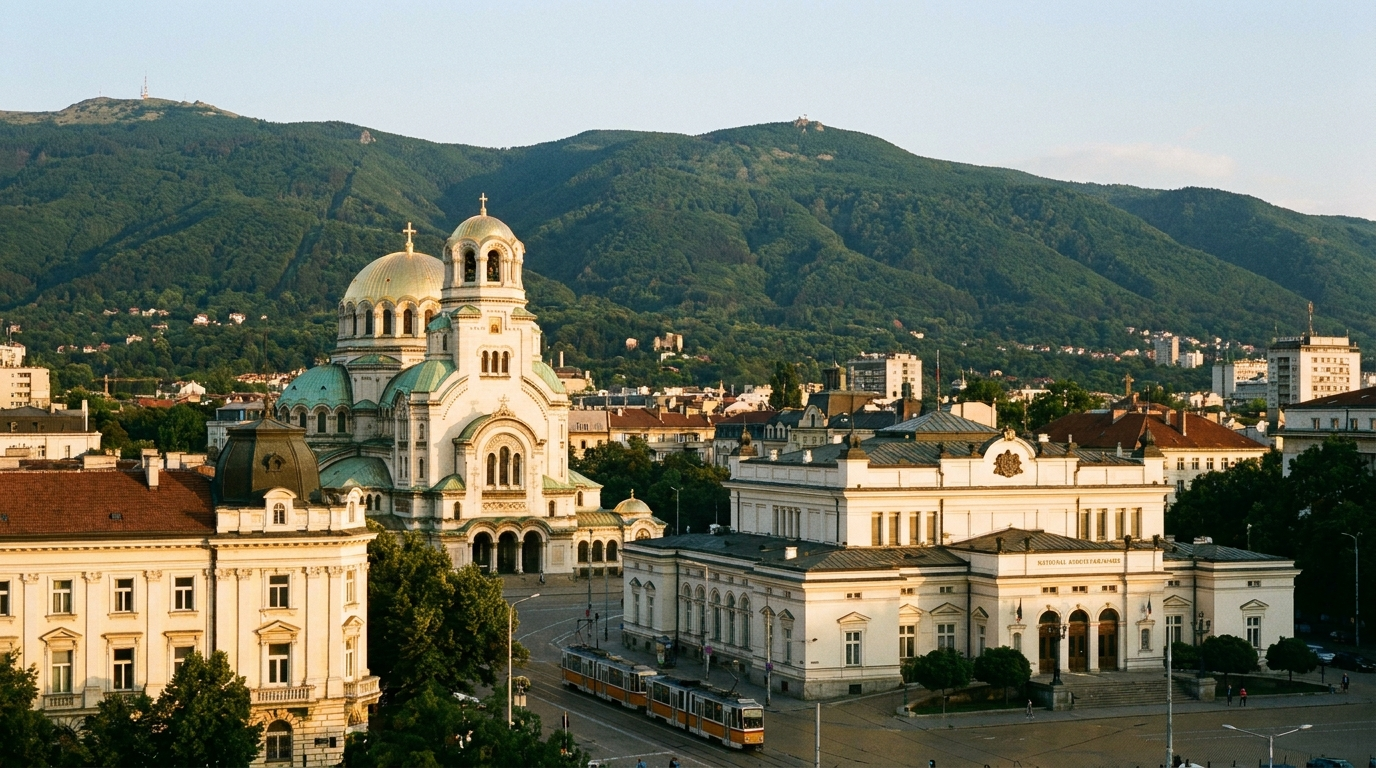
Life as a student in Bulgaria is comfortable and remarkably affordable. The country has the lowest living costs in the EU, so a modest budget stretches a long way — accommodation, food and transport all cost far less than in Western Europe. Sofia, the capital, is a lively city with historic architecture, mountain backdrops (Vitosha is on the doorstep) and a growing international scene, while coastal Varna and historic Plovdiv each offer their own appeal. The university cities are safe, welcoming and used to international students.
There are large, established communities of international students — from India, the UK, Greece, Germany and across the world — which means ready-made support networks and a multicultural campus life. As an EU and Schengen country, Bulgaria also makes travel across Europe easy during your studies. From food and accommodation to safety and the social scene, daily life is one of Bulgaria's quiet advantages. Our dedicated student life in Bulgaria guide covers living in Sofia in full — costs, accommodation, food and community.
For families, the reassurance is that Bulgaria is a safe, comfortable place to spend six years. The university cities are calm and welcoming, the established Indian and international communities provide a familiar support network and help with everything from accommodation to food, and the low cost of living means students can enjoy a genuine social and cultural life without financial strain. Sofia in particular offers museums, cafés, parks and easy access to the Vitosha mountain for hiking and skiing, while the country's Black Sea coast and historic towns are within easy reach for weekends. The blend of affordability, safety and a rich environment makes the years spent studying here genuinely enjoyable rather than merely endurable — an important consideration over a long medical degree, and one more reason students rate their time in Bulgaria highly.
Practising after your degree
A Bulgarian medical degree opens routes to practise almost anywhere, with each destination following its own licensing path. Within the EU/EEA, recognition is automatic — register and work after the local-language assessment. For the UK, you register with the GMC, in most cases via the UKMLA plus an English test. For the US, you take the USMLE, obtain ECFMG certification and enter the Match. For India, you clear the FMGE/NExT and complete an internship to register with the NMC. For the Gulf, you sit the relevant authority's exam (DHA, MOH, and others).
To practise in Bulgaria itself, you complete the graduation requirements, reach a working level of Bulgarian, and register with the national medical authority. The principle everywhere is the same: the degree establishes your eligibility, and the destination's exam and registration complete the route. The breadth of these options — Europe automatically, and the rest of the world through well-defined exams — is one of the strongest reasons to study medicine in Bulgaria. Our Bulgaria practising guide details every route, exam and timeline.
A practical word on planning: wherever you intend to practise, the smartest approach is to begin preparing for that destination's licensing route during your degree, not after graduating. US-bound students can sit USMLE steps while still studying; India-bound students keep the FMGE/NExT syllabus in view across the six years; UK-bound students plan early for the UKMLA and English test. Treating licensing as part of the journey from the start, rather than an afterthought, is what makes the transition from graduate to practising doctor smooth. Because a Bulgarian degree opens so many doors, deciding your likely destination early lets you prepare deliberately and avoid wasted time — guidance EHEC builds into each student's plan from the outset.
Scholarships & funding
Medical studies in Bulgaria are largely self-funded, but the low overall cost keeps them within reach for many families, and some support exists. Opportunities include Erasmus+ mobility grants for periods of study elsewhere in Europe, occasional merit-based reductions or awards from individual universities, and education loans from banks and specialist lenders in students' home countries (popular among Indian students in particular). EU students may also access mobility and support schemes available across the Union.
Because Bulgaria's tuition and living costs are already among the lowest in the EU, the funding challenge is smaller than for most study-abroad destinations — the headline cost is modest to begin with. Sensible financial planning, rather than reliance on large scholarships, is usually the realistic approach: budget for the full six years, factor in the (low) living costs, and explore education-loan options where needed. EHEC helps families plan a realistic budget and points to the funding routes relevant to their situation, so the cost is clear and manageable from the outset.
For Indian families especially, education loans are a well-established route, with many banks and specialist lenders offering financing for medical study abroad; the relatively low total cost of a Bulgarian degree often makes the loan more manageable to service than the much larger sums required for an Indian private college. It is worth comparing loan options early, understanding the repayment terms, and factoring the (low) living costs into the total borrowed. EU students may be able to access home-country support or Erasmus+ mobility funding for parts of their study. Whatever the route, the guiding principle is the same: plan the full six-year budget up front so there are no surprises, and treat funding as a solvable logistical question rather than a barrier — which, given Bulgaria's low costs, it usually is.
How Bulgaria compares
Bulgaria sits in the affordable, EU-recognised tier of European medical destinations, and it helps to see where it fits. Against non-EU options like Georgia, Bulgaria costs a little more but adds the automatic EU passport that Georgia cannot. Against other EU options such as Romania, Poland or Slovakia, Bulgaria is broadly comparable on recognition, with a particular edge on living costs (the lowest in the EU) and a transparent, exam-based admission route. Tuition is in a similar band to Poland and above Romania, but the low cost of living narrows the all-in gap.
The right choice depends on your priorities — cost, admission style, location and where you want to practise. Bulgaria is a particularly strong pick for students who want an EU degree, the lowest possible living costs, and a fair entrance exam rather than a lottery. To weigh the European routes side by side, see our comparison of leading European destinations and the broader study medicine in English in Europe hub, both of which set Bulgaria in its wider context.
A simple way to frame the decision: if your top priority is the absolute lowest cost and you are comfortable outside the EU, Georgia is worth a look; if you want EU recognition with the simplest, most flexible admission, Romania stands out; if you are happy to sit a science entrance exam for an EU degree, Slovakia and Bulgaria both fit, with Bulgaria adding the lowest living costs in the Union; and if the US is your goal, Poland's strong USMLE orientation is notable. Bulgaria's particular sweet spot is the combination of EU recognition, very low all-in cost, and a transparent exam — a balance that suits a large share of students. None of these is universally "best"; the right answer depends on your circumstances, which is exactly what a good counselling conversation is for. The comparison guide is designed to help you weigh these trade-offs against your own goals.
Common myths about studying in Bulgaria
- "A Bulgarian degree isn't really recognised." False — it carries automatic EU recognition and is WDOMS-listed, supporting the GMC, USMLE, NMC and more.
- "I'll need to speak Bulgarian to study." No — the whole degree is in English; you learn Bulgarian only for patient contact in the clinical years.
- "It must be low quality because it's cheap." Low cost reflects Bulgaria's low cost of living, not low standards — its universities are long-established and EU-accredited.
- "Admission is automatic if I can pay." No — you must pass a Biology and Chemistry entrance exam; payment alone does not secure a place.
- "I can't return to India with a Bulgarian degree." You can, provided you qualified NEET, chose an NMC-compliant university, and clear the FMGE/NExT.
- "The degree only works in Bulgaria." The opposite — it opens routes across the EU, UK, US, India and the Gulf via each destination's licensing exam.
Most hesitation about Bulgaria comes from these misunderstandings rather than real drawbacks. Seen clearly, the country offers a recognised, affordable, English-taught medical education with a fair admission route — a strong, legitimate option, not a compromise. Separating fact from myth is the first step to deciding well.
Is Bulgaria right for you?
Bulgaria is an excellent choice if you want an EU-recognised, English-taught medical degree at low cost, prefer a fair Biology-and-Chemistry entrance exam to a numerus clausus lottery, and value the lowest living costs in the EU. It suits European students blocked at home, Indian students seeking an affordable NMC-compliant route, and UK or US students wanting direct entry from high school. The trade-offs are honest ones: you will need to learn Bulgarian for clinical patient contact, sit (and prepare for) an entrance exam, and navigate your destination's licensing route afterwards.
It may be less ideal if you want the very cheapest option regardless of EU status (Georgia is cheaper but non-EU) or if you are unwilling to sit any entrance exam. For most students, though, the balance Bulgaria strikes — recognition, low cost, fair admission and a welcoming environment — is highly attractive. The best way to decide is to weigh it against your specific goals, budget and academic profile with someone who knows the landscape, which is exactly what EHEC offers.
Ultimately, the decision comes down to fit. Ask yourself where you want to end up practising, what budget your family can sustain across six years, whether you are ready to prepare for a Biology and Chemistry exam, and how you feel about living in Bulgaria for the duration. For a great many students — European school-leavers blocked by caps at home, Indian students seeking an affordable recognised route, and UK or US students priced or competed out of domestic places — the honest answer is that Bulgaria fits very well. It delivers a legitimate, EU-recognised medical education at one of the lowest all-in costs in Europe, through a fair and transparent admission process, in a safe and welcoming setting. That is a strong combination, and for the right student it makes the choice to study medicine in Bulgaria a genuinely smart one rather than a compromise.
How EHEC helps
EHEC guides you through the entire journey to study medicine in Bulgaria — choosing the right university for your goals and budget, preparing for the Biology and Chemistry entrance exam, handling documents, NEET and legalisation, securing your visa, and settling you in before your course begins. We map the whole path from application to graduation and beyond, so you can decide with clarity and apply with confidence.
Book a free 45-minute consult →
Related guides
- Cost of studying medicine in Bulgaria
- Medicine in Bulgaria admission: requirements & how to apply
- Student life in Bulgaria: living in Sofia
- Practising after a Bulgaria medical degree
- Study medicine in English in Europe
- Study MBBS abroad: the complete guide
- Studying medicine abroad as a US student
- Comparison of leading European destinations
- Explore Bulgaria
- MBBS in Georgia: the complete guide
- Study medicine in Latvia
- Study medicine in Lithuania
- Study medicine in Malta
- Study medicine in Poland
- Study medicine in Romania
Frequently asked questions
Is a Bulgaria medical degree recognised internationally?
Yes. Bulgaria is an EU member, so the degree is automatically recognised across the EU/EEA, and Bulgarian universities are WDOMS-listed and WHO-recognised, supporting the UK's GMC/UKMLA, the US USMLE/ECFMG, Canada, Australia and India's NMC routes.
How much does it cost to study medicine in Bulgaria?
Tuition is roughly €8,000–10,000 a year (≈ ₹7.2L–9L; $8,640–10,800; £6,800–8,500; AED 32,000–40,000). With the EU's lowest living costs (€400–600/month), an all-in six-year budget is about €75,000–105,000.
Is the medical degree taught in English?
Yes — the full six-year MD is taught entirely in English, so no Bulgarian is needed to enrol or study. You do learn Bulgarian alongside, as it's needed to communicate with patients during the clinical years.
How do I get admitted to study medicine in Bulgaria?
Through a Biology and Chemistry entrance exam (English is tested too at some universities). There is no numerus clausus, and many universities don't require a separate IELTS. You need a school leaving certificate with Biology and Chemistry grades.
Do I need the MCAT or a bachelor's degree?
No. Bulgarian medicine admits directly from high school — no prior bachelor's degree and no MCAT — so the six-year course takes you from school-leaver to qualified doctor.
What are the best medical universities in Bulgaria?
MU-Sofia (the oldest and most recognised), MU-Plovdiv, MU-Varna (on the coast), MU-Pleven (smaller classes, February intake), Sofia University and Trakia University (among the most affordable).
Can Indian students study medicine in Bulgaria?
Yes. Qualify NEET, choose an NMC-compliant university, complete the six-year degree with its internship, then clear the FMGE/NExT and register with the NMC to practise in India.
How long is the medical course in Bulgaria?
Six years: about two years of pre-clinical study, three years of clinical study, and a final sixth year of supervised clinical practice. You graduate with a recognised Master's-level degree in Medicine.
Can I practise in the UK or US after studying in Bulgaria?
Yes. For the UK, register with the GMC, in most cases via the UKMLA plus an English test. For the US, take the USMLE, get ECFMG certification and enter the residency Match. The degree makes you eligible for both.
Is Bulgaria cheap for international students?
Yes — Bulgaria has the lowest living costs in the EU, around €400–600 a month in Sofia and less in smaller cities, and tuition is among the most affordable in the Union, especially at Trakia and Pleven.
When should I apply to study medicine in Bulgaria?
Start six to nine months ahead. Application windows typically close in late August for an autumn start (MU-Sofia's 2026 exam is in early September), and some universities like Pleven offer a February intake.
Is Bulgaria in the EU and Schengen?
Yes. Bulgaria has been an EU member since 2007 and is now a full Schengen member, so the degree carries automatic EU recognition and you can travel visa-free across most of Europe during your studies.
Do I need a visa to study medicine in Bulgaria?
EU/EEA students don't — they just register locally after arriving. Non-EU students (including Indian students) need a Type-D long-stay student visa, obtained after your admission letter, then convert it to a residence permit on arrival.
What documents do I need to apply?
A secondary-school leaving certificate with Biology and Chemistry grades, a passport, the application form and an eligibility letter; non-EU students also need a NEET certificate where relevant, plus apostille and certified translations.
Does Bulgaria have a February intake?
Some universities, such as MU-Pleven, offer a February intake alongside the main autumn one, giving students who miss the September round another opportunity to begin earlier in the year.
Want this applied to your own profile? Book a free 45-minute consult and a senior counsellor will map exactly what it means for you, your timeline, and your budget.