Student life in Bulgaria combines the lowest living costs in the EU with a safe, welcoming capital, easy access to mountains and the Black Sea, and a large international community. In Sofia, a medical student lives comfortably on roughly €450–700 a month (₹40,500–63,000; $486–756; £383–595; AED 1,800–2,800), with dormitory rooms from as little as €50 and private flats near the centre from €300. English is widely spoken, the city is genuinely safe, and Schengen membership opens the rest of Europe for weekend travel. This 2026 guide covers everything — costs, accommodation, food, transport, safety, community and what there is to do.
What student life in Bulgaria is like
Student life in Bulgaria is defined by a rare combination: it is genuinely affordable, comfortably safe, and rich in things to do, all within the European Union. Most international medical students are based in Sofia, the capital — home to the country's oldest and largest medical university — though the picture is similar in Plovdiv, Varna and the smaller university cities. The overriding impression students describe is of a city that is easy to live in: cheap enough to enjoy on a modest budget, safe enough to relax in, and connected enough to feel part of Europe.
For a medical student, who will spend six years here, this matters enormously — your environment shapes your wellbeing as much as your studies do. Bulgaria delivers a high quality of life at low cost, with mountains and parks for the outdoors, a lively café and nightlife scene, a welcoming international community, and Schengen access for travel. The rest of this guide breaks down each aspect of student life in Bulgaria in detail, with costs in five currencies. For the academic and degree context, see our complete guide to studying medicine in Bulgaria.
It is worth setting expectations honestly: Bulgaria is not a flashy, expensive Western European capital, and that is precisely the point. What it offers is substance over gloss — a real European city with genuine culture, history and amenities, at a price a student can actually afford, in a country that is safe and welcoming. Students who arrive expecting Paris or London prices are pleasantly surprised; those who come for the value and the lifestyle find a place that punches well above its cost. Over a long degree, this blend of affordability, safety and quality of life is what makes student life in Bulgaria not just bearable but genuinely enjoyable — a sustainable, pleasant base from which to become a doctor, rather than a hardship to be endured.
Cost of living overview
The headline of student life in Bulgaria is cost: it has the lowest living costs in the European Union. A medical student in Sofia lives comfortably on roughly €450–700 a month all-in — covering accommodation, food, transport, utilities and some leisure — and a frugal student in a dormitory can spend less, while smaller cities are cheaper still. Here is the range in all five currencies (approximate).
| Cost of living (Sofia, monthly) | EUR | INR | USD | GBP | AED |
|---|---|---|---|---|---|
| Frugal (dormitory, cooking at home) | €400–500 | ₹36,000–45,000 | $432–540 | £340–425 | AED 1,600–2,000 |
| Comfortable (shared flat, some leisure) | €500–700 | ₹45,000–63,000 | $540–756 | £425–595 | AED 2,000–2,800 |
| Per year (comfortable) | €6,000–8,400 | ₹5.4L–7.6L | $6,480–9,072 | £5,100–7,140 | AED 24,000–33,600 |
To put that in perspective, the same lifestyle would cost two or three times as much in a Western European capital. This low cost is the single biggest practical advantage of student life in Bulgaria — it means your money stretches far, you can live well on a modest budget or a manageable loan, and the financial pressure that weighs on students elsewhere is much lighter here. The sections below break this monthly figure into its parts. For the full six-year financial picture including tuition, see our cost of studying medicine in Bulgaria guide.
The psychological benefit of this affordability is easy to underestimate. Financial stress is one of the biggest drags on student wellbeing and academic performance worldwide — students working long hours to cover rent, or anxious about every expense, study less well and enjoy life less. In Bulgaria, because the baseline cost of living is so low, that pressure is dramatically reduced: a reasonable budget covers a comfortable life with room for leisure and travel, and students rarely need to take on heavy part-time work just to survive. For a medical student, whose course is already demanding, removing the financial strain frees energy for study and for actually enjoying their twenties. This quiet, everyday benefit — being able to afford a good life while you study — is at the heart of why student life in Bulgaria works so well.
Accommodation: dorms vs flats
Accommodation is your biggest cost, and Bulgaria offers cheap options. The two main choices are a university dormitory or a private/shared apartment. Dormitories are remarkably cheap — a shared room (typically two beds, two desks, a bathroom) can cost as little as €50 a month — but places are limited and the dorms are sometimes far from campus. Most international students prefer a private or shared apartment near the centre and university. Here are the options in all five currencies (approximate, Sofia).
| Accommodation (Sofia, monthly) | EUR | INR | USD | GBP | AED |
|---|---|---|---|---|---|
| University dormitory (shared room) | €50–100 | ₹4,500–9,000 | $54–108 | £43–85 | AED 200–400 |
| Room in a shared apartment | €200–350 | ₹18,000–31,500 | $216–378 | £170–298 | AED 800–1,400 |
| Private studio / one-bed | €300–450 | ₹27,000–40,500 | $324–486 | £255–383 | AED 1,200–1,800 |
A dormitory is the cheapest route but, in Sofia, the Medical University's dorms sit in the "Studentski Grad" (Student City) district, around 40 minutes by bus from campus — which is why many students choose a flat closer in. Bills are usually not included in private rents, and agreements typically run for a year. Sharing a flat with classmates is the popular middle ground: affordable, central and sociable. Securing accommodation early, ideally before you arrive, avoids stress and inflated prices, and is a practical first step in settling into student life in Bulgaria.
A few pointers help you choose well. Dormitory rooms are typically twin-share, with limited places, so apply as soon as you are admitted if you want one; some dorms also restrict cooking, which matters if you like to prepare your own food. For private flats, it is worth using a trustworthy estate agent who will show suitable properties and prepare a proper rental agreement — and budgeting for a deposit (usually one to two months' rent) on top of the first month. Many international students start in a dormitory or a temporary arrangement for the first weeks, then move into a shared flat with classmates once they know the city and have found flatmates. Whatever you choose, the low cost of accommodation is a foundation of affordable student life in Bulgaria, and getting it sorted early sets you up for a settled first year.
Where students live in Sofia
Two broad areas dominate student living in Sofia. Studentski Grad ("Student City") is the dedicated student district — home to the cheapest dormitories and the biggest concentration of student nightlife, with bars, clubs and concerts. The trade-off is distance: it is some way from the city centre and the Medical University's teaching sites, so a daily commute by bus is involved. For students who prize cheap rent and a lively student scene, it is the classic choice.
The alternative is to live in or near the city centre, close to the Medical University and Sofia's amenities — the cafés, shops, parks and pedestrian streets. Central flats cost more than a dorm but save commuting time and put you in the heart of city life; this is where many international medical students end up, often sharing an apartment with classmates to manage the cost. Between the two, you can balance budget, commute and lifestyle to suit you. Choosing the right area is one of the first decisions that shapes your day-to-day student life in Bulgaria, and one EHEC's accommodation guidance can help with.
Cost compared to other student cities
It helps to see Sofia's affordability in context. A comfortable monthly student budget of €450–700 in Sofia would buy far less in most European student cities: in Western European capitals — London, Paris, Amsterdam — rent alone often exceeds that whole budget, and even many Central European cities sit higher. Bulgaria's status as the cheapest country in the EU for students is not marketing; it shows up directly in rent, groceries, transport and a night out, all of which cost a fraction of their Western equivalents.
This gap matters most over six years. The cumulative saving of studying in Sofia rather than a pricier capital runs into tens of thousands of euros across a medical degree — money that either reduces what you borrow or simply eases the pressure of student life. And the saving does not come at the expense of experience: Sofia still offers culture, nightlife, the outdoors and Schengen travel, just at low cost. For students and families weighing destinations on the lived cost of being a student, not just tuition, this affordability is the decisive practical advantage of student life in Bulgaria. It is the rare case where choosing the cheaper option means sacrificing nothing of real value in the experience.
Living in the smaller university cities
While Sofia hosts the most international medical students, Bulgaria's other university cities each offer their own version of student life — usually even cheaper than the capital. Plovdiv, one of Europe's oldest continuously inhabited cities, pairs a beautiful old town and lively arts scene with lower costs. Varna, on the Black Sea, offers coastal living with beaches a short distance from campus. Pleven and Stara Zagora (Trakia University) are smaller, quieter and the most economical of all, with a close-knit student feel.
The trade-offs are straightforward: smaller cities mean lower rent and living costs and a more intimate atmosphere, but fewer big-city amenities and a smaller (though still present) international scene. Varna swaps the mountains for the sea; Plovdiv offers history and culture; the smaller cities offer calm and the lowest costs. None is worse — they simply suit different temperaments and budgets. If the capital's pace or price does not appeal, these cities show that student life in Bulgaria is rewarding well beyond Sofia, and our pillar guide profiles each university and its city. Whichever city you choose, the same low costs, EU recognition and welcoming student community apply, so the decision comes down to atmosphere and personal preference rather than any trade-off in quality.
A sample monthly budget
Here is a realistic monthly budget for a medical student in Sofia, in all five currencies (approximate; a comfortable mid-range lifestyle sharing a flat).
| Item (monthly) | EUR | INR | USD | GBP | AED |
|---|---|---|---|---|---|
| Accommodation (dorm/shared) | €150–400 | ₹13,500–36,000 | $162–432 | £128–340 | AED 600–1,600 |
| Food & groceries | €120–200 | ₹10,800–18,000 | $130–216 | £102–170 | AED 480–800 |
| Transport (student pass) | €11–30 | ₹990–2,700 | $12–32 | £9–26 | AED 44–120 |
| Utilities & internet | €40–70 | ₹3,600–6,300 | $43–76 | £34–60 | AED 160–280 |
| Health insurance | €10–20 | ₹900–1,800 | $11–22 | £9–17 | AED 40–80 |
| Leisure & personal | €60–150 | ₹5,400–13,500 | $65–162 | £51–128 | AED 240–600 |
| Total | €450–700 | ₹40,500–63,000 | $486–756 | £383–595 | AED 1,800–2,800 |
The biggest variable is accommodation, followed by leisure — both within your control. A student in a dormitory cooking most meals sits near the bottom; one in a central flat eating out often sits at the top. Either way, the total is low by European standards. Use this as a template and adjust each line for your own choices to estimate your personal cost of student life in Bulgaria.
Food & eating
Eating well is cheap and easy in Bulgaria. Cooking at home with groceries from supermarkets and local markets typically costs under €200 a month, and eating out is affordable — a hearty meal at a traditional Bulgarian mehana (tavern) rarely costs more than €10, and a casual restaurant meal even less. Fresh produce from local markets is cheap and good, and university canteens offer inexpensive meals between classes. Bulgarian cuisine — grilled meats, fresh salads (the famous Shopska salad), banitsa pastry, yoghurt — is hearty and tasty.
For international students, including those from India, the bigger cities make familiar food easy: Indian groceries and spices are available at ethnic markets, and many Indian students cook for themselves or share meal planning with friends. There are international restaurants, fast-food chains and shopping-mall food courts too, so you are never short of options. Whether you prefer to cook, eat at the canteen, or explore Bulgarian and international restaurants, food is one of the easy pleasures of student life in Bulgaria — affordable, varied, and accommodating of different tastes and diets.
For students with specific dietary needs, Bulgaria is accommodating. Vegetarian and vegan options have grown, especially in Sofia, where dedicated restaurants and clearly labelled supermarket products are increasingly common; Bulgarian cuisine itself has many vegetable-based dishes, salads and dairy staples. Halal food is available too, given Bulgaria's own Muslim community and the international student presence, with halal shops and restaurants in the cities. Cooking your own meals remains the cheapest route and gives full control over your diet, and the abundance of fresh, cheap produce at local markets makes it easy and enjoyable. Whatever your dietary preferences or budget, eating well is straightforward — another of the everyday conveniences that make student life in Bulgaria comfortable for a genuinely international student body.
Getting around
Sofia has an affordable, accessible public transport network — metro, buses and trams — that makes getting around easy and cheap. A monthly pass covering all lines costs only around €20–30, and with a student discount it drops to roughly €11 (about 22 leva). The metro is modern and convenient, and most student areas, the university and the centre are well connected. Taxi and ride-hailing apps are available and inexpensive too, useful for late nights.
For most students, a student transport pass is all you need to get around the city — there is little reason to run a car, which keeps costs down further. The compact, walkable centre means you can often reach cafés, shops and parks on foot, and the city is reasonably bike-friendly. Cheap, reliable public transport is one of the quiet conveniences of student life in Bulgaria, removing both the cost and the hassle of getting around. Be sure to obtain your student transport card on arrival to claim the discounted fare.
The wider connectivity is convenient too. Sofia Airport sits close to the city and is well served by budget airlines, making trips home and around Europe easy and affordable. Long-distance buses and trains link Sofia to Plovdiv, Varna, the Black Sea coast and neighbouring countries at low cost, so domestic and regional travel is straightforward without a car. Within the city, the metro's reach has expanded in recent years, and the combination of metro, trams and buses covers the student areas, university sites and centre comprehensively. This blend of cheap local transport and easy onward connections means students are never stuck — getting to class, to the mountains, to the coast or to another country is simple and affordable, which adds real day-to-day ease to life as a student in Sofia.
Safety
Safety is a common concern for families, and here Bulgaria reassures: Sofia is a safe city. Students routinely describe feeling comfortable, including at night — the central areas, such as the park in front of the National Palace of Culture and the Vitosha Boulevard pedestrian street, are busy and well-populated in the evenings. As anywhere, ordinary urban common sense applies, but violent crime is low and the city has a relaxed, secure feel that lets students get on with their lives.
Bulgaria is also a notably tolerant, welcoming society. In the heart of Sofia, the so-called "Square of Tolerance" sits at the meeting point of a mosque, a Catholic cathedral, an Orthodox church and a synagogue — a vivid symbol of the city's openness to people of all faiths and backgrounds. International students from more than 70 countries study here, and the large, diverse student population makes newcomers feel at home. For students and parents weighing safety as a factor, this combination of a safe city and a tolerant culture is one of the genuine strengths of student life in Bulgaria.
It is worth adding some practical reassurance for families. As in any city, students should take ordinary precautions — keep valuables secure, be sensible late at night, and use registered taxis or ride-hailing apps — but these are routine habits, not responses to unusual danger. Sofia's central and student districts are busy and well-lit in the evenings, the public transport is safe to use, and the large international student presence means newcomers are quickly absorbed into a watchful, supportive community. Female students, in particular, generally report feeling safe and comfortable. Bulgaria does not feature among Europe's high-crime destinations, and the lived experience of most international students is of an easygoing, secure city. That everyday sense of safety underpins everything else and is a quiet but important pillar of student life in Bulgaria.
The international & Indian community
You will not be alone in Bulgaria. The country hosts a large international student community drawn from more than 70 countries — Indian, UK, Greek, German and many other students study side by side — so there is a ready-made network of people in the same situation. For Indian students in particular, the community is well established: most major universities have Indian student associations that organise celebrations of Diwali, Holi and other festivals, run peer-support groups, and help newcomers settle in.
This sense of community matters over a six-year degree. Senior students mentor juniors, friendships form quickly in shared dorms and flats, and cultural societies keep students connected to home while they build new international friendships. Whether you want familiar company from your own country or a global circle of friends, you will find it. The strength and diversity of the student community is one of the most reassuring aspects of student life in Bulgaria, especially for those moving far from home for the first time, and it is a big reason students settle in so quickly.
For families anxious about sending a child far away, this established community is often the most reassuring fact of all. A first-year arriving in Sofia is not stepping into the unknown alone — they are joining a large, supportive network of students who have made exactly the same move, many from their own country and culture. Seniors share advice on everything from accommodation and exams to where to buy familiar groceries; associations organise welcome events; and the sheer number of fellow internationals means friendships and support are immediate. This soft infrastructure of community does as much for a new student's wellbeing as any official service, and it is one of the under-appreciated strengths of student life in Bulgaria that makes the transition far gentler than parents fear.
Things to do: city culture
Sofia is a cultured capital with plenty to fill your free time. The city has a rich array of museums and galleries — the Regional History Museum and the National Art Gallery among them — and a lively theatre scene, with Georgi Rakovski Street nicknamed "Sofia's Broadway" for its concentration of theatres. The historic centre mixes Roman ruins, Orthodox cathedrals (the landmark Alexander Nevsky among them), Ottoman-era mosques and grand public buildings, all walkable.
Day to day, much of student social life revolves around the city's café culture and the Vitosha Boulevard area — the main pedestrian street, lined with cafés, shops and restaurants, where students meet, study and relax. There are cinemas, shopping malls with international brands, and a calendar of concerts and events. For a capital, Sofia is compact and affordable, so enjoying its culture does not strain a student budget. This easy access to art, history, theatre and café life gives student life in Bulgaria a genuinely rich cultural dimension beyond the lecture hall.
Sofia's layered history is itself part of the appeal. Walking the centre, you pass Roman remains (visible beneath the modern streets and metro stations), the golden-domed Alexander Nevsky Cathedral, Ottoman-era mosques, Soviet-era architecture and contemporary galleries — millennia of European history in a few walkable blocks. The city has a lively contemporary arts and music scene too, with festivals, exhibitions and gigs through the year, much of it cheap or free for students. Cafés double as study spots and social hubs, and the relaxed pace makes it easy to dip into culture between classes. For a curious student, Sofia offers a constant, affordable supply of things to see and do, ensuring that the cultural side of student life in Bulgaria is every bit as rewarding as the practical affordability that first draws students in.
The outdoors: Vitosha & parks
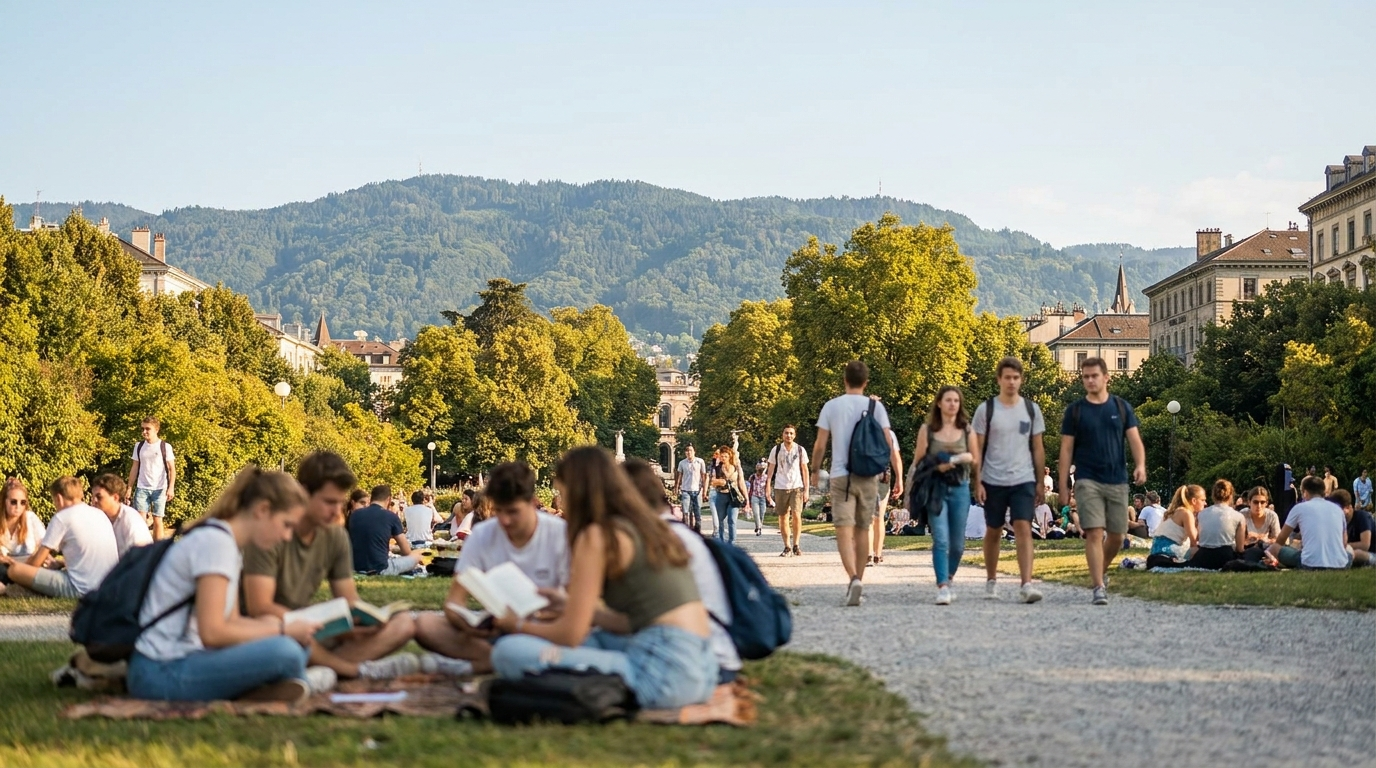
One of Sofia's best features for students is how close nature is. Vitosha mountain rises right beside the city, just 30–40 minutes from the centre — a vast natural playground for hiking and picnics in the warmer months and skiing and snowboarding in winter, all on the capital's doorstep. Few European capitals offer a proper mountain so close, and for outdoorsy students it is a major draw.
Within the city, green space is plentiful. Borisova Gradina, Sofia's largest park, is a favourite for jogging, cycling and relaxing, with a small lake where you can rent a boat in summer and ice-skate in winter. Other parks dot the city for walks and downtime between study. This easy access to mountains and parks gives students a healthy outlet from the demands of medical study and a cheap, refreshing way to spend free time. The outdoors is a defining, much-loved part of student life in Bulgaria — and a real wellbeing asset over a long degree.
The presence of a genuine mountain on the city's edge is genuinely unusual and shapes how students spend their free time. In a single day you can finish morning classes and be hiking a forest trail or skiing a slope by afternoon, then back in the city for the evening — a rhythm few medical students anywhere can match. In summer, Vitosha's trails and meadows are perfect for group hikes, picnics and stargazing; in winter, its runs offer affordable skiing and snowboarding minutes from your flat. This proximity to nature is not just a pleasant extra — for students under the sustained pressure of a medical curriculum, regular time outdoors is a proven boost to mental health and focus. Having it so accessible and so cheap is one of the standout features of student life in Bulgaria, and something graduates often remember most fondly.
Nightlife & social life
Sofia has a vibrant social scene to suit most tastes. The Studentski Grad (Student City) district is the epicentre of student nightlife, packed with bars, clubs and live-music venues where parties and concerts run through the week. Closer to the centre, the area around Vitosha Boulevard and Sofia University has plenty of bars, pubs and restaurants for a more relaxed evening, and you can also seek out venues playing chalga, Bulgaria's distinctive pop-folk music, for a local flavour.
Beyond nightlife, social life revolves around café meet-ups, student society events, sports, and the simple pleasure of exploring the city with friends. The mix of a buzzing student district and a relaxed café culture means you can dial your social life up or down to suit your study load and mood. Importantly, it is all affordable — a night out in Sofia costs a fraction of one in Western Europe — so students can have a full social life without overspending. This lively but affordable scene is a big part of what makes student life in Bulgaria enjoyable.
What many students appreciate is the range of registers on offer. You can have a big night out in a Studentski Grad club, a relaxed evening of craft beer and conversation in a centre bar, a cultural night at the theatre or a concert, or a quiet coffee and board games with friends — and switch between them as your week and workload dictate. During exam periods the city's cafés fill with students revising together; in lighter weeks the bars and live-music venues come alive. Because everything is cheap and close together, no plan requires much money or travel. This easy, affordable variety means students rarely feel they are missing out socially, however demanding their studies — a balance that is harder to strike in pricier cities and one of the underrated pleasures of being a student here.
Travel: Schengen & the Black Sea
Studying in Bulgaria is a springboard for travel. As a full Schengen member, Bulgaria lets students travel freely across the rest of the Schengen area — so weekend or holiday trips to other European countries are easy, with no internal border checks. For students who want to see Europe during their studies, this open access is a significant perk, and budget flights and buses make it affordable.
Closer to home, Bulgaria itself rewards exploration. The Black Sea coast — centred on Varna and Burgas — offers beaches and summer resorts a few hours away, a popular escape when the weather warms. The country also has historic towns like Plovdiv (one of Europe's oldest continuously inhabited cities), monasteries, mountains and ski resorts. Between domestic travel and Schengen access to the wider continent, the opportunities to explore are a genuine highlight of student life in Bulgaria, turning six years of study into six years of seeing Europe too.
For many students, this travel dimension becomes one of the defining joys of their time abroad. Bulgaria's central position in south-eastern Europe puts a remarkable variety of destinations within easy reach — neighbouring Greece, Romania, Serbia and Turkey are short trips away, and budget flights from Sofia connect to capitals across the continent. A long weekend can mean a Greek island, a Romanian city, or a ski trip; a summer break can mean a tour of several countries. Because both the travel and the base in Bulgaria are cheap, students can see far more of Europe on a modest budget than they could from a pricier base. This freedom to explore, made possible by Schengen membership and low costs, adds a rich layer of experience to student life in Bulgaria that students carry with them long after graduation.
Climate & seasons
Bulgaria has a four-season climate, which many students enjoy for its variety. Summers are warm and sunny — ideal for the Black Sea coast, outdoor cafés and hiking — while winters are cold and often snowy, which, with Vitosha so close, makes Sofia a convenient base for skiing. Spring and autumn are mild and pleasant, good for exploring the city and countryside.
For students coming from warmer climates, the cold winters are the main adjustment, so warm clothing is a sensible early purchase; for those from cooler climates, the warm summers are a welcome bonus. The distinct seasons shape the rhythm of student life — skiing and cosy cafés in winter, the coast and the mountains in summer — and add variety to the year. Adapting to the seasons is part of the experience, and most students come to appreciate the changing backdrop to their student life in Bulgaria.
Healthcare as a student
As an international student you are required to have health insurance, which is inexpensive — around €10–20 a month via a private policy or the national scheme — and gives you access to medical care while you study. EU/EEA students can use their European Health Insurance Card. Bulgaria has hospitals and clinics in all the university cities, and as a medical student you will, of course, come to know the healthcare system well through your clinical training.
Practically, arrange your health insurance before or on arrival, since proof of cover is needed for your visa and enrolment, and register with a local doctor for routine needs. Pharmacies are widespread and staff often speak some English. The cost of staying healthy — insurance, the occasional pharmacy visit — is low, in keeping with Bulgaria's general affordability. Knowing that healthcare is accessible and cheap is one less thing to worry about, and a reassuring part of the practical side of student life in Bulgaria.
Banking, SIM & practicalities
A few practical set-up tasks make the first weeks smoother. A local SIM card and mobile plan is cheap and easy to arrange, with good coverage and affordable data — useful from day one for maps, transport apps and staying in touch. Opening a local bank account can help with paying rent and day-to-day spending, though many students manage initially with international cards and apps; your university or student association can advise on the most student-friendly banks.
Beyond those, you will want to register for your residence permit (non-EU) or with local authorities (EU), get your student transport card, and set up the everyday apps Bulgarians use for taxis, food delivery and transport. None of this is difficult, and the established student community — seniors and associations — is a great source of practical tips on which providers and apps to use. Getting these basics sorted early removes friction and lets you focus on settling into student life in Bulgaria. EHEC's pre-departure and arrival support walks students through each of these steps, so nothing essential is missed in the busy first weeks.
Sports & staying active
Staying active is easy and affordable in Bulgaria, which matters for wellbeing over a demanding degree. The obvious draw is the outdoors — hiking and trail running on Vitosha, cycling and jogging in Borisova Gradina and other parks, and skiing or snowboarding in winter, all close and cheap. Beyond that, Sofia has plenty of gyms and fitness centres at low monthly rates, swimming pools, and sports facilities, many with student discounts.
Universities and student associations also run sports clubs and informal teams — football, basketball, volleyball and more — which double as a great way to make friends. Whether your thing is the mountains, the gym, team sports or a run in the park, the options are abundant and inexpensive. For medical students, who benefit enormously from a physical outlet to balance long hours of study, this easy access to affordable sport and the outdoors is a genuine plus of student life in Bulgaria, supporting both fitness and mental health across the six years.
Festivals & the Bulgarian calendar
Bulgaria has a rich calendar of festivals and traditions that add colour to the student year. A favourite is Martenitsa (1 March), when people exchange red-and-white adornments to welcome spring — a charming custom students quickly adopt. The country also celebrates its name days, Orthodox Christmas and Easter, and a lively summer season of music and cultural festivals, including events on the Black Sea coast and in historic Plovdiv.
For international students, this calendar sits alongside their own celebrations: Indian student associations mark Diwali, Holi and more, and the diverse student body brings festivals from around the world to campus. Experiencing Bulgarian traditions while keeping your own is part of the cultural richness of studying here, and a great way to bond with classmates from every background. Joining in the festivals — local and international alike — is one of the warm, memorable threads of student life in Bulgaria, turning a study-abroad stint into a genuinely cultural experience. Many graduates say these shared celebrations, more than the lectures, are what they remember most about their years here.
Language & getting by
A frequent worry — "will I cope without speaking Bulgarian?" — is largely unfounded for daily life. In Sofia and the other university cities, English is widely spoken, especially among younger people, university staff and in places students frequent; restaurant menus are commonly available in English, and the international brands and apps you know are present. Your degree is taught entirely in English, so your studies never require Bulgarian.
That said, learning some basic Bulgarian is genuinely worthwhile and appreciated by locals — simple greetings and everyday phrases smooth daily interactions, help with markets and officialdom, and enrich your experience of the culture. Crucially, you will need conversational Bulgarian for your clinical years, when you communicate with local patients, and for practising in Bulgaria afterwards — so picking it up gradually pays off. For everyday student life, though, English carries you comfortably from day one, removing a major barrier and making the transition into student life in Bulgaria smooth.
Balancing study & life
It is worth being honest that medicine is a demanding degree, and student life in Bulgaria is not all cafés and mountains — the academic workload is serious, with long hours of study, practicals and, in the later years, clinical placements. The students who thrive are those who balance hard study with the outlets the city offers: using the parks and Vitosha for exercise and headspace, the café and social scene for downtime, and the supportive student community for encouragement when the work is heavy.
The good news is that Bulgaria makes that balance easy and affordable. Because living costs are low, students feel less financial pressure than peers elsewhere; because the city is compact, safe and full of cheap things to do, downtime is easy to come by; and because the community is strong, support is close at hand. Managing the demands of medicine while enjoying everything around you is the real art of student life in Bulgaria — and the environment here is well suited to striking that balance over the long haul of a six-year degree.
It also helps that the supports for wellbeing are woven into the everyday. A jog in Borisova Gradina or a hike on Vitosha clears the head between study blocks; a cheap coffee with classmates on Vitosha Boulevard provides a social reset; the student associations offer both fun and a sounding board when the workload bites. Because none of this costs much, students do not have to choose between looking after themselves and staying on budget. Over six years, the students who do best are rarely those who simply study hardest, but those who sustain themselves — physically, socially and mentally — through the marathon, and Bulgaria's affordable, outdoorsy, community-minded environment is unusually good at enabling exactly that. Building healthy habits early is the secret to thriving in student life in Bulgaria rather than merely surviving it.
Tips for settling in
- Sort accommodation early — secure a dorm place or a shared flat before you arrive to avoid stress and inflated prices.
- Get your student transport card on arrival to claim the cheap monthly fare.
- Arrange health insurance before or on arrival — you need it for your visa and enrolment.
- Connect with the student community — join your university's Indian/international association and societies early.
- Learn a few Bulgarian phrases — it smooths daily life and is appreciated, even though English carries you.
- Cook and shop locally — markets and supermarkets keep food costs low; find the ethnic markets for familiar ingredients.
- Pack for winter — Sofia's winters are cold and snowy, so bring or buy warm clothing.
- Explore early — get to know Vitosha, the parks and the centre to feel at home quickly.
A little organisation in the first weeks pays off for the whole degree. Settling in well — sorting the practicalities and plugging into the community — sets the tone for a happy, productive six years and helps you make the most of student life in Bulgaria from the start, turning a new country into a welcoming home.
How EHEC helps
EHEC helps you prepare for student life in Bulgaria as well as the admission itself — guiding you on accommodation (dormitory or shared flat, and where to live in Sofia), budgeting realistically in your own currency, arranging health insurance, connecting with the student community, and handling pre-departure and arrival so the move is smooth. We make sure you arrive ready to settle in quickly and enjoy your time here.
Book a free 45-minute consult →
Related guides
- Study medicine in Bulgaria: the complete guide
- Cost of studying medicine in Bulgaria
- Medicine in Bulgaria admission: requirements & how to apply
- Practising after a Bulgaria medical degree
- Study medicine in English in Europe
- Study MBBS abroad: the complete guide
- Studying medicine abroad as a US student
- Comparison of leading European destinations
- Explore Bulgaria
- Student life in Georgia (Tbilisi)
- Student life in Latvia
- Student life in Lithuania
- Student life in Romania
Frequently asked questions
How much does it cost to live as a student in Bulgaria?
About €450–700 a month in Sofia (₹40,500–63,000; $486–756; £383–595; AED 1,800–2,800) for a comfortable lifestyle covering accommodation, food, transport, utilities and leisure — the lowest student living costs in the EU. Smaller cities are cheaper.
Is Sofia safe for international students?
Yes. Sofia is a safe city where students feel comfortable, including at night in the busy central areas. Violent crime is low, and the city is known for its tolerant, welcoming culture toward people of all backgrounds and faiths.
How much is student accommodation in Sofia?
University dormitory rooms cost as little as €50/month (shared), a room in a shared flat €200–350, and a private studio €300–450. Many students share a central flat with classmates to balance cost and convenience.
Is English widely spoken in Bulgaria?
Yes, especially in Sofia and among younger people and university staff. Menus are often in English and your degree is taught in English. Learning basic Bulgarian helps for daily life and is needed for clinical years with local patients.
Is there an Indian community in Bulgaria?
Yes. There's a large Indian student community, and most major universities have Indian student associations that celebrate Diwali, Holi and other festivals and support newcomers. Indian groceries and spices are available in the bigger cities.
What is there to do in Sofia?
Plenty — museums and galleries, theatres (Georgi Rakovski Street is "Sofia's Broadway"), café culture on Vitosha Boulevard, nightlife in Studentski Grad, and the outdoors: Vitosha mountain (30–40 min away) for hiking and skiing, plus city parks like Borisova Gradina.
Can I travel around Europe while studying in Bulgaria?
Yes. Bulgaria is a full Schengen member, so you can travel freely across the Schengen area — weekend and holiday trips around Europe are easy and affordable. Bulgaria's own Black Sea coast and historic towns are also worth exploring.
What is the food like for international students?
Affordable and varied. Groceries cost under €200/month, a tavern meal is around €10, and Bulgarian cuisine is hearty. Indian and international ingredients and restaurants are available in the bigger cities, and university canteens are cheap.
How do students get around Sofia?
By public transport — a modern metro plus buses and trams. A monthly student pass costs around €11 (about 22 leva), making it very cheap. Taxi and ride-hailing apps are available and inexpensive too.
What is the weather like?
Bulgaria has four seasons: warm, sunny summers (great for the coast and hiking) and cold, often snowy winters (handy for skiing on nearby Vitosha). Spring and autumn are mild. Pack warm clothing for winter.
Do I need health insurance as a student?
Yes — health insurance is required and inexpensive (around €10–20/month), and you need proof for your visa and enrolment. EU/EEA students can use their European Health Insurance Card.
Is student life in Bulgaria good for medical students specifically?
Yes. Low costs ease financial pressure, the city is safe and full of affordable things to do, the outdoors aids wellbeing, and the strong student community offers support — all valuable over a demanding six-year medical degree.
Do I have to live in Sofia, or are other cities good too?
Other university cities are great and often cheaper. Plovdiv offers history and arts, Varna offers Black Sea coastal living, and Pleven and Stara Zagora are smaller, quieter and the most economical. Each has its own student life; Sofia simply has the largest international scene.
How easy is it to set up banking and a phone?
Easy. A local SIM and mobile plan are cheap and quick to arrange, and you can open a local bank account for rent and daily spending (many students initially use international cards and apps). Your student association can advise on student-friendly options.
Can I stay active and play sport in Sofia?
Very much so — hiking and skiing on Vitosha, running and cycling in the parks, affordable gyms with student rates, and university sports clubs and informal teams. Staying active is cheap and easy, which helps wellbeing during a demanding degree.
Want this applied to your own profile? Book a free 45-minute consult and a senior counsellor will map exactly what it means for you, your timeline, and your budget.