Student life in Hungary — and especially in Budapest — is one of the most enjoyable in Europe: a stunning UNESCO-listed capital on the Danube, famous thermal baths and ruin bars, a huge international student community, and living costs of roughly €600–900 a month that are well below Western Europe. As an EU and Schengen city, Budapest also puts the whole continent within a short, cheap flight. This 2026 guide covers everything a medical student needs to know about living in Budapest and Hungary's other student cities: costs, accommodation, food, transport, safety, culture, travel and how to make the most of it all, with living costs shown in five currencies.
Why student life in Hungary is special
Student life in Hungary is consistently rated among the best in Europe, and for good reason. At its heart is Budapest — a breathtaking capital straddling the Danube, with grand 19th-century architecture, world-famous thermal baths, a buzzing café and ruin-bar culture, and genuinely student-heavy neighbourhoods. Add a large, diverse international student community, affordable living costs, and a central European location that makes weekend travel easy, and you have an environment that makes a demanding medical degree far more enjoyable to live through.
Beyond the capital, the smaller university cities of Debrecen, Pécs and Szeged offer a calmer, even more affordable student experience with their own charm, strong traditions and lively student scenes. Whichever city you choose, Hungary combines a high quality of life, safety, rich culture and a welcoming atmosphere for internationals. This guide explores every aspect of student life in Hungary so you know exactly what to expect. For the full picture of the degree itself, see our complete guide to studying medicine in Hungary.
What makes the Hungarian student experience particularly special for medical students is the combination of seriousness and joy. The degree is rigorous and the universities are world-respected, yet the surrounding life is genuinely delightful — affordable enough to enjoy on a student budget, rich enough never to be dull, and social enough that you build a global circle of friends. It is this blend that explains why so many graduates describe their years in Hungary as among the best of their lives, not merely a means to a qualification. Over a six-year degree, the quality of your daily life matters enormously, and Hungary delivers a setting in which a demanding course feels not like an ordeal but like an adventure. That is the promise of student life in Hungary, and the rest of this guide shows how it plays out in practice.
Cost of living overview
A defining feature of student life in Hungary is its affordability. In Budapest, the most expensive city, a student typically spends €600–900 a month all-in; the smaller cities cost less. Here is a representative monthly budget in all five currencies (yours will vary with accommodation choice and lifestyle).
| Monthly item (Budapest) | EUR | INR | USD | GBP | AED |
|---|---|---|---|---|---|
| Accommodation (dorm/shared) | €150–450 | ₹13,500–40,500 | $162–486 | £128–383 | AED 600–1,800 |
| Food & groceries | €120–200 | ₹10,800–18,000 | $130–216 | £102–170 | AED 480–800 |
| Transport (student pass) | €10 | ₹900 | $11 | £9 | AED 40 |
| Utilities & internet | €50–150 | ₹4,500–13,500 | $54–162 | £43–128 | AED 200–600 |
| Health insurance | €30–60 | ₹2,700–5,400 | $32–65 | £26–51 | AED 120–240 |
| Leisure & personal | €80–150 | ₹7,200–13,500 | $86–162 | £68–128 | AED 320–600 |
| Total | €600–900 | ₹54,000–81,000 | $648–972 | £510–765 | AED 2,400–3,600 |
This is excellent value for a European capital — rent in Budapest is roughly half that of Berlin or Paris, and eating out costs a fraction of Western European prices. Living in a dormitory and cooking at home keeps you toward the lower end; a private flat and a busy social life push you higher. Either way, the affordability of student life in Hungary is a major draw, and our cost of studying medicine in Hungary guide sets these living costs alongside tuition for the full financial picture.
A sensible piece of advice for any new student: arrive with a financial buffer. The first weeks carry one-off costs that the monthly averages don't capture — an accommodation deposit (typically two months' rent), initial furnishings or supplies, a SIM card, and general setting-up expenses — so having two to three months' worth of funds available on arrival prevents early stress. Thereafter, the predictable, modest monthly costs are easy to manage. Tracking your spending in the first couple of months, using a simple budgeting app or spreadsheet, helps you find your personal rhythm and identify where your money goes. Most students quickly settle into a comfortable routine well within the €600–900 range, and many spend less by leaning on dorms, canteens, cooking and student discounts. Good budgeting from the outset makes the affordability of student life in Hungary work fully in your favour.
Accommodation
Accommodation is the biggest part of your budget, with three main options at different price points. Here is what each costs per month, in all five currencies.
| Accommodation (per month) | EUR | INR | USD | GBP | AED |
|---|---|---|---|---|---|
| University dormitory | €80–350 | ₹7,200–31,500 | $86–378 | £68–298 | AED 320–1,400 |
| Room in a shared flat | €200–450 | ₹18,000–40,500 | $216–486 | £170–383 | AED 800–1,800 |
| Private studio / flat | €350–635 | ₹31,500–57,150 | $378–686 | £298–540 | AED 1,400–2,540 |
The cheapest and most sociable option is a university dormitory (€80–350/month depending on city and standard), often allocated on or near campus — great for meeting fellow students. A room in a shared flat (€200–450) gives more independence and is the most popular choice in Budapest, while a private studio or flat (€350–635) offers full privacy at a higher cost. Remember a deposit (usually two months' rent) and utilities on top of private rentals. Most first-years choose a dormitory or shared flat, then settle as they get to know the city. Accommodation choice is the single biggest lever on the cost of student life in Hungary.
A few practical tips help. Dormitory places can be limited and allocated early, so apply promptly through the university — they are the cheapest option and the best for making friends in your first year, even if standards are basic. When looking for a shared flat or private rental, it helps to have a Hungarian-speaking friend or the university housing office assist, and to view places in person where possible to avoid scams. Many students start in a dormitory and move to a shared flat with friends in later years, once they know the city and the good neighbourhoods. Budgeting for the upfront deposit (two months' rent) and the first month is important, since these initial costs land all at once. Planning your accommodation early and sensibly is the foundation of an affordable, comfortable student life in Hungary.
Best districts in Budapest
Where you live shapes your daily experience, and Budapest's districts each have a character. District V is the central, prestigious core, close to many institutions. Districts VI and VII (the latter the historic Jewish Quarter) are the heart of the city's nightlife and cultural scene — home to the famous ruin bars. District VIII, once rougher, is now a revitalised, popular student area. District IX is a more affordable, up-and-coming area with a great local vibe, and District XI (in Buda) is a calmer, leafy student staple near several universities.
These central districts are all close to universities, transport hubs, attractions and grocery shopping, making them ideal for students. The university buildings are often on the Buda side, while much of the student social life happens in Pest, but the excellent transport network bridges the two effortlessly. Choosing the right district — balancing rent, vibe and proximity to your campus — is part of settling into student life in Hungary, and fellow students and the university housing office can advise on the best areas for your university and budget.
The Buda–Pest divide is worth understanding when you choose where to live. Pest (the flat, eastern side) is the lively, commercial heart — most nightlife, restaurants, shops and the central student districts sit here, and it tends to be where students socialise. Buda (the hilly, western side) is greener, quieter and more residential, with the castle district, leafy neighbourhoods and several university buildings. Many medical students end up commuting between the two — living in a Pest student district and travelling to Buda campuses, or vice versa — which the metro, trams and buses make quick and painless. Proximity to your specific faculty and teaching hospitals is worth prioritising, since you will make that journey daily for years; a slightly higher rent close to campus can be worth it for the time and ease it saves. Weighing these trade-offs thoughtfully is a practical early decision that shapes your everyday routine.
Food & groceries
Eating well is easy and affordable. Groceries cost around €120–200 a month for a student cooking at home, with budget supermarkets — Lidl, Aldi, Tesco, Spar and Penny — keeping costs down, and local markets offering fresh produce cheaply. Student canteens (menza) at the universities serve subsidised meals for just €2–4, an unbeatable midday option. Eating out is inexpensive by Western European standards: a casual restaurant meal costs only a few euros, and Hungarian street food is cheaper still.
Most students settle into a routine of cooking at home — which is both economical and a great social activity with flatmates — while enjoying the occasional meal out or street-food treat. Cooking together is a staple of dormitory and shared-flat life. With a little planning, food is one of the most affordable and enjoyable parts of student life in Hungary, and the country's rich culinary traditions (more on which below) make exploring the local cuisine a pleasure rather than an expense.
Getting around
Budapest has one of Europe's best public-transport systems — an integrated network of metro lines, trams, trolleybuses and buses that gets you anywhere quickly. The best part for students is the price: a student monthly pass costs only around €10 (compared with about €25 for non-students), an extraordinary deal for unlimited city-wide travel. With a student card or ISIC, you also get up to 50% off public transport and Hungarian national trains. Budapest additionally has a bike-share scheme (MOL Bubi) at around €22 a semester.
The smaller cities — Debrecen, Pécs and Szeged — are compact enough that many students walk or cycle, with cheap public transport where needed. The efficiency and low cost of getting around is a quietly significant benefit of student life in Hungary: you can live a little further out to save on rent without feeling cut off, and you can explore the city freely on a tiny budget. Pairing a transport pass with a bike or scooter, as many students do, gives maximum flexibility for minimal cost.
A few practicalities are worth knowing. To buy the discounted student pass, you'll need a valid student card, so sort your enrolment and student ID early. Budapest's transport runs a night network of buses after the metro and trams stop, so getting home late is rarely a problem. Ride-hailing and taxi apps operate too, useful for late nights or moving luggage, though they cost more than public transport. For the occasional longer journey, the national rail network (with up to 50% student discount) links the cities affordably. Overall, you can rely almost entirely on cheap public transport for daily life and keep a car well out of the picture — a real saving. The ease and economy of getting around frees up both budget and time, adding to the day-to-day comfort of student life in Hungary.
Cost by city
Where you study within Hungary affects your budget. Here is an approximate comparison of monthly student living costs across the four main cities, in all five currencies.
| City (monthly student budget) | EUR | INR | USD | GBP | AED |
|---|---|---|---|---|---|
| Budapest (Semmelweis) | €600–900 | ₹54,000–81,000 | $648–972 | £510–765 | AED 2,400–3,600 |
| Debrecen | €500–650 | ₹45,000–58,500 | $540–702 | £425–553 | AED 2,000–2,600 |
| Pécs | €450–600 | ₹40,500–54,000 | $486–648 | £383–510 | AED 1,800–2,400 |
| Szeged | €450–600 | ₹40,500–54,000 | $486–648 | £383–510 | AED 1,800–2,400 |
Budapest is the priciest but the most vibrant, with the largest international community and lifestyle options. Debrecen, Hungary's second city, is cheaper while still lively. Pécs and Szeged (the "City of Sunshine") are the most affordable, with relaxed, attractive student scenes. The trade-off is between the capital's energy and the smaller cities' value and calm — both deliver a rich student life in Hungary, just at different price points and tempos. EHEC helps students weigh this when choosing a university.
Health insurance & healthcare
Health insurance is both legally required and sensible. Non-EU students typically budget €30–60 a month for private health insurance that meets the visa requirement (covering at least €30,000 of medical costs including emergencies). EU/EEA students can use their European Health Insurance Card (EHIC) for basic cover, often topped up with private insurance. The cost is modest, and it gives you access to Hungary's healthcare system for the duration of your studies.
Hungary has accessible, reasonable-quality healthcare, and as a medical student you will, of course, become very familiar with its hospitals through your clinical training. Arranging valid, full-duration health insurance before you arrive is a visa requirement, so it is one of the practical first steps of settling into student life in Hungary. EHEC advises students on meeting the insurance requirement correctly so the visa and enrolment go smoothly.
Mobile, internet & utilities
Staying connected is cheap and easy. Hungary has three main mobile providers offering prepaid and contract deals; a typical plan with domestic calls and generous mobile internet costs around €25–35 a month, and good Wi-Fi is standard in dormitories, cafés and university buildings. For those in private rentals, utilities (electricity, heating, water, internet) typically run €100–150 a month, varying with the season — heating pushes winter bills up — though in dormitories these are usually included in the fee.
These connectivity and utility costs are modest and predictable, and easy to arrange on arrival. Most students sort a local SIM in their first days, giving them affordable data and a Hungarian number for everything from transport apps to food delivery. Factoring these small recurring costs into your budget completes the practical picture of student life in Hungary, and they are comfortably covered within the €600–900 monthly range for Budapest, with the smaller cities cheaper still.
Safety
Hungary is a safe country, consistently ranking well on international peace and safety indices, and Budapest is generally a safe capital for students. As in any major city, sensible precautions apply: be alert to petty theft and pickpocketing in tourist areas, on busy public transport and in nightlife districts, and avoid a few specific areas late at night. The university districts, however, are all in safe parts of the city, and travelling in groups at night — as students naturally do — further reduces any risk.
With common-sense awareness, students live safely and comfortably in Budapest and the smaller cities, which are calmer still. The overall environment is welcoming and secure, and the large international student community means you are rarely far from friends and support. Safety is one of the reassurances that makes student life in Hungary appealing to students and their families alike — it is a place where you can focus on your studies and enjoy yourself without undue worry, while simply staying street-smart as you would anywhere.
A few simple habits keep you safe: keep an eye on your belongings on crowded transport and in nightlife areas, don't leave bags or phones unattended, use licensed taxis or ride apps late at night, and stay with friends when out after dark. It is also wise to save emergency numbers (112 is the EU-wide emergency line), know the location of your university's support services, and keep copies of your documents. None of this is unusual or onerous — it is the ordinary prudence of city living anywhere in the world. With these basics in place, the genuine safety of Hungary's cities lets you relax and make the most of everything on offer, which is exactly why so many families feel reassured about student life in Hungary.
Culture & things to do
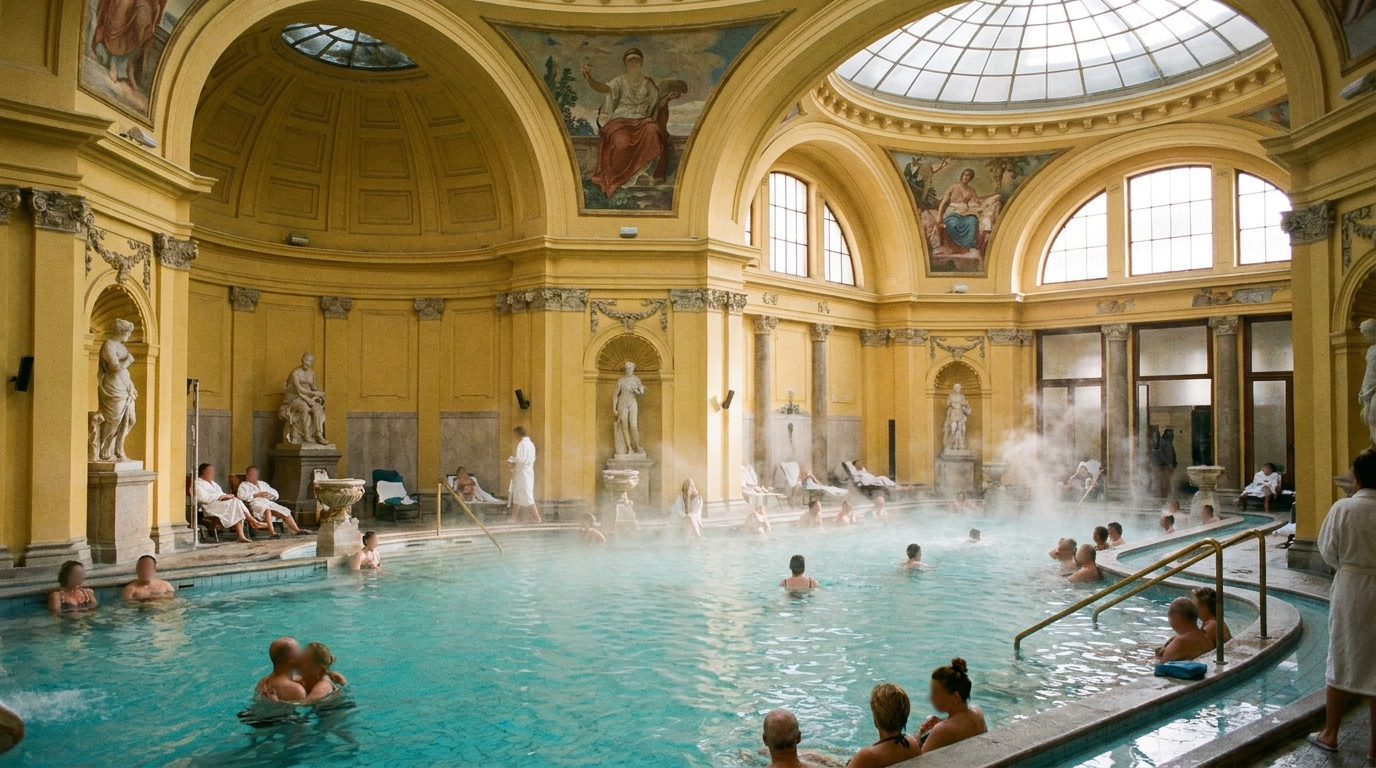
This is where Budapest truly shines. The city is a cultural treasure trove, and much of it is affordable for students. Its thermal baths — the grand Széchenyi (Europe's largest medicinal bath) and the art-nouveau Gellért among them — are a beloved, inexpensive way to relax. The ruin bars of the Jewish Quarter (the legendary Szimpla Kert chief among them) are unique to Budapest. And the city's landmarks are world-class: the neo-Gothic Parliament, Buda Castle, Fisherman's Bastion, St Stephen's Basilica, the Chain Bridge and Heroes' Square.
Beyond these, Budapest offers museums and galleries (with modest €4–8 entry and student discounts), a famous café culture, and a packed calendar of festivals — including Sziget, one of Europe's biggest music festivals. The smaller cities have their own cultural riches and festivals too. There is always something to do, much of it cheap or free, which means the cultural richness of student life in Hungary never depends on a big budget. Exploring it all is one of the great joys of studying here.
The grand old coffeehouses deserve special mention — Budapest's historic cafés, once the haunt of writers and intellectuals, are a wonderful place to study, socialise or simply soak up the atmosphere over an inexpensive coffee and cake. The city's calendar also brims with seasonal highlights: open-air summer concerts and bath parties, the romantic Christmas markets in winter, spring festivals and autumn wine events. Free public spaces — Margaret Island, City Park, the Danube promenades — offer leisure at no cost at all. This abundance of affordable and free culture means a student can have a rich, varied life on a modest budget, which is one of the most distinctive and appealing features of student life in Hungary compared with pricier Western European capitals.
Hungarian cuisine
Hungarian food is hearty, flavourful and a pleasure to discover. Signature dishes include goulash (gulyás), the iconic paprika-spiced meat-and-vegetable soup; lángos, deep-fried dough topped with sour cream and cheese; chimney cake (kürtőskalács), a sweet spiral pastry; and a wealth of paprika-rich stews and dishes. Hungary is also a notable wine country — the sweet Tokaji is world-renowned — and pálinka (fruit brandy) is the national spirit.
For students, the appeal is that all of this is affordable: street food like lángos costs little, and traditional restaurants are inexpensive. Markets such as the Great Market Hall offer fresh, cheap local produce. Sampling Hungarian cuisine — and cooking it with flatmates — is an enjoyable, budget-friendly part of student life in Hungary, and a delicious way to immerse yourself in the local culture. Many international students develop a lasting love of paprika and goulash during their years here.
International students are well catered for, too. Budapest and the larger cities have a diverse food scene — Indian, Middle Eastern, Asian, Italian and vegetarian/vegan options are widely available — so those who miss the flavours of home, or who have specific dietary needs, are not stuck. Halal and vegetarian food is increasingly easy to find, and international grocery stores stock familiar ingredients for home cooking. This means students from every background can eat comfortably and affordably, whether sticking to home cuisine or embracing Hungarian dishes. The combination of cheap, hearty local food and a growing international food scene ensures that eating well — to your own taste and budget — is one of the easy pleasures of student life in Hungary, and a frequent source of shared meals and new friendships.
Nightlife & social life
Budapest has a justly famous nightlife, anchored by its ruin bars — atmospheric bars set up in formerly derelict buildings, full of mismatched furniture and character, concentrated in District VII. Beyond these, the city offers everything from relaxed pubs and craft-beer spots to clubs and live-music venues, much of it concentrated in the student-heavy central districts. Prices are student-friendly: a local beer costs around €2.70–3, and a cocktail about €5.
The social side of student life in Hungary is one of its highlights. With a large international student population, there is a constant flow of gatherings, society events, parties and meet-ups, and it is easy to build a wide circle of friends from around the world. Whether your idea of a night out is a quiet drink, a ruin-bar crawl or a music festival, Budapest delivers — and the smaller cities, while calmer, have their own lively student scenes. A healthy social life is, of course, balanced against a demanding degree, but Hungary makes the balance an enjoyable one.
It is worth noting that the social scene is as rich for those who don't drink or prefer quieter evenings. The café culture, the thermal baths, cinema trips, board-game cafés, live music, sports clubs and society events all offer plenty to do without a late night out, and the inclusive international community means no one feels left out. Student societies and the Erasmus Student Network organise an endless stream of cultural outings, trips, dinners and themed events that suit every temperament. The point is that connection and fun in Budapest do not depend on partying — there is a version of the city's social life for everyone, from the festival-goer to the homebody. This breadth is part of why student life in Hungary suits such a wide range of students so well.
The international community
One of the biggest reassurances for students moving abroad is community, and here Hungary excels. The universities host large, diverse international student populations — Semmelweis alone draws students from over 110 countries — so you join an established, welcoming network from day one. Student societies, the Erasmus Student Network (ESN), country-specific associations and university clubs make it easy to find your people, whether you want fellow nationals or a global mix.
This thriving international community means you are never alone in navigating life abroad: there is always someone who has faced the same bureaucracy, the same homesickness, the same first-week confusion, and can help. Lifelong friendships are forged in dormitories and lecture halls, and the bonds formed studying medicine together are famously strong. The richness and supportiveness of this community is one of the most valuable, if intangible, aspects of student life in Hungary — it turns a daunting move abroad into a shared adventure.
The diversity of the community is itself an education. Studying alongside future doctors from dozens of countries — comparing healthcare systems, cultures and perspectives — broadens you in ways that go far beyond the curriculum, and builds a global professional network that can serve you for the rest of your career. Many students also find a home in their national or cultural societies (Indian, Nigerian, Iranian, German and many others are typically active), which celebrate festivals, share food from home, and ease homesickness. Between the broad international mix and these tighter-knit groups, every student can find both a global circle and a familiar corner. This dual sense of belonging — to a worldwide cohort and to your own community — is a quiet but profound strength of student life in Hungary.
Travelling from Hungary
One of the great perks of studying in Hungary is its position at the heart of Europe. As an EU and Schengen member, Hungary lets you travel freely across the continent, and Budapest is superbly connected. The whole of Europe is two to three hours away by plane, with budget flights making weekend getaways genuinely affordable — return tickets to dozens of destinations can be found from around €50. Neighbouring capitals — Vienna, Bratislava, Prague, Zagreb — are just a few hours away by train or bus.
This makes Hungary an ideal base for exploring Europe during your studies: a free weekend can become a trip to the Alps, the Adriatic coast, or a great European city. For international students, the chance to see so much of the continent cheaply and easily is a wonderful bonus on top of the degree itself. The travel opportunities are a genuinely cherished part of student life in Hungary, and many students look back on their European adventures as fondly as on their studies.
Practical travel is easy from Budapest. The city's airport connects to budget carriers serving destinations all over Europe, while international trains and coaches (the latter often very cheap) run frequently to neighbouring countries — Vienna is about two and a half hours by train, Bratislava around two, with Prague, Krakow, Zagreb and Belgrade all reachable in a few hours. The well-developed European rail and bus networks, combined with student discounts, make spontaneous trips affordable. Group travel with fellow students is the norm, splitting costs and multiplying the fun. Just be mindful to plan trips around your study schedule — the clinical years in particular leave less free time — but the breaks you do take become some of the most memorable parts of the whole experience. Few study destinations offer this much of Europe on the doorstep, which is a standout perk of student life in Hungary.
Day trips within Hungary
You need not leave the country to explore, either — Hungary itself rewards day trips and weekend breaks. From Budapest, the Danube Bend (with the charming towns of Szentendre, Visegrád and Esztergom) is a popular short escape, as is Lake Balaton, central Europe's largest lake and a summer playground for swimming, sailing and lakeside relaxation. Eger, with its castle and wine cellars, and Lake Hévíz, the world's largest thermal lake, are further gems within easy reach.
The smaller university cities make excellent bases too: Pécs is near the Villány wine region and the Mecsek hills; Szeged sits close to the southern countryside; and Debrecen is the gateway to the Hortobágy National Park (a UNESCO site) and the Hajdúszoboszló spa town. These domestic trips are cheap, accessible by train or bus, and offer a wonderful counterpoint to city life. Discovering Hungary beyond your university city is an affordable, rewarding dimension of student life in Hungary that many students treasure as much as their international travels.
Common worries (and reassurances)
It is natural to have concerns about moving abroad to study, so here are some reassurances. "Will I cope with the language?" Yes — your degree is in English, English is widely spoken in the student cities, and you learn functional Hungarian gradually. "Will it be safe?" Hungary is a safe country and the university areas are secure; normal precautions suffice. "Will I be lonely?" Far from it — the large international community means instant friendships and support. "Can I afford it?" Living costs are among Europe's more affordable, and scholarships and student discounts help.
"Will I manage the workload and a life?" The degree is demanding, but Hungary's affordable, enjoyable environment is precisely what makes the balance sustainable. The truth is that the overwhelming majority of international students settle in well, thrive, and look back on their Hungarian years with great fondness. The worries that loom large before departure almost always fade within the first weeks. Acknowledging these concerns — and seeing how readily they are answered — is reassuring for students and families alike, and it underlines why student life in Hungary is consistently rated so highly by those who experience it.
Learning Hungarian
You do not need Hungarian to study or to get by — your degree is in English, and in the student cities (Budapest, Szeged, Debrecen) English is widely spoken among younger people. That said, learning some Hungarian enriches the experience considerably: it helps with everyday life, lets you connect with locals beyond the international bubble, and is essential for your clinical years, when you communicate with Hungarian patients (which is why the medical curriculum includes around two hours a week of Hungarian classes).
Hungarian is a famously challenging language, so no one expects fluency — functional, conversational ability is the realistic and useful goal. Making the effort, however, is rewarding: locals appreciate it, it deepens your integration, and it is a genuinely useful skill. Embracing the language, even a little, is a small thing that markedly improves student life in Hungary, turning you from a visitor into a more rooted member of the community. The classes built into your course give you a head start.
Weather & seasons
Hungary has a continental climate with four distinct seasons. Summers (June–August) are warm to hot and sunny — perfect for the thermal baths, festivals and outdoor café life — while winters (December–February) are cold, often with snow, giving Budapest a magical, festive feel around Christmas. Spring and autumn are mild and pleasant, ideal for exploring the city and travelling. Szeged, the "City of Sunshine," enjoys especially favourable weather.
The varied seasons mean there is always a different side of the city to enjoy — summer terraces and bath parties, cosy winter cafés and Christmas markets, blossoming spring parks. Pack for the range, especially a warm coat for winter, and you will appreciate each season's distinct charm. The pleasant climate for much of the year adds to the appeal of student life in Hungary, and the seasonal rhythm becomes part of the experience of living there over six years, marking the passage of your studies in a way that flat, unchanging weather never could.
Working part-time
International students in Hungary are permitted to work part-time during their studies, and some take on on-campus roles, tutoring (English or STEM), or freelance work to supplement their budget and gain experience. It is a legal and accessible option, and a way to earn a little, build skills and meet people. Student discounts and a low cost of living mean part-time earnings stretch reasonably far.
That said, a word of realism: a medical degree is extremely demanding, leaving limited time for work, and you should never rely on part-time income to cover your essential costs — especially in Budapest, which is the hardest city to fund this way. Treat any earnings as a useful supplement, not a foundation, and arrive with sufficient funds and a buffer. Approached sensibly, part-time work can be a positive part of student life in Hungary, but your studies must always come first, and the demands of the course should never be underestimated for the sake of a few hours' pay.
Student discounts
Hungary offers generous student discounts that meaningfully lower the cost of living. With a student card or ISIC, you get up to 50% off public transport and national trains, the cheap monthly transport pass, reduced or free entry to museums, galleries, theatres and many attractions, discounts at gyms, cinemas and some shops, and the subsidised €2–4 meals in university canteens. Always carry your student ID to claim these benefits.
These discounts add up significantly over a six-year degree, making cultural life, travel and everyday spending all more affordable. They are part of why student life in Hungary delivers such good value: the country actively supports its large student population with reduced prices across services. Taking full advantage of every discount you are entitled to is a simple, effective way to stretch your budget further and enjoy more of what the country offers, so it is well worth getting your student card and ISIC sorted early.
Balancing study & life
A medical degree is intense, and the final, often-overlooked piece of student life in Hungary is balance. The workload — especially in the science-heavy early years and the demanding clinical rotations — is substantial, and success requires discipline and consistent study. But the rich, affordable, enjoyable life Budapest and Hungary's other cities offer is precisely what makes that workload sustainable: the baths, the cafés, the friendships, the travel and the festivals are not distractions but the things that recharge you.
The students who thrive are those who study hard and make time for the experiences around them — using the city's affordable pleasures to decompress, building a strong support network, and looking after their wellbeing. Six years is a long time, and a degree lived joylessly is far harder than one balanced with a fulfilling life outside the lecture hall. Hungary makes that balance genuinely achievable, which is why so many graduates remember their time there so fondly. Embracing both sides — the rigour and the richness — is the secret to making the most of student life in Hungary.
First weeks: settling in
The first few weeks abroad are always the most demanding — socially, academically and administratively — so it helps to know what to expect. On arrival you will move into your accommodation, complete university enrolment and registration, convert your visa to a residence permit, register your address, and sort the essentials: a local SIM card, a bank account if useful, and your transport pass and student card. University international offices and orientation programmes guide you through all of this, and fellow students are an invaluable source of practical help.
It is normal for the first month to feel overwhelming — new city, new bureaucracy, new people — but it passes quickly, and the established international community means you are never figuring it out alone. Arriving a little early, before term starts, gives you time to settle without academic pressure. Many students say the initial nerves give way within weeks to a sense of excitement and belonging. A smooth landing sets the tone for the whole experience, and preparing for these first practical steps is the foundation of a happy student life in Hungary. EHEC helps students prepare so the first weeks go smoothly.
Sport, fitness & wellbeing
Looking after your physical and mental wellbeing is essential over a demanding six-year degree, and Hungary supports it well. Universities have sports facilities and clubs, gyms are affordable (and often student-discounted), and the cities are pleasant for running, cycling and walking — Budapest's Margaret Island and riverside paths are favourites, and the smaller cities are green and walkable. The famous thermal baths double as a uniquely relaxing form of self-care after a hard week. Many students join sports teams or fitness classes as a way to stay healthy and meet people.
Mental wellbeing matters just as much: the intensity of a medical degree makes it important to manage stress, stay connected, and seek support when needed. Universities offer student support services, and the strong peer community is itself a vital source of resilience. Building healthy routines — regular exercise, good sleep, social connection and downtime — is part of sustaining yourself through the course. Prioritising wellbeing is not a luxury but a necessity, and the affordable, active, sociable nature of student life in Hungary makes it easy to look after yourself while you study.
Shopping & daily essentials
Day-to-day shopping in Hungary is convenient and affordable. Supermarkets — Lidl, Aldi, Tesco, Spar, Penny and CBA among them — are plentiful and reasonably priced, and local markets (such as Budapest's Great Market Hall) offer fresh, cheap produce. For household goods, electronics and clothing, the cities have shopping malls, high streets and the usual international chains, plus budget options for students furnishing a room. Pharmacies (gyógyszertár) are widely available for everyday health needs.
Online shopping and food delivery are well established too, with apps covering groceries and restaurant meals. Most essentials are easy to find and cheaper than in Western Europe, so kitting out your accommodation and managing daily life is straightforward and budget-friendly. Knowing where to shop for value — budget supermarkets and markets for food, malls and online for goods — helps you keep costs down. The convenience and affordability of everyday shopping is one more practical comfort of student life in Hungary, leaving you more time and money for studies and enjoyment alike.
How EHEC helps
EHEC helps you prepare for student life in Hungary as well as for the degree — advising on the best city and university for your budget and personality, helping you secure accommodation, explaining the practicalities of cost, transport, insurance and settling in, and connecting you with the support you need to land smoothly. We want you not just to study in Hungary, but to thrive there.
Book a free 45-minute consult →
Related guides
- Study medicine in Hungary: the complete guide
- Cost of studying medicine in Hungary
- Medicine in Hungary admission: requirements & how to apply
- Practising after a Hungary medical degree
- Study medicine in English in Europe
- Study MBBS abroad: the complete guide
- Studying medicine abroad as a US student
- Comparison of leading European destinations
- Explore Hungary
- Student life in the Czech Republic
- Student life in Italy
- Student life in Poland
- Student life in Slovakia
Frequently asked questions
How much does it cost to live in Budapest as a student?
About €600–900 a month all-in (accommodation, food, transport, utilities, insurance and personal spending). The smaller cities — Debrecen, Pécs and Szeged — are cheaper, at roughly €450–650 a month.
What are the accommodation options for students?
University dormitories (€80–350/month), rooms in shared flats (€200–450) and private studios or flats (€350–635). Dorms are cheapest and most sociable; shared flats are the most popular choice in Budapest. Budget a deposit (two months' rent) for private rentals.
Is Budapest safe for international students?
Yes — Hungary ranks well on safety, and Budapest is generally safe. Take normal big-city precautions against petty theft, avoid a few areas late at night, and travel in groups. The university districts are all in safe parts of the city.
How much is public transport for students?
Very cheap — a student monthly pass in Budapest costs only around €10 (versus ~€25 for non-students) for unlimited metro, tram, trolleybus and bus travel, with up to 50% off national trains too. Smaller cities are cheaper still.
Do I need to speak Hungarian?
Not to study or get by — your degree is in English and English is widely spoken in the student cities. But you'll learn functional Hungarian (around two hours a week) for your clinical years with patients, and any effort enriches daily life.
What is there to do in Budapest?
Plenty, much of it affordable: the famous thermal baths, ruin bars, museums and galleries (€4–8 entry, student discounts), café culture, festivals like Sziget, and landmarks such as Parliament, Buda Castle and Fisherman's Bastion.
What is the food like, and is it affordable?
Hungarian cuisine is hearty and delicious — goulash, lángos, chimney cake, paprika dishes — and very affordable. Groceries run €120–200/month, student canteens serve meals at €2–4, and eating out is cheap by Western European standards.
Can I travel around Europe while studying in Hungary?
Easily — Hungary is in the EU and Schengen, so you can travel freely, and the whole continent is 2–3 hours by plane, with budget flights from around €50 return. Vienna, Prague and Bratislava are just a few hours away by train.
Can international students work part-time in Hungary?
Yes, part-time work (on-campus jobs, tutoring, freelancing) is permitted. But a medical degree is demanding, so treat any earnings as a supplement, not a way to fund your essentials — arrive with sufficient funds and a buffer.
Is Budapest or a smaller city better for students?
It depends on your preference: Budapest offers the biggest international community, the most lifestyle options and the best transport, but is the priciest; Debrecen, Pécs and Szeged are cheaper, calmer and still lively. Both deliver a great student experience.
What health insurance do I need?
Non-EU students need private health insurance (around €30–60/month) covering at least €30,000 of medical costs including emergencies, valid for your full stay — it's a visa requirement. EU/EEA students can use the EHIC, often topped up privately.
What discounts do students get?
With a student card or ISIC: up to 50% off transport and national trains, the cheap monthly transport pass, reduced or free museum and theatre entry, discounts at gyms and cinemas, and €2–4 university canteen meals. Always carry your student ID.
What should I do in my first weeks in Hungary?
Move into your accommodation, complete enrolment, convert your visa to a residence permit, register your address, and sort a local SIM, a bank account, your transport pass and student card. Arriving a little early and using the university's orientation and international office makes it smooth.
Are there day trips and places to visit within Hungary?
Plenty — the Danube Bend (Szentendre, Visegrád, Esztergom), Lake Balaton, Eger's castle and wine cellars, and Lake Hévíz are all near Budapest. The smaller cities offer Villány wine country (Pécs), Hortobágy National Park (Debrecen) and more, all cheaply reached by train or bus.
How do I look after my wellbeing during the degree?
Build healthy routines — regular exercise (university sports clubs, gyms, running, the thermal baths), good sleep, social connection and downtime. Universities offer support services, and the strong peer community is a vital source of resilience over a demanding six years.
Want this applied to your own profile? Book a free 45-minute consult and a senior counsellor will map exactly what it means for you, your timeline, and your budget.