The cost of living in Malta for students is moderate — most international students spend €700–1,200 a month — for a life on a sunny, safe, English-speaking Mediterranean island. Whether you study via the Queen Mary University of London (Barts) MBBS or the University of Malta, you'll enjoy seafront towns like Sliema, the historic capital Valletta, the student hub around Msida, and the calm of Gozo — with free student bus travel, beaches, history and Schengen access to Europe. This 2026 guide covers the cost of living in Malta for students and everything about island student life, in five currencies.
Cost of living overview
The cost of living in Malta for students is moderate and manageable. Most international students spend €700–1,200 a month, covering accommodation, food, transport, utilities and personal costs — though this varies with your area and lifestyle. Malta is generally an affordable destination, with the bonus that English is an official language, so daily life is effortless for international students.
Accommodation is the biggest expense and the main variable: living in a seafront hotspot like Sliema costs more than the student belt around Msida or the calm of Gozo. But moderate prices, free student bus travel, cheap local food and a wonderful climate keep the overall cost of living in Malta for students reasonable. This guide breaks down every element in five currencies. For tuition and the bigger financial picture, see our cost of studying medicine in Malta guide.
What makes Malta especially attractive on the living-cost front is the combination of moderate prices with a genuinely high quality of life. You are not trading comfort for affordability: even on a student budget, you live by the Mediterranean, in a sunny climate, in an English-speaking society, with free bus travel and inexpensive local food. Few European destinations deliver that blend of reasonable costs and lifestyle. Understanding the cost of living in Malta for students therefore means looking not just at the numbers but at what those numbers buy — which, in Malta, is a great deal.
Monthly budget breakdown
Here's a typical monthly cost of living in Malta for students, broken down by category in five currencies. Most students land in the €700–1,200 range depending on area and lifestyle.
| Monthly item | EUR | INR | USD | GBP | AED |
|---|---|---|---|---|---|
| Accommodation (shared room) | €450–700 | ₹40,500–63,000 | $486–756 | £383–595 | AED 1,800–2,800 |
| Food & groceries | €200–250 | ₹18,000–22,500 | $216–270 | £170–213 | AED 800–1,000 |
| Utilities & internet | €100–120 | ₹9,000–10,800 | $108–130 | £85–102 | AED 400–480 |
| Transport (free bus + extras) | €0–30 | ₹0–2,700 | $0–32 | £0–26 | AED 0–120 |
| Personal & leisure | €100–150 | ₹9,000–13,500 | $108–162 | £85–128 | AED 400–600 |
| Total | €850–1,250 | ₹76,500–1.12L | $918–1,350 | £723–1,064 | AED 3,400–5,000 |
Living in a cheaper area, sharing a room and using your free student bus pass pulls you toward the lower end; seafront living and an active social life push you higher. Note the first month costs more (deposit plus setup). The figures here are typical planning ranges; your own total will reflect your specific area, accommodation type and lifestyle, so treat them as a well-grounded starting point to refine. This breakdown gives a realistic picture of the cost of living in Malta for students, explored category by category below.
For comparison with peers across Europe, Malta's typical student budget sits comfortably below that of major Western-European capitals while offering a Mediterranean lifestyle that few can match — a favourable position that, combined with free student transport and English-official ease, makes the islands a strong-value choice. The category-by-category breakdown that follows shows exactly where the money goes, and where the biggest savings lie, so you can build a budget that fits your circumstances and make informed choices about the cost of living in Malta for students.
It is worth stressing how much the total depends on choices within your control. The headline €700–1,200 range reflects real differences in lifestyle: a student sharing a room in Msida, cooking at home and using the free bus sits comfortably at the lower end, while one renting a studio in Sliema and eating out regularly approaches or exceeds the top. Because accommodation dominates the budget, decisions about area and sharing matter far more than small economies elsewhere. Keeping this in mind lets you steer your own position within the cost of living in Malta for students rather than treating it as fixed.
Accommodation & housing
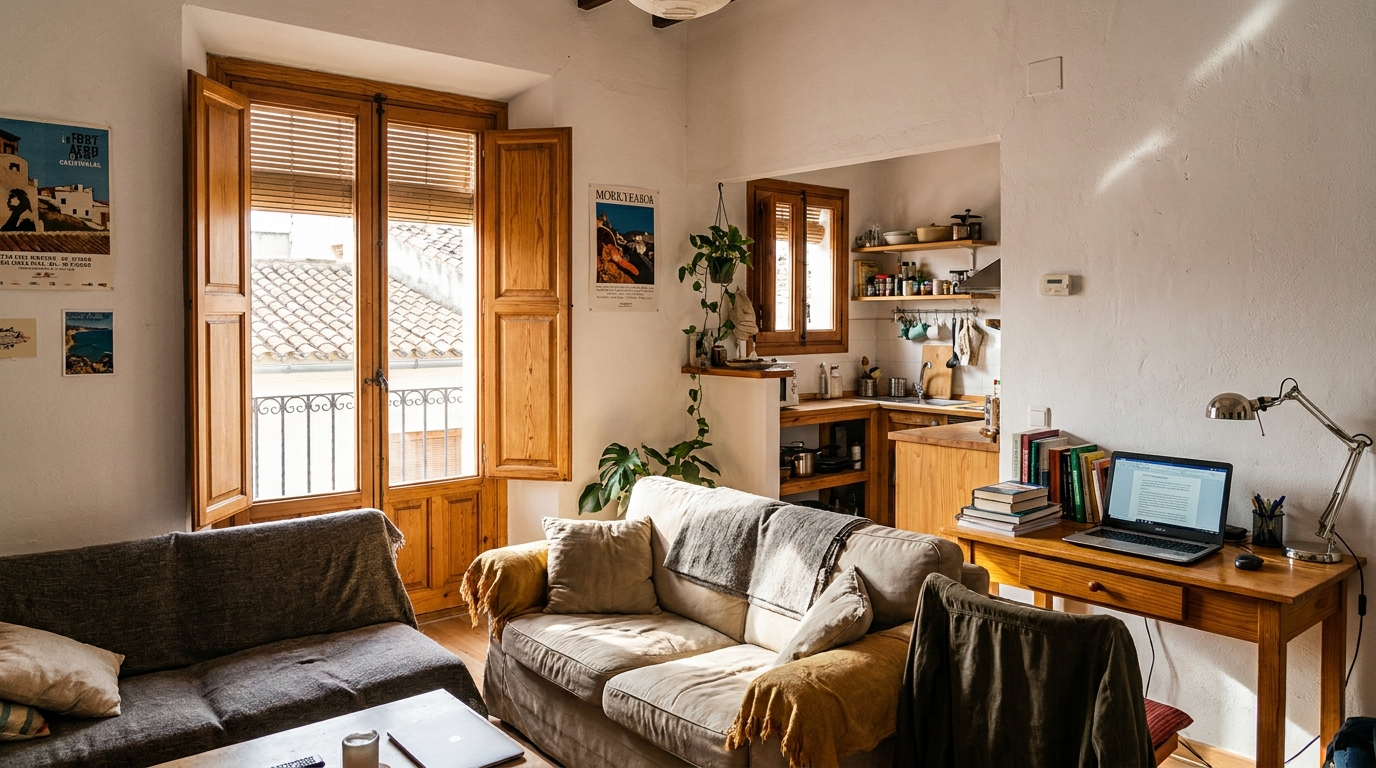
Accommodation is the largest part of the cost of living in Malta for students. Malta's student housing is dominated by the private rental market — there's no large student-foundation system — so most students rent privately through agents, Facebook groups and portals, though the University of Malta offers some support and partner residences with student rates. A room in a shared flat runs €450–900 a month, cheapest in Msida, the Three Cities and Gozo, priciest in Sliema and St Julian's.
Expect a deposit of one to two months' rent plus a security deposit, and note that utilities are often quoted on top of rent (with summer air-conditioning pushing bills up). The best flats near the seafront go quickly before the autumn intake, so search early. Sharing with other students is the most economical option and the norm. Accommodation choices — area, sharing and booking early — are the biggest lever on the cost of living in Malta for students.
The dominance of the private rental market has practical implications worth understanding. Without a large dedicated student-housing system, most students secure a place through letting agents, online portals and student Facebook groups, often arranging viewings (or trusted remote arrangements) before term. Demand is high and good flats move within days, particularly the sought-after seafront ones before the autumn intake, so starting your search early and being ready to commit is important. The University of Malta's partner residences offer a more straightforward, if limited, alternative. Navigating this market well is central to controlling the cost of living in Malta for students.
Accommodation by type
The cost of living in Malta for students depends heavily on accommodation type. Here are the typical monthly options in five currencies.
| Accommodation type | EUR | INR | USD | GBP | AED |
|---|---|---|---|---|---|
| Room in shared flat (budget areas) | €450–700 | ₹40,500–63,000 | $486–756 | £383–595 | AED 1,800–2,800 |
| Room in shared flat (Sliema/St Julian's) | €600–900 | ₹54,000–81,000 | $648–972 | £510–765 | AED 2,400–3,600 |
| Studio apartment | €550–1,100 | ₹49,500–99,000 | $594–1,188 | £468–935 | AED 2,200–4,400 |
| One-bedroom (value areas) | €750–1,100 | ₹67,500–99,000 | $810–1,188 | £638–935 | AED 3,000–4,400 |
A shared room is by far the most economical and the student norm; studios and one-beds offer privacy at a premium that many students happily forgo, at least in the early years, to keep costs down and to share the social experience of flatmates. University residences, where available, offer convenience and student rates, often furnished and with utilities included — apply early, as demand is high and places are limited. Choosing a shared room in a value area is the single biggest saving on the cost of living in Malta for students.
It is worth being alert to the practical details of Maltese tenancies when budgeting. Deposits typically run to one or two months' rent plus a security deposit, and — importantly — utilities (water and electricity) are frequently quoted on top of the rent rather than included, with summer air-conditioning capable of pushing bills up noticeably. Confirming exactly what is and isn't included before signing, and factoring utilities and the deposit into your planning, prevents nasty surprises. Reading the terms carefully and budgeting for the full picture is an important part of managing the cost of living in Malta for students.
Where to live: the areas
Where you live shapes both the cost of living in Malta for students and your daily experience. The main options are the student belt around Msida, Gżira, Pietà and Ta'Xbiex (closest to the University of Malta, practical, mid-priced, full of students); the seafront hub of Sliema and St Julian's (the most international and expensive, with nightlife and jobs); the historic capital Valletta (atmospheric but limited flatshare supply); and cheaper options like the Three Cities and Gozo.
Your choice depends on your university's location, your budget, and your taste for the lively Sliema scene versus quieter inland or island towns. Queen Mary students spend their early years on Gozo before moving across Malta; University of Malta students cluster around Msida. Each area has a distinct character and price point. Choosing the right area is central to balancing the cost of living in Malta for students with the lifestyle you want.
A helpful way to think about it is that Malta's small size means even the cheaper areas are rarely far from the action. Because the islands are compact and the bus network (free for students) is comprehensive, choosing an affordable area like Msida, Gżira or one of the Three Cities rarely means isolation — you can reach campus, the seafront, Valletta and the nightlife easily. This decoupling of cost from convenience is unusual and valuable: you can live affordably without sacrificing access, a quiet advantage that makes optimising the cost of living in Malta for students easier than in larger countries.
Areas compared
Here's how the main areas compare on typical one-bedroom rent (a useful benchmark, with shared rooms costing much less), in five currencies.
| Area (1-bed benchmark) | EUR | INR | USD | GBP | AED |
|---|---|---|---|---|---|
| Sliema / St Julian's (premium) | €1,100–1,500 | ₹99,000–1.35L | $1,188–1,620 | £935–1,275 | AED 4,400–6,000 |
| Gżira / Msida / Birkirkara (value) | €750–1,100 | ₹67,500–99,000 | $810–1,188 | £638–935 | AED 3,000–4,400 |
| St Paul's Bay / Mellieħa (north) | €550–850 | ₹49,500–76,500 | $594–918 | £468–723 | AED 2,200–3,400 |
| Gozo (cheapest) | €500–750 | ₹45,000–67,500 | $540–810 | £425–638 | AED 2,000–3,000 |
Sharing a room cuts these figures substantially, which is why a shared room is the default choice for cost-conscious students. Gżira is often called "affordable Sliema" — 20–35% cheaper for an essentially identical lifestyle, a short walk from the Sliema promenade. Gozo is cheapest but needs a ferry commute. Choosing a value area like Gżira or Msida is a smart way to manage the cost of living in Malta for students.
One encouraging trend for 2026 is that Malta's rent growth has slowed sharply — to around 4% projected for the year, after the double-digit increases seen in 2021–2024. While rents remain higher than they were a few years ago, this cooling brings a measure of stability and predictability to budgeting, particularly welcome for students planning multi-year stays. It also means the value gap between premium and affordable areas remains significant, rewarding careful area choice. Factoring in this more stable rental outlook helps with realistic planning of the cost of living in Malta for students.
The Gżira example is instructive because it captures the logic of value-area living. Sitting between Sliema and Msida, a seven-minute walk from the Sliema promenade and ten from the Valletta ferry, Gżira offers an essentially identical lifestyle — the same restaurants, transport and expat community — at rents 20–35% below Sliema. For the price difference, many students conclude the premium for a Sliema address simply isn't worth it once they've settled. Applying this kind of reasoning — identifying areas that offer the same access for less — is exactly how savvy students optimise the cost of living in Malta for students.
Msida & the student belt
For University of Malta students, the Msida student belt is the natural home and a sweet spot in the cost of living in Malta for students. Msida, Gżira, Pietà and Ta'Xbiex sit closest to the main campus — practical, mid-priced and full of students, with a lively but less expensive feel than the seafront hotspots. Gżira in particular offers great value, a short walk from Sliema's promenade and the Valletta ferry.
This area means short commutes (or walks) to campus, plenty of fellow students, and good amenities, all at a more reasonable cost than Sliema or St Julian's. It's the practical default for many, and for good reason. For students prioritising both proximity to the University of Malta and a sensible budget, the Msida student belt is an ideal base, keeping the cost of living in Malta for students in check while keeping you in the thick of student life.
The student-heavy character of this belt brings social benefits beyond cost and convenience. Living among large numbers of fellow students makes it easy to form friendships, share flats, find study partners and plug into student social life, while the area's cafés, shops and transport links serve a young population. For international students arriving alone, settling into a recognised student area like Msida or Gżira can ease the transition considerably. This blend of affordability, proximity and community is what makes the student belt such a popular and sensible choice within the cost of living in Malta for students.
Sliema & St Julian's
Sliema and St Julian's are the seafront student-and-nightlife hub — the most international and most expensive part of the cost of living in Malta for students. This is where you'll find seafront promenades, restaurants, shopping, the Paceville nightlife district, language schools and many tech/iGaming offices (a source of part-time and graduate jobs). It's vibrant, social and central — and you pay a premium for it.
Rooms here run at the top of the range (€600–900+), and one-beds €1,100–1,500. For students who want to be at the centre of the action, with the sea on their doorstep and nightlife within walking distance, it's worth the cost. Many, though, choose nearby Gżira for an almost-identical lifestyle at 20–35% less. Whether the premium suits you depends on your budget and priorities within the cost of living in Malta for students.
It is worth noting the practical upsides that can offset Sliema and St Julian's higher costs for some students. The concentration of tech, iGaming and hospitality employers in the area means part-time and graduate job opportunities are close at hand, and the abundance of language schools, restaurants and services creates a lively, convenient environment. For a student who will work part-time in the area or who deeply values the seafront-and-nightlife lifestyle, the premium may be justified. Weighing these benefits against the higher rent is a personal calculation within the broader cost of living in Malta for students.
The nightlife of Paceville, in St Julian's, is Malta's best known, drawing students from across the islands, but it is worth being realistic that living right in the thick of it brings noise and higher prices alongside the convenience. Many students enjoy the seafront and social scene of Sliema and St Julian's while choosing to live a little outside the busiest spots — in Gżira or the quieter parts of Sliema — to balance access with peace and cost. Finding your own preferred point on that spectrum is part of settling into the cost of living in Malta for students.
Valletta & the Three Cities
Malta's historic heart offers a different flavour of the cost of living in Malta for students. Valletta, the UNESCO World Heritage capital, is atmospheric, central and steeped in history (the Knights of St John, baroque architecture, Is-Suq tal-Belt food market) — though flatshare supply is limited and it can be pricey. Across the Grand Harbour, the Three Cities (Cospicua, Vittoriosa, Senglea) offer a more authentic, often cheaper alternative with the same harbour beauty.
Living in or near Valletta puts you among Malta's finest sights and a vibrant cultural scene, with ferries linking the harbour towns. The Three Cities, in particular, can offer good value and character. For students who love history and atmosphere and don't mind limited supply, this historic area is a wonderful (if sometimes pricier) base, adding cultural richness to the cost of living in Malta for students.
The Three Cities deserve particular attention from value-conscious students drawn to this part of Malta. Across the Grand Harbour from Valletta, Cospicua, Vittoriosa and Senglea offer the same historic, waterfront atmosphere — arguably more authentic and less touristy — often at lower rents than the capital itself, with ferries and buses linking them to the rest of the island. For students who want character and harbour views without Valletta's limited supply and prices, the Three Cities can be a rewarding and more affordable choice, a hidden gem within the cost of living in Malta for students.
Ferries link these harbour towns to Valletta and Sliema, so even from across the Grand Harbour you remain well connected to the rest of the island and its student life.
Living on Gozo
Gozo — Malta's greener, quieter sister island — is the cheapest base and especially relevant for Queen Mary students, who spend their early years there. Rents are 30–50% lower than on the main island, with one-beds from €500 and far more space for your money. The capital, Victoria (Rabat), is the most affordable urban centre, and the island offers a peaceful, close-knit, beautiful environment ideal for focused study.
The trade-off is the ferry commute to the main island (a 25-minute crossing, free for residents), and you'll likely want a car for getting around Gozo and the south. But for the lowest cost of living in Malta for students, plus tranquillity and natural beauty, Gozo is unmatched. For Queen Mary's Gozo-based early years, this affordable island life is built into the programme — a distinctive part of the cost of living in Malta for students on that route.
Gozo's appeal extends well beyond its low rents. The island's slower pace, natural beauty, close community and abundance of outdoor pursuits — swimming, diving, hiking the cliffs and countryside — make it a restorative environment, particularly valuable during the demanding early years of a medical degree. The trade-off of the ferry commute is real but manageable, and free for residents. For Queen Mary students especially, embracing Gozo life means combining the lowest accommodation costs with a uniquely peaceful, scenic setting — a distinctive and appealing facet of the cost of living in Malta for students.
It is worth adding that Gozo, despite its tranquillity, is far from isolated. The regular ferry connects it to the main island in around 25 minutes, Victoria offers shops, markets, historical sites and services, and the island has its own community life and events. For a medical student in Queen Mary's early Gozo years, this means the benefits of an affordable, peaceful base without being cut off — the main island's amenities remain accessible when needed. This balance of seclusion and connection makes Gozo a surprisingly practical, as well as economical, chapter within the cost of living in Malta for students.
Food & groceries
Food is an affordable part of the cost of living in Malta for students — around €200–250 a month for groceries if you cook at home. You can save further by shopping at local markets: the Ta'Qali Farmers Market (Tuesdays and Saturdays) is the largest and cheapest for Maltese produce, the Marsaxlokk Fish Market (Sundays) offers fresh fish near wholesale prices, and village fruit-and-veg vans undercut Sliema supermarkets (a tub of strawberries €1–1.50 locally vs €3+ in Sliema).
Eating out is reasonable too: cheap pastizzi (Malta's flaky pastries — Is-Serkin in Rabat is famous), takeaways €6–20, a McDonald's Big Mac around €5.80, and delivery via Bolt Food or Wolt. Maltese and Mediterranean cuisine is delicious and fresh, drawing on Italian, North African and British influences for a varied and satisfying everyday diet. Cooking at home and using markets keeps food costs low, while the occasional meal out remains affordable — a tasty, budget-friendly part of the cost of living in Malta for students.
Malta's food culture rewards students who explore it. Beyond the famous pastizzi and the fresh produce of the markets, the islands offer a rich Mediterranean cuisine — fresh fish, rabbit dishes, Maltese bread, local cheeses and seasonal vegetables — much of it affordable, especially when bought locally and cooked at home. Discovering village bakeries, market stalls and good-value local eateries becomes part of the experience, and a way to eat well on a budget. This combination of fresh, affordable food and a vibrant culinary culture is one of the pleasures hidden within the cost of living in Malta for students.
For students who do choose to eat out, Malta offers good value across a range of options, from the ubiquitous pastizzerias and casual cafés to harbourside restaurants, and delivery apps make the occasional treat convenient. Standout budget spots — places famous for their pastizzi or hearty, inexpensive local dishes — become part of the student folklore. The key to keeping food affordable is balance: cooking and market-shopping as the daily default, with eating out as an enjoyable, occasional extra. Struck well, this balance keeps food a comfortably affordable line within the cost of living in Malta for students.
Transport & free buses
Transport is a standout saving in the cost of living in Malta for students: with a Personalized Student Tallinja Card, you travel free on day and night buses across Malta and Gozo. There's just a one-time registration fee (around €25 plus ~€3.85 postage), after which student bus travel is essentially free — a huge benefit, given buses are the main public network.
On top of that, the Valletta harbour ferries (Sliema and the Three Cities) are free with the Tallinja Card (since January 2024), and the Gozo Channel ferry is cheap (€4.65 return on foot). The islands are small, so journeys are short. In car-light areas (Valletta, Sliema, Gżira, Msida) you won't need a car, though Gozo, the south and Mellieħa benefit from one. Free student buses make transport almost negligible in the cost of living in Malta for students.
The free student bus scheme is genuinely one of Malta's standout benefits for students and worth prioritising on arrival. Applying for the Personalized Student Tallinja Card early means you can travel across both islands — day and night — at essentially no cost for the duration of your studies, after only the small one-time registration and postage fees. Combined with the free Valletta harbour ferries and the islands' small size, this effectively removes transport as a meaningful budget line for most students. Few study destinations offer such generous free public transport, a real easing of the cost of living in Malta for students.
For the few journeys not covered by the free buses — the Gozo Channel crossing, for instance, or the occasional taxi or ride-hail late at night — costs remain modest. The Gozo ferry is inexpensive (and free for residents), ride-hailing via apps like Bolt is readily available and reasonably priced, and the islands' small scale keeps any paid journeys short. Some students in outlying areas like Gozo, the south or Mellieħa find a car useful, but for most, living car-free in a well-connected area is entirely practical and economical, reinforcing how light transport sits within the cost of living in Malta for students.
Healthcare & insurance
Healthcare is a small but essential part of the cost of living in Malta for students. EU/EEA students can access Malta's public healthcare system with a European Health Insurance Card (EHIC), so they pay no premium. Non-EU students must hold private health insurance, costing roughly €50–200 a month depending on coverage (also required for the visa), giving shorter waits and specialist access.
Malta's public hospitals are decent, and as a medical student you'll come to know the health system through your placements. Budgeting for insurance (and registering your EHIC if EU) is a simple, necessary step. Because it's mandatory — and a visa requirement for non-EU students — factor it into your plans from the start. Health cover is a modest, manageable element of the cost of living in Malta for students, and worth arranging early.
For EU/EEA students, the EHIC is genuinely valuable, granting access to Malta's public healthcare on the same basis as locals and removing the need for a private premium — so registering and carrying it is worthwhile. Non-EU students, who must hold private cover, should shop around for a policy that meets the visa's requirements while offering good value, as premiums vary with coverage. Many appreciate private insurance anyway for shorter waits and specialist access. Either way, sorting health cover early — EHIC registration or a suitable private policy — is a sensible, modest part of planning the cost of living in Malta for students.
Working while studying
Part-time work can supplement the cost of living in Malta for students. The 2026 rules: EU/EEA students can work without a permit and with no hourly restrictions; non-EU (third-country) students may work up to 20 hours a week, usually after the first 90 days of residency. Malta's tourism-, services- and iGaming-driven economy (much of it around Sliema/St Julian's) offers opportunities, and because English is official, international students access English-speaking roles easily.
That said, medicine is demanding — especially in clinical years — so treat part-time work as a supplement, most feasible in the earlier years and holidays, rather than a financial mainstay. It won't fund tuition, but it can ease living costs and add experience. Non-EU students should confirm their permit's current work conditions. Used sensibly, part-time earnings are a useful way to ease the cost of living in Malta for students.
The favourable work rules are worth appreciating, especially for EU/EEA students who face no permit requirement or hourly cap and can therefore work as their studies allow. Non-EU students' 20-hour weekly allowance, available after the initial residency period, is reasonably generous by international standards, and Malta's English-speaking, services-heavy economy makes finding suitable roles straightforward. While medicine's demands limit how much any student can realistically work, the combination of fair rules and accessible opportunities means part-time work can make a genuine, if supplementary, contribution to easing the cost of living in Malta for students.
English & everyday life
A wonderful feature of student life — and a practical easing of the cost of living in Malta for students — is that English is an official language. Everything from renting a flat and shopping to opening a bank account, visiting the doctor and socialising happens in English, removing the bureaucratic and social friction that international students face elsewhere. Maltese is also spoken, and learning some is appreciated, but you'll never struggle to be understood. It is a genuine convenience that few other study destinations can offer so completely.
This makes settling in remarkably easy. You can navigate officialdom, make friends across the large international community, and handle daily life from day one. For medical students, it also means clinical placements happen in English. This effortless, English-language daily life is one of the most underrated advantages of studying in Malta — a quality-of-life benefit that complements the moderate cost of living in Malta for students.
The practical value of this cannot be overstated for international students, particularly those studying abroad for the first time. Tasks that can be stressful and time-consuming elsewhere — sorting a tenancy, registering with authorities, opening a bank account, dealing with healthcare, or simply making friends — are straightforward when conducted in English. This removes a major source of the friction and isolation that international students sometimes experience, helping you settle quickly and focus on your studies. This ease of daily life is a genuine, if intangible, complement to the moderate cost of living in Malta for students.
Leisure, beaches & culture
Leisure in Malta is rich and often free or cheap — a great value within the cost of living in Malta for students. The islands offer beautiful beaches and swimming spots (free), stunning coastline for walks and diving, and an extraordinary depth of history and culture: ancient megalithic temples (older than the pyramids), the walled city of Mdina, Valletta's baroque splendour, and countless festivals (the colourful village festas).
The warm Mediterranean climate means an outdoor lifestyle much of the year. Long, hot summers and mild winters mean the sea and the outdoors are enjoyable for far more of the year than in northern Europe. Add a lively café and social scene, watersports, and the buzz of Sliema and St Julian's, and there's plenty to do on any budget. Much of the best of Malta — sea, sunshine, historic sites, walks — costs little or nothing. This wealth of affordable leisure is a major quality-of-life bonus within the cost of living in Malta for students.
The outdoor, sea-centred lifestyle is perhaps Malta's greatest free amenity. With a warm climate for much of the year, students can swim, snorkel, dive, walk the coast and socialise outdoors at little or no cost, making an active, healthy social life affordable. Add the islands' remarkable concentration of historic sites, many free or cheap to visit, and the year-round calendar of village festas and cultural events, and there is always something to do without spending much. This abundance of low-cost leisure genuinely enhances the value within the cost of living in Malta for students.
Travelling from Malta
Malta's Schengen membership adds real value to student life. Because Malta is in the Schengen Area (unlike Cyprus), your Maltese student residence permit facilitates travel across much of Europe with no further visas — ideal for holidays, electives and exploring the continent. Malta International Airport has direct flights to many European cities and beyond, often at budget-airline prices.
So between terms or on long weekends, the rest of Europe is within easy, affordable reach — a genuine perk of studying here. Add the inter-island Gozo ferry and harbour ferries for local exploring, and Malta is wonderfully connected for its size. This Schengen-enabled mobility broadens horizons without straining the cost of living in Malta for students, and is a real advantage over non-Schengen study destinations. For a comparison, see our guide to student life in Cyprus.
The contrast with Cyprus is worth drawing out, since the two English-friendly island destinations are often compared. Both are EU members offering English-taught study, but Cyprus is not in the Schengen Area, whereas Malta is — so Maltese students enjoy more frictionless travel across continental Europe during their studies, whether for leisure, electives or visiting home via the continent. For students who value the freedom to explore Europe easily, Malta's full Schengen membership is a tangible edge, adding mobility to the package within the cost of living in Malta for students.
Safety & wellbeing
Malta is a safe, welcoming place to study — an important, intangible part of the value within the cost of living in Malta for students. It's consistently regarded as one of the safer European countries, with low crime, a stable society and a friendly, English-speaking population used to a large international community. Students generally feel secure walking, socialising and travelling around the islands.
The warm climate, outdoor lifestyle, sea and relaxed pace also support wellbeing, and the close-knit feel (especially on Gozo) helps students settle and find community. Universities offer student support services, including help with settling in, wellbeing and academic matters, which international students are encouraged to use. Combined with the ease of English-language life, this safety and friendliness make Malta a reassuring place to live and study, particularly for first-time-abroad students. This security and quality of life are valuable, if unquantifiable, parts of the cost of living in Malta for students.
For families sending a student abroad, particularly for the first time, Malta's safety and ease are genuinely reassuring. The combination of low crime, a stable and welcoming society, universal English, a large international student community and a compact, navigable geography means students can find their feet quickly and live independently with confidence. The supportive environment — whether the close community of Gozo or the established student areas of the main island — helps newcomers settle. This sense of security and belonging is a real, if hard-to-price, benefit woven into the cost of living in Malta for students.
How EHEC helps
EHEC helps you settle into student life and manage the cost of living in Malta for students — advising on the best areas for your university and budget (Msida belt, Gżira, Sliema, Gozo for Queen Mary), finding accommodation and avoiding rental pitfalls, setting up your Tallinja Card for free buses, arranging healthcare and insurance, understanding work rules, and budgeting realistically. We help you enjoy island life to the full while keeping costs sensible.
We also help you plan the practical first steps that make settling in smooth — from timing your accommodation search to secure a good flat before the autumn rush, to arranging your Tallinja Card, EHIC or insurance, and budgeting for the higher first month. Getting these basics right from the start means you can focus on your studies and on enjoying everything Malta offers, rather than scrambling on arrival. With sensible planning, the cost of living in Malta for students is entirely manageable, leaving you free to make the most of island student life.
Book a free 45-minute consult →
Money-saving tips
Several habits keep the cost of living in Malta for students down. The biggest is accommodation: share a room, choose a value area (Msida, Gżira, the Three Cities or Gozo rather than Sliema/St Julian's), apply early for university residences, and negotiate longer leases. Confirm whether utilities are included, and budget for summer cooling. Always search early — good flats go in days.
Then: get your Student Tallinja Card for free buses, cook at home and shop at local markets (Ta'Qali, Marsaxlokk, village vans), enjoy Malta's many free outdoor activities (beaches, walks, historic sites), get an EHIC (if EU) or shop around for insurance, and take advantage of student discounts. Keep the pricier Sliema nightlife as an occasional treat. Take advantage of student discounts too: many shops, attractions and services offer reduced rates on production of a student card, so it is worth asking and carrying proof of student status. Stacking these savings — above all the area and accommodation choice — keeps the cost of living in Malta for students comfortably manageable.
The hierarchy of savings is clear: accommodation is by far the largest lever, so choosing a value area and sharing a room saves the most, followed by the free student bus (which all but eliminates transport costs), then food (cooking and shopping at local markets), with leisure largely free thanks to Malta's beaches and outdoor life. A student who gets the big decisions right — area, sharing, the Tallinja Card — and then layers on the smaller economies can live comfortably toward the lower end of the range. This layered, priority-led approach is the most effective way to keep the cost of living in Malta for students firmly under control.
Notes by country
Student life and the cost of living in Malta for students vary a little by background. Indian & UAE students: budget €700–1,200 a month; English-official life is effortless; the free student bus and local markets help; remember the 20-hour work limit (non-EU) after 90 days. UK students: Malta feels familiar (English, driving on the left, a shared history), with sunshine and Schengen travel as bonuses.
EU students: no visa, free public healthcare with the EHIC, and unrestricted work — the easiest set-up; the cost of living is comparable to or below much of Western Europe. US, Canadian & Australian students: a safe, English-speaking, sunny base with European travel on the doorstep (see our guide for US students). Whatever your background, choosing a sensible area and using the free buses and markets keeps the cost of living in Malta for students in check. For more, see our hubs on studying medicine in English in Europe and studying MBBS abroad, and compare with student life in Greece.
Across all these groups, the common themes are clear: Malta offers a moderate cost of living, an English-official environment that removes everyday friction, free student bus travel, affordable local food, abundant free leisure, and Schengen access to Europe — a combination that delivers strong value and quality of life on a student budget. Tailoring your choices (area, accommodation, work) to your own nationality and circumstances lets you make the most of it. Whatever your background, thoughtful planning ensures you enjoy island life fully while keeping the cost of living in Malta for students well within reach.
Related guides
- Student life in Georgia (Tbilisi)
- Student life in Romania
- Study medicine in Malta: the complete guide
- Cost of studying medicine in Malta
- Medicine in Malta admission
- Practising after a Malta medical degree
- Student life in Cyprus (comparison)
- Student life in Greece (comparison)
- Student life in Italy (comparison)
- Student life in Lithuania (comparison)
- Study medicine in English in Europe
- Study MBBS abroad: the complete guide
- Queen Mary University of London
- University of Malta
- Explore Malta
Frequently asked questions
What is the cost of living in Malta for students?
Most international students spend €700–1,200 a month, covering accommodation, food, transport, utilities and personal costs. The biggest variable is accommodation and area: living in Sliema or St Julian's costs more than the Msida student belt or Gozo. Sharing a room, choosing a value area and using the free student bus keep costs at the lower end.
How much is student accommodation in Malta?
A room in a shared flat runs €450–900 a month — cheapest in Msida, the Three Cities and Gozo (€450–700), priciest in Sliema and St Julian's (€600–900). Studios run €550–1,100 and one-beds €750–1,500 depending on area. Expect a deposit of one to two months' rent, and check whether utilities are included.
Is transport free for students in Malta?
Effectively yes — with a Personalized Student Tallinja Card, you travel free on day and night buses across Malta and Gozo, after a one-time registration fee (around €25 plus ~€3.85 postage). The Valletta harbour ferries are also free with the card. This makes transport almost negligible in a Maltese student budget, since buses are the main network.
Which is the best area for students in Malta?
For University of Malta students, the Msida student belt (Msida, Gżira, Pietà, Ta'Xbiex) is ideal — close to campus, mid-priced and student-heavy. Gżira offers great value ("affordable Sliema"). Sliema and St Julian's are the lively, pricier seafront hub. Queen Mary students live on Gozo (cheapest) in their early years. Choose by your university, budget and lifestyle.
How much does food cost for students in Malta?
Around €200–250 a month for groceries if you cook at home. You can save by shopping at local markets (Ta'Qali Farmers Market, Marsaxlokk Fish Market, village fruit-and-veg vans), which undercut supermarkets in tourist areas. Eating out is reasonable too — cheap pastizzi, takeaways €6–20, and delivery via Bolt Food or Wolt.
Can international students work in Malta?
Yes. EU/EEA students can work without a permit and with no hourly restrictions. Non-EU (third-country) students may work up to 20 hours a week, usually after the first 90 days of residency. Malta's tourism, services and iGaming sectors offer opportunities, and because English is official, English-speaking roles are easy to access. Treat work as a supplement to studies.
Is Malta safe for international students?
Yes — Malta is consistently regarded as one of the safer European countries, with low crime, a stable society and a friendly, English-speaking population used to a large international community. Students generally feel secure, and the relaxed, outdoor island lifestyle supports wellbeing. Universities also provide student support services to help you settle in.
Do I need to speak Maltese to live in Malta?
No — English is an official language, so daily life (renting, shopping, banking, healthcare, socialising) all happens in English. Maltese is also spoken and learning some is appreciated, but you'll never struggle to be understood. This effortless English-language life is one of the biggest practical advantages of studying in Malta for international students.
Can I travel around Europe from Malta?
Yes — Malta is in the Schengen Area (unlike Cyprus), so your student residence permit facilitates travel across much of Europe with no further visas. Malta International Airport has direct flights to many European cities, often at budget prices, making holidays, electives and weekend trips easy. This Schengen mobility is a real perk of studying in Malta.
How much should I budget for my first month?
Budget more for your first month — typically €1,500–2,500 — to cover the accommodation deposit (often one to two months' rent plus a security deposit), utility setup, essential household items, initial groceries and transport, plus a buffer for settling in. After that, your regular monthly budget of €700–1,200 applies. Planning for this higher initial outlay avoids a cash-flow squeeze on arrival.
Want this applied to your own profile? Book a free 45-minute consult and a senior counsellor will map exactly what it means for you, your timeline, and your budget.